
A woman who underwent labiaplasty after years of feeling self-conscious about her body says she’s now living with serious regret and ongoing complications.
The woman, identified by The Independent as “Riley Smith” to protect her identity, said she had long felt insecure about the size of her labia. When she opened up to friends about her concerns, she says their reactions reinforced what she called her “worst insecurities” — and pushed her closer to surgery.
Smith told The Independent she was labeled “the perfect candidate” for the procedure she wanted and was told it would be a “super simple surgery.” Still, she alleges she wasn’t adequately informed about potential risks.
She ultimately had labiaplasty at age 22 — a procedure used to reduce the size of the labia minora, the folds of skin surrounding the urethra and vagina, according to the Cleveland Clinic. The Independent reported that Smith first wanted the surgery when she was 14.
After the operation, Smith said she developed multiple post-op problems. She told The Independent she feels “extremely drained and uncomfortable,” and said she “can’t sit directly on” the surgical area “for long.”
She also said sex has become “excruciatingly painful and mentally distressing.” According to Smith, issues have persisted since tissue was removed, including irritation, dryness, and recurring infections.
“I’m so sad. Penetration was never painful before. I feel so angry at the surgeon, the system and myself for making this decision,” she told The Independent.
:max_bytes(150000):strip_icc():focal(1250x266:1252x268):format(webp)/feeling-pain-and-holding-hand-013026-f098d8ea0c1b40328de8aa9b8db39830.jpg)
“It makes me so angry how casually this procedure is promoted as increasing sexual confidence, improving hygiene and even making underwear more physically comfortable,” she added.
In recent years, procedures such as labiaplasty and vaginoplasty have gained visibility online, often marketed through social media under the idea of a “designer vagina.” Vaginoplasty, the Cleveland Clinic notes, is a procedure that can repair the vagina after damage from medical conditions, injuries, or other factors.
The American Society of Plastic Surgeons says women seek labiaplasty for a range of reasons, including pain from twisting or tugging of the labia during activities like biking or intercourse, as well as itching, irritation, and self-consciousness.
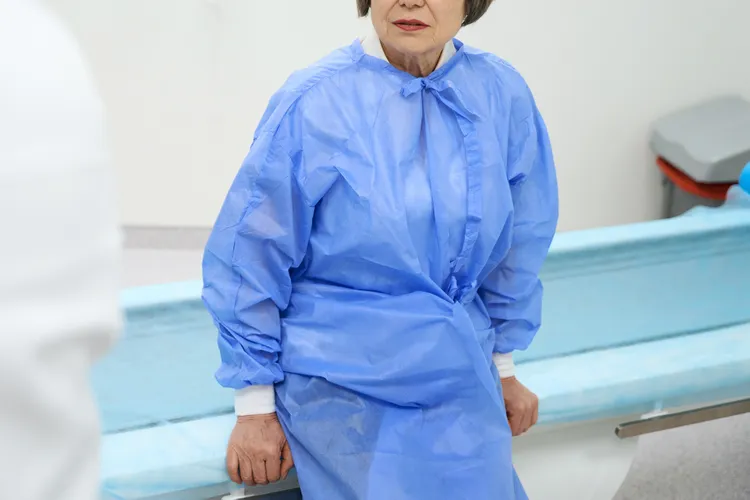
:max_bytes(150000):strip_icc():focal(1204x276:1206x278):format(webp)/Doctor-attending-to-a-patient-013026-1e438fb58ad14afeb5ea9c2abc232b4d.jpg)
The organization also notes that risks can include “bleeding, hematoma and infection,” along with what it describes as the most common complication: over-resection. The National Institutes of Health (NIH) defines over-resection as when “too much bone, cartilage or tissue [is] removed.”
Smith told The Independent that a doctor has since discussed reconstruction surgery with her. The approach, she said, would use techniques similar to those used for women who have experienced female genital mutilation (FGM), which the World Health Organization (WHO) describes as “procedures that involve partial or total removal of the external female genitalia, or other injury to the female female genital organs for non-medical reasons.”