
A federal judge on Friday ordered new limits on what immigration agents can do during a sweeping operation in Minnesota, ruling that officers involved in the effort can’t use certain crowd-control measures against peaceful protesters or arrest them simply for protesting.
The decision comes as anger has grown over a fatal shooting tied to the operation, reports of US citizens being detained, and complaints from residents who say they’ve been asked to show documents during encounters with federal officers.
The ruling also lands as CNN reported that the Department of Justice is investigating Minnesota Gov. Tim Walz and Minneapolis Mayor Jacob Frey for possible obstruction of federal law enforcement, according to sources familiar with the matter. The reported probe raises the prospect of criminal consequences for the two Democratic leaders, both of whom have sharply criticized the surge of federal activity that began last month.
Despite frigid temperatures, protests continued in Minneapolis on Friday and into the night. Minnesota Department of Public Safety Commissioner Bob Jacobson urged people planning to demonstrate this weekend to stay safe and follow the law.
Demonstrations intensified last week after Renee Good, a 37-year-old mother of three, was fatally shot in her car by an ICE agent. Tensions rose again a week later when another agent shot and injured a Venezuelan man accused by the Department of Homeland Security of “violently” resisting arrest.
Judge’s order shields peaceful protesters
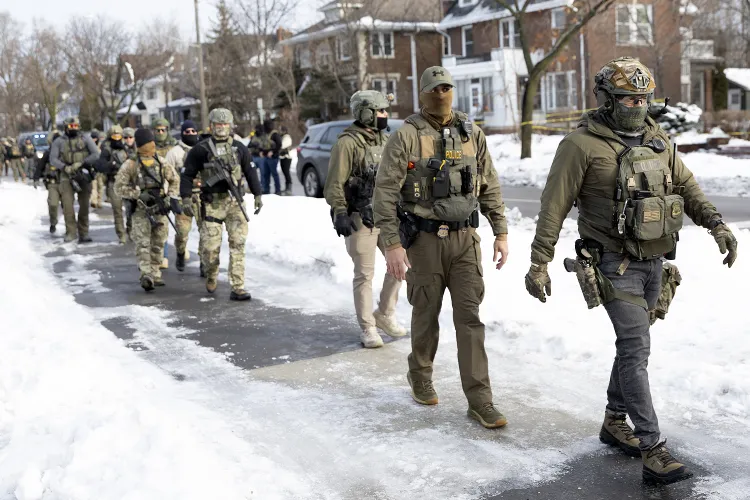
In a preliminary injunction issued Friday, US District Judge Katherine Menendez said federal agents participating in the Trump administration’s Operation Metro Surge in Minnesota may not arrest, retaliate against, or otherwise target people engaged in peaceful protest. The judge also barred agents from using “pepper-spray or similar nonlethal munitions and crowd dispersal tools” against peaceful demonstrators.
Menendez further ruled that agents cannot stop and detain drivers without “reasonable articulable suspicion” that the drivers are forcibly obstructing or interfering with federal operations. She noted that “the act of safely following” officers “at an appropriate distance” does not, on its own, create reasonable suspicion to justify a traffic stop.
The order applies only in Minnesota and only to federal agents involved in the current operation. It does not affect other federal officers carrying out routine duties elsewhere.
In response, the Department of Homeland Security said it is “taking appropriate and constitutional measures to uphold the rule of law and protect our officers and the public from dangerous rioters.” Assistant DHS Secretary Tricia McLaughlin said agents follow training and use “the minimum amount of force necessary to protect themselves, the public, and federal property.”
The injunction was sought by activists who filed a lawsuit last month alleging the federal government violated their constitutional rights. That case is separate from another lawsuit filed Monday by Minnesota and the Twin Cities, which asks a court to halt what they describe as a “federal invasion” tied to Operation Metro Surge.
What else is happening
Walz and Frey respond: Neither the governor nor the mayor confirmed the reported DOJ investigation, but both accused the Trump administration of using investigations to intimidate political opponents. Several Democratic governors and members of Congress issued statements describing the reported probe as an abuse of power.
Outcry over enforcement tactics: Democratic members of Congress held a field hearing at Minnesota’s state capitol on Friday to highlight alleged abuses during the crackdown. At the hearing, lawmakers and residents said American citizens have been tackled or detained because of their ethnicities. A DHS spokesperson said federal agents do not use racial profiling to make arrests.
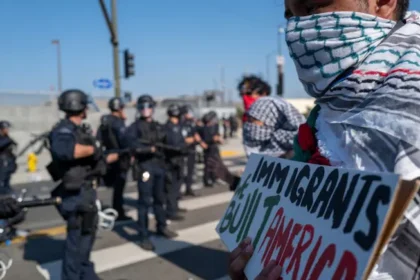
Protests continue: Protesters again gathered Friday outside Minneapolis’ Bishop Henry Whipple Federal Building, which has served as a staging site for immigration operations. Federal officers in tactical gear pushed a group of protesters away from the street, and at least one person appeared to be detained after multiple agents responded. CNN said it reached out to DHS for details.
Trump on the Insurrection Act: The president said Friday he is willing to use the Insurrection Act to send US troops into Minnesota but added, “I don’t think there’s any reason right now to use it.” He has repeatedly threatened to invoke the centuries-old law if state and local leaders do not quell unrest.
Federal officials in Minneapolis: FBI Director Kash Patel and Deputy Attorney General Todd Blanche visited Minneapolis on Friday amid ongoing tensions between immigration officers and activists and an escalating dispute between local leaders and Trump administration officials over federal tactics.
Children hospitalized after tear gas: Two children, including an infant, were taken to the hospital Wednesday night after federal agents deployed tear gas, the City of Minneapolis said. Minnesota Attorney General Keith Ellison told CNN’s Jake Tapper that a family driving children home from an athletic event was “caught in the middle of” a protest when tear gas was fired near their vehicle. The city said a 6-month-old infant experienced breathing difficulties and was later reported as stable but in serious condition.