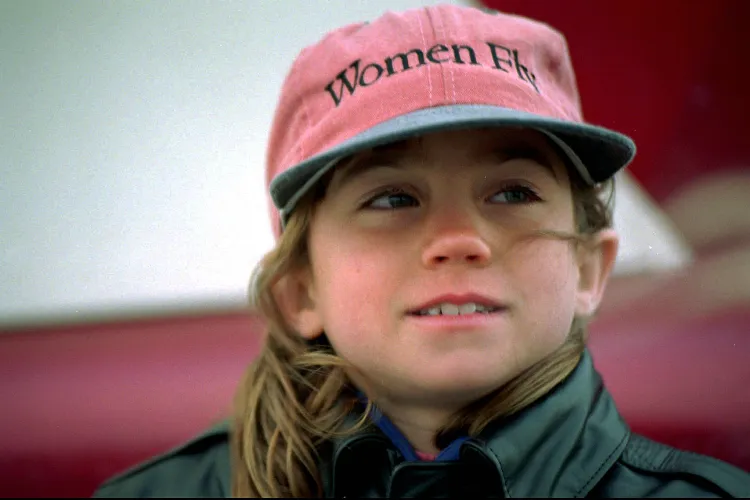

Three decades after the Cessna 177B plummeted into a residential street in Cheyenne, the death of 7-year-old Jessica Dubroff remains a cautionary milestone in American aviation and media ethics. What began as a quest for a world record ended in a triple fatality that forced a national reckoning over parental judgment and the pressures of the 24-hour news cycle.
On April 11, 1996, Jessica Dubroff, her father Lloyd Dubroff, and flight instructor Joe Reid were killed instantly when their aircraft stalled four minutes after takeoff. The trio was attempting a cross-country flight from California to Massachusetts to establish Jessica as the youngest person to fly across the United States.
The National Transportation Safety Board (NTSB) later determined the “pilot in command,” Joe Reid, attempted a takeoff in deteriorating weather conditions including sleet, rain, and heavy winds. Investigative findings revealed the aircraft was overweight and struggling with high density altitude.
The NTSB concluded that a primary contributing factor was the “desire to adhere to an overly ambitious itinerary, in part, because of media commitments.”
The crash ignited an immediate firestorm regarding “stage parents” and the commercialization of childhood achievements. While the media initially championed Jessica as a prodigy, the narrative shifted toward culpability following the accident.
:max_bytes(150000):strip_icc():focal(761x0:763x2):format(webp)/Jessica-Dubroff-Lloyd-Dubroff5-1996-033126-8cca781bd07842148338103b13e15f39.jpg)
“I’ll never forget the cover of Time was a picture of Jessica and the words ‘Who Killed Jessica?’” recalls Dave Dubroff, Jessica’s half-brother.
Investigators highlighted that Jessica, labeled a “pilot trainee,” had only 33 hours of flight time and lacked an FAA medical certificate. Despite the public perception of her being at the controls, the NTSB confirmed Reid was handling the aircraft at the moment of impact.
In the immediate aftermath of the tragedy, the Federal Aviation Administration (FAA) faced intense pressure to reform “child pilot” regulations. Congress eventually passed the Federal Aviation Reauthorization Act of 1996, which prohibited unlicensed individuals from operating aircraft for the purpose of setting records or seeking media attention.
:max_bytes(150000):strip_icc():focal(449x0:451x2):format(webp)/Lloyd-Dubroff7-033126-0fd60c53f231483c871416d231606bca.jpg)
For the families left behind, the passage of time has shifted the focus from blame to remembrance. Chris Reid, the pilot’s son, acknowledges the fatal tactical errors made that morning. “He made a bad decision,” Reid says. “There’s nothing to refute.”
:max_bytes(150000):strip_icc():focal(749x0:751x2):format(webp)/Jessica-Dubroff2-1996-033126-7a240b44b02b4c69a7427b90756d2f9a.jpg)
Dave Dubroff, now 66, has transitioned from the “hard anniversaries” of the first two decades to a place of peace. He remembers his father Lloyd as a man who simply wanted to support his daughter’s passion.
“They were a wonderful father and daughter who set out on the journey of their lives,” Dubroff says. “And unfortunately, there was an accident.”