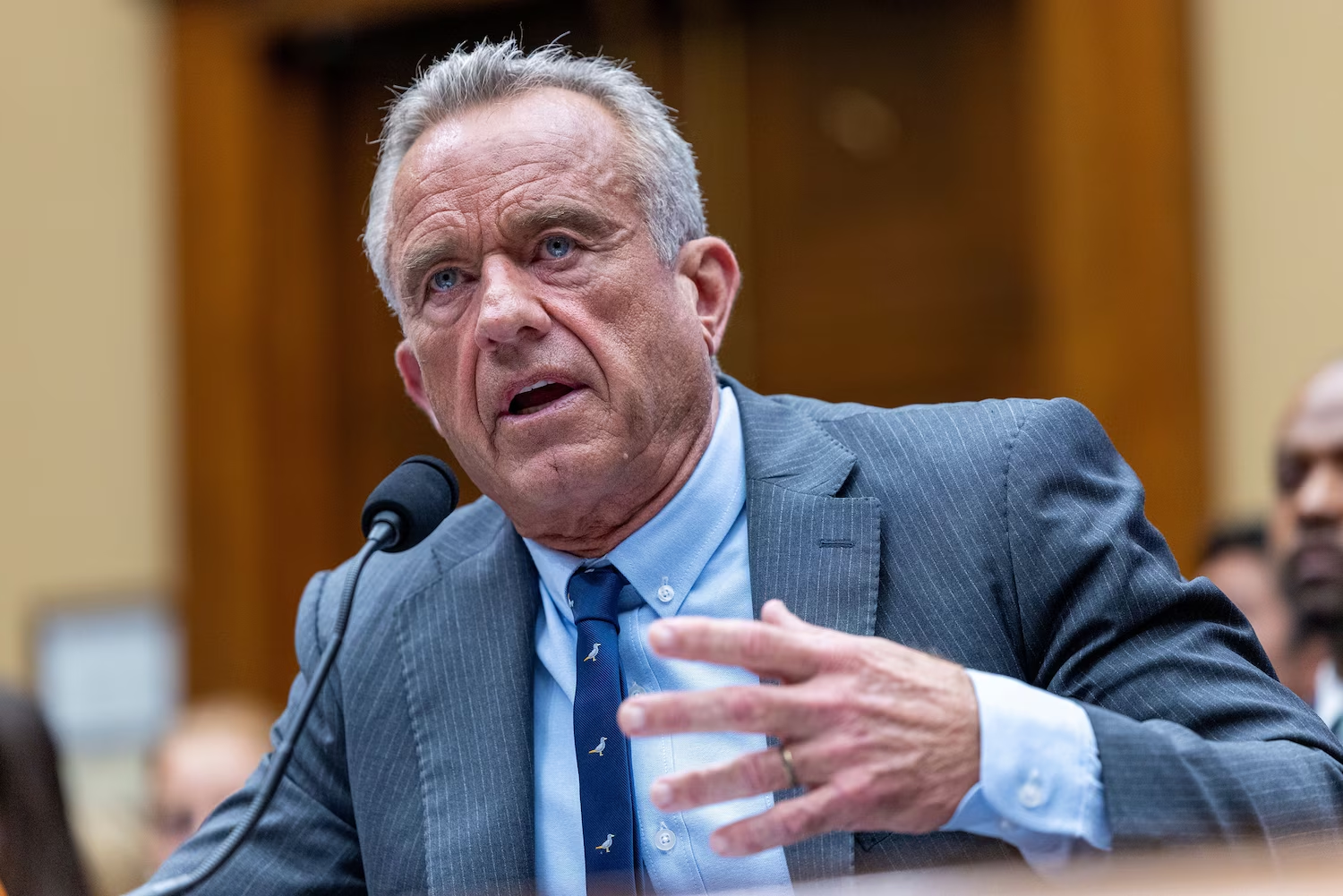

Washington, D.C. — In a move that has sparked intense debate, the U.S. Department of Health and Human Services (HHS) has reinstated the Task Force on Safer Childhood Vaccines, a panel originally established in 1986 and disbanded in 1998. The revival follows a lawsuit filed by Children’s Health Defense, an anti-vaccine organization founded by HHS Secretary Robert F. Kennedy Jr., alleging the agency’s failure to establish the task force violated federal law.
A Victory for Vaccine Safety Advocates
Supporters of the task force argue that its reinstatement is a crucial step toward enhancing vaccine safety and addressing public concerns. The panel, led by National Institutes of Health (NIH) Director Jay Bhattacharya, aims to develop vaccines with fewer and less severe adverse reactions, improve safety surveillance systems, and support vaccine-related research.
“This task force will provide an opportunity to scrutinize and improve the safety of childhood vaccines, ensuring that public health policies are based on the best available science,” said Bhattacharya in a statement. “Our goal is to foster public trust in vaccines through transparency and rigorous evaluation.”
Critics Warn of Undermining Public Health
However, many public health experts express concern that the task force could undermine decades of scientific consensus on vaccine safety. Critics fear that the panel may be populated with individuals lacking scientific credibility or holding strong anti-vaccine biases, as occurred earlier this year when Kennedy replaced a vaccine advisory panel with vaccine-skeptical figures.
“The revival of this task force could erode trust in vaccines and public health institutions,” warned Dr. Walter Orenstein, a former director of the CDC’s immunization program. “It’s essential that any review of vaccine safety is conducted by experts committed to evidence-based science.”
Political Implications and Public Sentiment
The reinstatement of the task force also carries significant political implications. Kennedy’s leadership at HHS has already led to several controversial decisions, including removing all 17 members of the CDC’s Advisory Committee on Immunization Practices and ending recommended COVID-19 vaccinations for healthy children and pregnant women.
These actions have intensified the debate over vaccine policy in the United States, with some viewing them as a necessary correction to perceived overreach, while others see them as a dangerous departure from established public health practices.
A Divisive Issue with Deep-Rooted Emotions
The issue of vaccine safety is deeply emotional for many families, particularly those who believe their children have been harmed by vaccines. While extensive scientific research has found no credible link between vaccines and autism, the perception of risk remains a powerful force in public opinion.
For some parents, the task force represents a long-overdue acknowledgment of their concerns. “Finally, someone is listening to us,” said one mother whose child was diagnosed with autism shortly after receiving vaccinations. “We need more research into vaccine safety.”
For others, the task force is a troubling signal that the government is retreating from its commitment to evidence-based medicine. “This is a step backward,” said a pediatrician who requested anonymity. “We can’t afford to let misinformation guide our health policies.”
Looking Ahead
As the task force begins its work, all eyes will be on its composition and the scientific rigor of its findings. The first report is expected within two years, with biennial updates thereafter.
In the meantime, the debate over vaccine safety and public health policy is likely to intensify, reflecting broader divisions in American society over science, trust, and the role of government in personal health decisions.