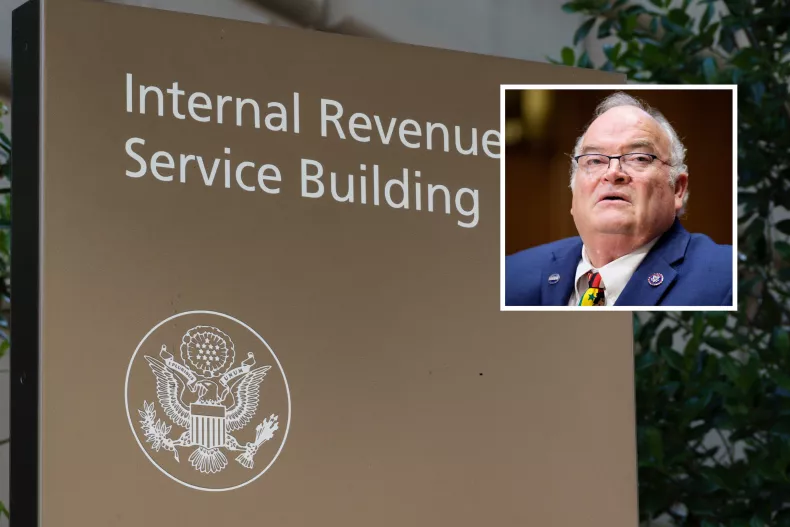

Internal Revenue Service (IRS) officials and the White House clashed over a request to use confidential tax records in order to locate suspected undocumented immigrants, ultimately leading President Donald Trump to dismiss IRS Commissioner Billy Long, according to a report by The Washington Post on Saturday.
Newsweek reached out to the White House and the U.S. Treasury for comment outside of normal business hours on Saturday afternoon.
Why It Matters
The IRS has been under strain following major staff reductions through the administration’s Department of Government Efficiency (DOGE). Experts have warned these cuts could hinder the agency’s ability to perform its core duties, such as processing returns and issuing refunds.
The push for aggressive restructuring, driven by Trump and Elon Musk—who led DOGE until his departure from the White House in May—has drawn sharp criticism for its sweeping approach to downsizing federal agencies.
Long’s removal comes less than two months after he was confirmed to lead the IRS. According to the Associated Press, he is now the shortest-tenured Senate-confirmed commissioner since the position was created in 1862.
What To Know
The Post, citing two people familiar with the matter, reported that Long’s dismissal followed disputes over how much data the IRS would provide for immigration enforcement. An earlier arrangement to share limited data yielded far fewer confirmed matches than the White House had hoped.
The Trump administration has previously pushed to access confidential taxpayer information in its broader immigration crackdown. In April, former IRS Commissioner Melanie Krause resigned after refusing to allow enforcement agencies access to taxpayer records. Shortly afterward, a federal judge declined to stop the IRS from sharing certain data with Immigration and Customs Enforcement (ICE).
Under the April deal, ICE was allowed to submit names and addresses of suspected undocumented immigrants, which the IRS would then cross-check against tax filings. Typically, such information is legally protected, with severe penalties for improper disclosure.
According to the Post, the Department of Homeland Security (DHS) recently asked the IRS to track about 40,000 immigrants by cross-referencing addresses with taxpayer records. The IRS verified only about 3 percent of those names, mostly individuals with taxpayer identification numbers. The White House viewed this as insufficient and sought broader access, including information on whether individuals had claimed the income tax credit.
The IRS refused, citing taxpayer privacy rights. Long had publicly stated he would not provide information beyond the limits of the original agreement.
President Trump responded by removing Long on Friday, appointing him ambassador to Iceland, and naming Treasury Secretary Scott Bessent as acting commissioner. This marks the fifth leadership change at the IRS since Trump returned to office in January.
What People Are Saying
White House spokeswoman Abigail Jackson told the Post:
“The Trump administration is working in lockstep to eliminate information silos and to prevent illegal aliens from taking advantage of benefits meant for hardworking American taxpayers. Any absurd assertion other than everyone being aligned on the mission is simply false and totally fake news.”
On X, former Commissioner Billy Long wrote Friday:
“It is a honor to serve my friend President Trump and I am excited to take on my new role as the ambassador to Iceland. I am thrilled to answer his call to service and deeply committed to advancing his bold agenda. Exciting times ahead!”
What Happens Next
Bessent will serve as acting commissioner while the administration weighs a permanent replacement. In the meantime, the IRS faces ongoing challenges tied to staffing cuts and shifting enforcement priorities.