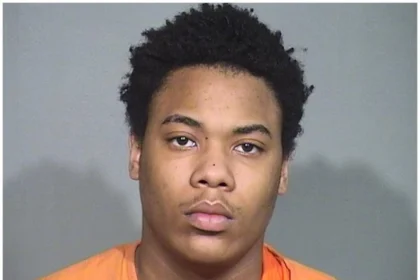

A Maryland woman has been sentenced to more than eight years in prison for attempting to assassinate U.S. Supreme Court Justice Brett Kavanaugh.
On Friday, Oct. 3, U.S. District Judge Deborah Boardman sentenced Sophie Roske, 29, to 97 months — eight years and one month — in prison for the June 2022 attempted murder of Justice Kavanaugh, 60, according to NBC News, CBS News, and CNN.
Prosecutors had requested a 30-year prison term, and the Justice Department plans to appeal the judge’s decision. In a statement, Attorney General Pam Bondi called the sentence “woefully insufficient,” adding that it “does not reflect the horrific facts of this case.”
NBC News reported that Judge Boardman said Roske “has taken full responsibility for her actions.”
Roske was 26 when she was arrested near Kavanaugh’s Maryland home. According to CNN, she contacted police before carrying out her plan by calling 911, telling an operator she needed psychiatric help and intended to harm both Kavanaugh and herself.
:max_bytes(150000):strip_icc():focal(999x0:1001x2):format(webp)/Brett-Kavanaugh-FBI-2000-3a415622f7d040bda28bbc6250e4a603.jpg)
“I sincerely apologize to the justice and his family for the considerable distress I have put them through,” Roske said in court on Friday, addressing both families. She also apologized for “contributing to the fear that judges feel while doing their job,” according to CBS News.
Calling her actions “selfish and misguided,” Roske told the court, “I have been portrayed as a monster, and this tragic mistake I have made will follow me the rest of my life.” She added that she should have recognized how “poor” her mental health was at the time.
According to NBC News, Coreen Mao, the attorney representing the Department of Justice, argued that Roske’s actions were premeditated, noting that she purchased weapons on nine different occasions and conducted online searches about serial killers and mass shootings. “The primary mission was assassination, not suicide,” Mao said.
Roske’s defense attorneys stated that she had a long history of mental health struggles and had voluntarily admitted herself to treatment facilities multiple times, CNN reported.
“Deeply depressed and acutely suicidal, she reasoned that she could give her life some meaning if she were able to stop the Supreme Court from overturning Roe v. Wade,” her lawyers wrote in court filings, “a decision she felt certain would result in pain and suffering to others.”
Roske was charged under her legal name, Nicholas J. Roske. Her attorneys said in September that she was transitioning. According to The New York Times, Judge Boardman noted that Roske received a reduced sentence due in part to an executive order from former President Donald Trump requiring that transgender women be held in male-only federal prisons. Boardman said this policy could interfere with Roske’s transition-related medical care and added that Roske’s sentence includes supervised release for the remainder of her life.