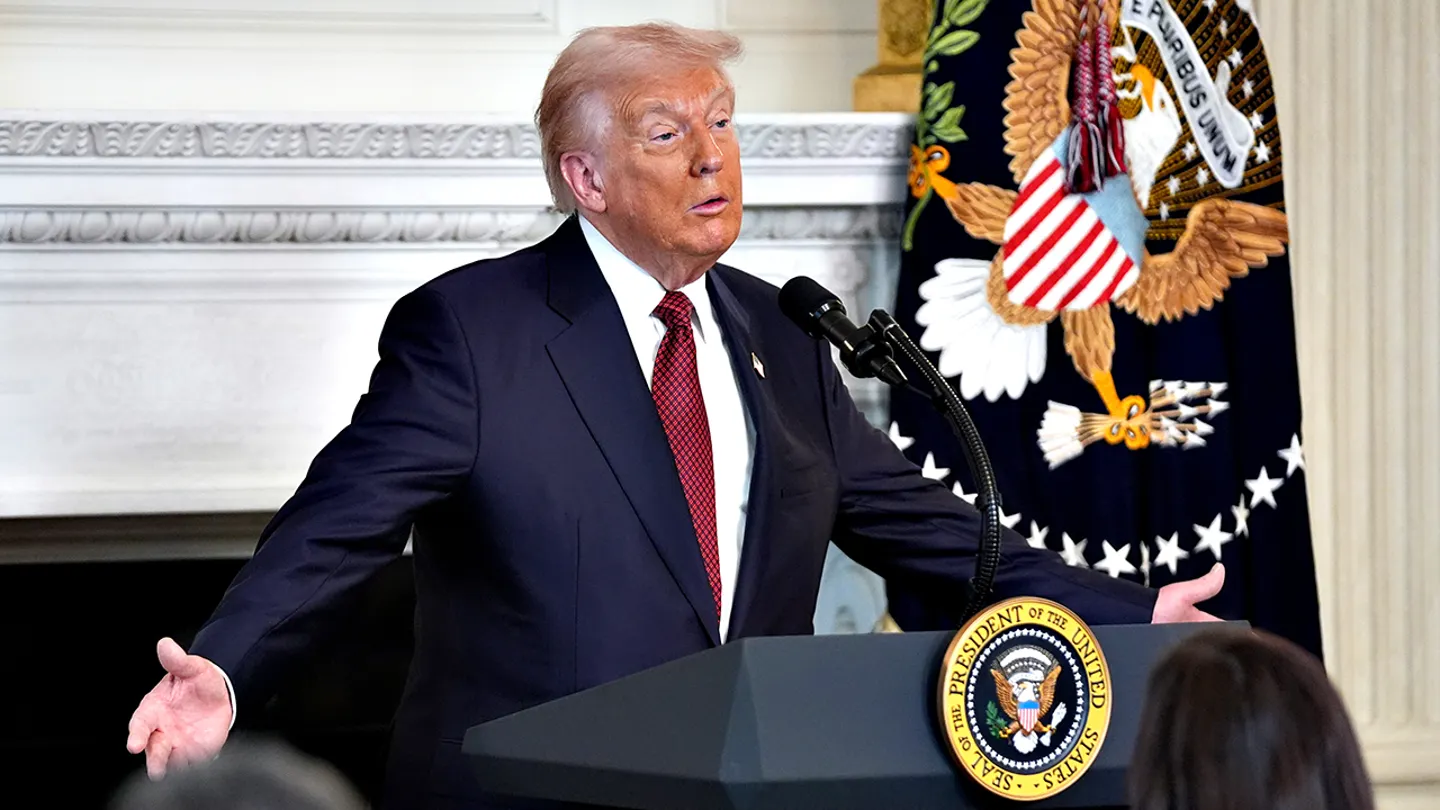

The 42nd week of President Donald Trump’s second administration delivered a fast-moving mix of governing, controversy, and political signaling.
Over the past several days, Trump signed legislation to reopen the federal government after a record-long shutdown, defended the use of H-1B visas for foreign hires despite backlash from parts of his base, said he would direct the Justice Department to examine Jeffrey Epstein’s connections to prominent Americans, and issued pardons to dozens of people tied to efforts to challenge the 2020 election results. Here’s what unfolded.
Government shutdown ends
On Wednesday night, Trump signed a funding bill that Congress passed earlier in the week, reopening the government as the fallout from the shutdown intensified. Federal workers had missed paychecks, and airline disruptions were growing amid staffing shortages in air traffic control.
The measure keeps funding at fiscal year 2025 levels through Jan. 30, giving lawmakers time to negotiate a longer-term appropriations package for fiscal year 2026.
It also extends support for the Supplemental Nutrition Assistance Program (SNAP) through September. More than 42 million Americans rely on SNAP to buy groceries through debit-style benefits.
In addition, the bill reverses layoffs initiated by the Trump administration in October and provides back pay to workers affected by the shutdown.
Foreign worker visa criticism
Trump sat for a two-part interview with Fox News host Laura Ingraham that aired Monday and Tuesday. In it, he argued that H-1B visas are necessary to bring specialized talent into the U.S. When Ingraham suggested domestic workers could fill those roles, Trump pushed back.
“You can’t take people off an unemployment line and say, ‘I’m gonna put you into a factory where we’re gonna make missiles,’” he said, framing the visas as essential for certain technical industries.
H-1B visas allow U.S. companies to employ highly skilled foreign workers for up to six years. The program has long divided Trump’s coalition: supporters call it vital for competitiveness, while opponents argue it displaces American workers.
His comments drew sharp criticism from some MAGA-aligned lawmakers, including Rep. Marjorie Taylor Greene of Georgia, who said she was “America First and America Only,” and condemned what she described as replacing Americans with foreign labor.
The White House responded by pointing to a policy announced in September that would impose a $100,000 annual fee on companies seeking H-1B visas. Officials also highlighted a Labor Department initiative, Project Firewall, aimed at preventing abuse of the visa process.
In the same interview, Trump reiterated support for allowing up to 600,000 Chinese students to study in the U.S., arguing American universities depend on their tuition revenue. Former U.N. ambassador Nikki Haley criticized that position on X, calling it a major strategic risk.
More Epstein documents
On Friday, Trump said he would instruct the Justice Department and FBI to evaluate financier and convicted sex offender Jeffrey Epstein’s ties to other U.S. figures, including former President Bill Clinton and former Treasury Secretary Larry Summers.
His announcement followed the release of thousands of Epstein-related documents by Democrats and Republicans on the House Oversight and Government Reform Committee. Some emails reportedly include Epstein mentioning Trump, though the documents do not accuse Trump of wrongdoing.
Trump dismissed the renewed attention as politically motivated, writing on Truth Social that it was a “Russia, Russia, Russia Scam,” and accusing Democrats of trying to shift focus away from others he claimed spent time with Epstein.
Clinton has denied ever visiting Epstein’s island and wrote in his 2024 memoir Citizen that he regretted knowing him. Summers’ office did not respond to a request for comment.
Presidential pardons
Late Sunday, the Trump administration announced that the president had issued pardons for more than 70 people accused of trying to overturn the 2020 election results.
Because presidential pardons apply only to federal charges—and many of those individuals face state cases instead—the move is widely seen as symbolic rather than legally decisive.
Among those pardoned were Rudy Giuliani, who continues to face state-level election interference charges in Arizona, along with former White House chief of staff Mark Meadows and former Trump lawyer Sidney Powell.
Taken together, the week underscored a familiar pattern in Trump’s second term: major policy actions tightly interwoven with culture-war disputes and messages aimed directly at his political base.