
The U.S. Coast Guard has updated the wording of a new policy on hate symbols—such as swastikas and nooses—after criticism erupted over language that appeared to soften how those symbols are treated.
Earlier this month, the service introduced a draft that described swastikas, nooses, and similar imagery as “potentially divisive,” according to reporting by The Washington Post. That phrasing marked a shift from a 2019 policy that labeled these symbols as “widely identified with oppression or hatred” and treated their display as “a potential hate incident.”
Following public and political backlash, the Coast Guard issued revised guidance on Thursday. The updated policy states that “divisive or hate symbols and flags are prohibited,” explicitly naming “a noose, a swastika, and any symbols or flags co-opted or adopted by hate-based groups.”
Why it matters
The rapid reversal drew national attention amid rising concern about antisemitism and hate-related incidents in both the military and society at large.
The controversy also comes in the wake of leadership changes at the service. Admiral Linda Fagan, the former acting commandant, was dismissed on President Donald Trump’s first day in office, with administration officials citing, among other reasons, what they described as an “excessive focus” on diversity and inclusion.
What to know
The Associated Press reported that the initial draft would have categorized incidents involving these symbols as harassment complaints instead of hate incidents. The proposal also stated that restrictions would not extend to private spaces such as family housing.
The draft triggered pushback from several officials, including Democratic Senator Jacky Rosen of Nevada. She warned that the revision “rolls back important protections against bigotry” and could lead to “horrifically hateful symbols like swastikas and nooses” being allowed.
“At a time when antisemitism is rising in the United States and around the world, relaxing policies aimed at fighting hate crimes not only sends the wrong message to the men and women of our Coast Guard, but it puts their safety at risk,” Rosen said.
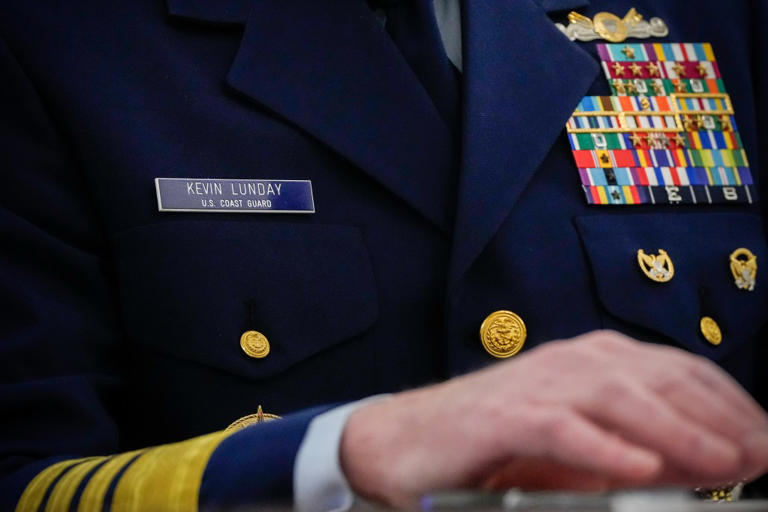
Acting Commandant Admiral Kevin Lunday rejected claims that the service was easing its stance. He called it “categorically false” to say the rules had been weakened and emphasized that enforcement remains strict.
“Any display, use or promotion of such symbols, as always, will be thoroughly investigated and severely punished,” Lunday said.
In the revised memo, the Coast Guard’s prohibition section now reads: “Divisive or hate symbols and flags are prohibited. These symbols and flags include, but are not limited to, the following: a noose, a swastika, and any symbols or flags co-opted or adopted by hate-based groups as representations of supremacy, racial or religious intolerance, antisemitism, or any other improper bias.”
What people are saying
Lunday added that the Coast Guard “does not tolerate the display of divisive or hate symbols and flags,” noting that such imagery “reflect[s] hateful and prohibited conduct that undermines unit cohesion.”
Cornell University law professor Menachem Rosensaft, a Jewish community leader, said that treating the swastika as anything less than a hate symbol would be dangerously dismissive. He described it as “the ultimate symbol of virulent hate and bigotry,” arguing that downgrading its status would be akin to calling Ku Klux Klan imagery merely “potentially divisive.”
What happens next
The Coast Guard says it will keep monitoring incidents involving hate-based or divisive symbolism and will revisit the policy as needed.