
Powell told lawmakers the Fed must assess Trump’s tariffs’ effects before more rate cuts and ensure temporary price hikes don’t lead to lasting inflation.
President Donald Trump renewed his criticism of Federal Reserve Chair Jerome Powell on Wednesday, saying he has a shortlist of candidates ready to replace him once Powell’s term ends in May 2026.
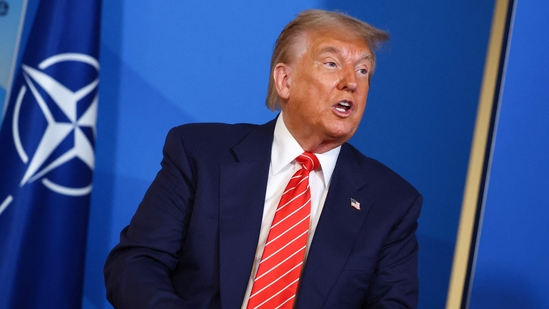
“I know within three or four people who I’m going to pick,” Trump told reporters after the NATO summit, referring to the future leadership of the central bank.
Breaking with tradition, Trump has repeatedly attacked Powell—whom he initially appointed—over interest rate policies. Unlike past presidents who typically avoid commenting on the Federal Reserve to preserve its independence, Trump has openly pressured the Fed to cut interest rates.
“He goes out pretty soon, fortunately,” Trump said of Powell. “I think he’s terrible… He’s average mentally and has a low IQ for what he does.”
Trump vs Powell: A Long-Running Feud
Just hours before Powell’s testimony before Congress on Tuesday, Trump posted on Truth Social that interest rates should be “at least two to three points lower.”
In his testimony, Powell responded indirectly, saying the Fed was monitoring economic conditions carefully. He emphasized the importance of understanding how Trump’s tariffs could impact inflation before considering further rate cuts.
“We have to be sure that a one-time price increase doesn’t turn into an ongoing inflation problem,” Powell said.
He also noted that rate cuts could happen sooner than expected if inflation softens or the labor market weakens significantly.
Currently, the Fed’s benchmark lending rate sits between 4.25% and 4.50%, unchanged since the last cut in December.
Powell Responds to Trump’s Pressure
When asked about Trump’s frequent criticism, Powell stood firm:
“We always do what we think is the right thing to do, and we live with the consequences.”
The ongoing tension underscores a deep divide between Trump’s push for looser monetary policy and the Fed’s cautious approach as it weighs inflation risks against economic growth.
With Powell’s term set to expire next year, the Fed’s future leadership—and its direction on interest rates—could become a major issue heading into the 2026 presidential term.