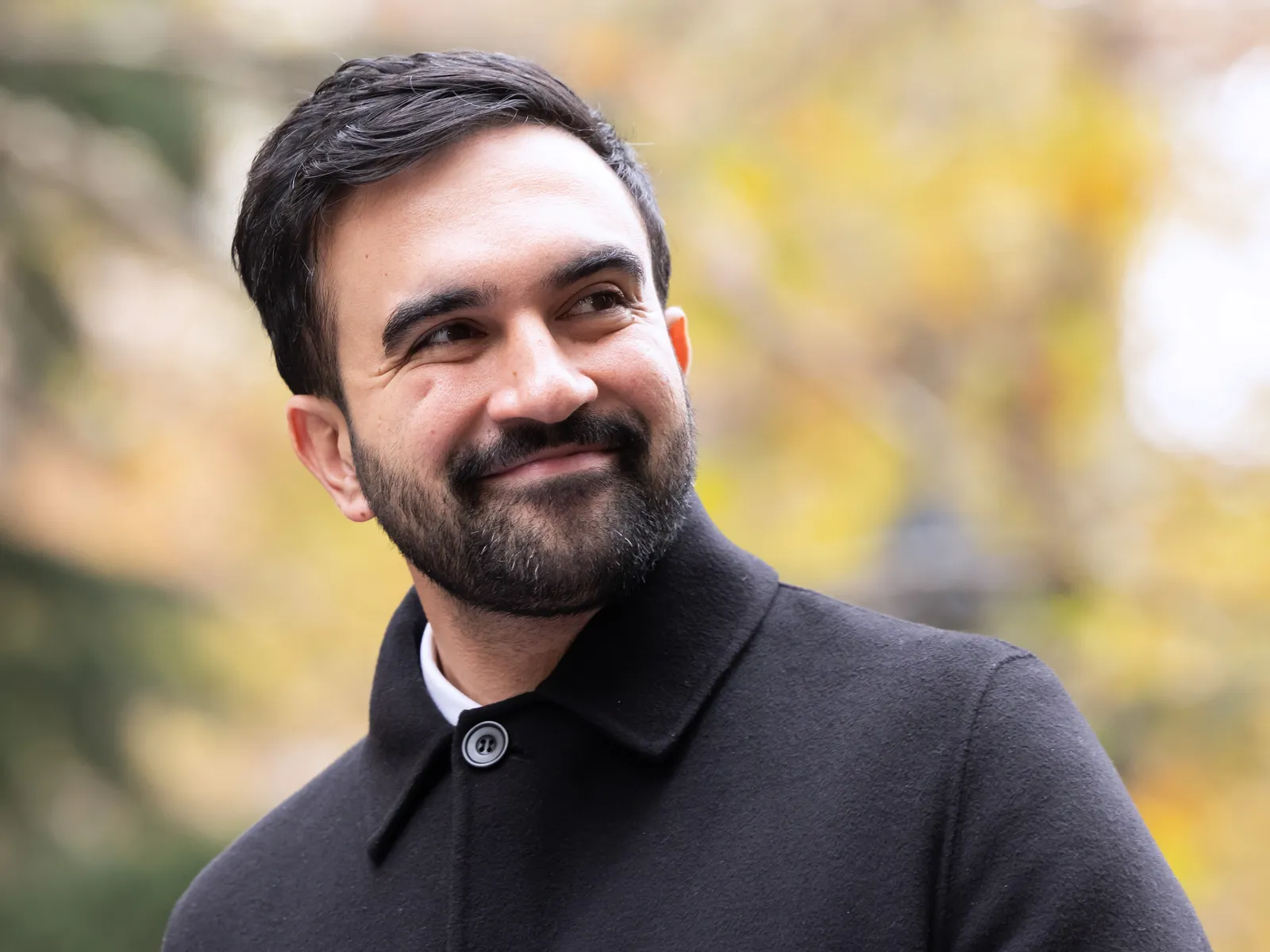

A month after Zohran Mamdani’s surprise win in New York City’s mayoral election, the predicted stampede of wealthy residents out of the city—an idea heavily promoted by some landlords and out-of-state real estate boosters—still hasn’t shown up in the numbers.
If anything, the opposite appears to be happening at the top end of the market. Luxury home deals in New York City are rising, not collapsing.
New York luxury contracts jumped in November
Fresh figures suggest the city’s highest-priced properties are moving faster than they were just weeks earlier. Olshan Realty reported that sales of luxury homes priced above $4 million climbed 31 percent in November compared with October, reaching 151 properties.
Douglas Elliman saw a similar pattern, reporting 176 signed contracts for properties priced at $4 million or more in November—up 25 percent from the prior month.
To some market watchers, the fear-driven narrative never made much sense.
“This notion that people are going to flee New York because they don’t like the mayor is pretty ridiculous,” Donna Olshan, president and founder of Olshan Realty, told Newsweek. She allowed that a small slice of older or retired residents already considering a move—especially for tax reasons—might feel nudged, but said most people are not uprooting their lives over politics.
“I think a lot of the reaction of people is were very overblown. They got panicked. But New York is New York,” Olshan said.
Corcoran Group broker Noble Black echoed that skepticism, telling Fox Business on Monday that there has been no visible “Mamdani effect” in the citywide market.
A brief pause—and a quick return
Black said he could recall two clients who temporarily halted their New York City search after Mamdani’s nomination, based on advice from financial advisers to “wait and see.” But the pause didn’t last.
“I remember thinking then, This is kind of ridiculous,” he told Newsweek. “And sure enough, even before the mayoral election, both of those buyers restarted their search. They came back into the market.”
In his view, the moment looked less like a meaningful shift and more like a headline-driven scare that wore off.
What’s really pushing luxury demand
Several people interviewed pointed to a simpler explanation for the higher-end strength: money is flowing, and high earners are confident.
Olshan said Manhattan’s luxury market has been doing “very well,” largely because the stock market has remained strong. She described the surge in deals as closely tied to Wall Street performance.
Jonathan Miller, president of Miller Samuel, told Newsweek that luxury sales are rising because top-end incomes have remained elevated. “Wall Street had record compensation in 2024,” he said, adding that high-end housing is outperforming the broader market in a way that matches the compensation trend.
Miller dismissed the idea that the current luxury momentum is some election-related phenomenon, saying the conditions driving it were in place well before Mamdani became widely known.
“This is all so dumb. It’s based on nothing,” Miller said, referring to the supposed “Mamdani effect.”
He also said that, despite chatter in Florida that Mamdani’s win would push Manhattan wealth south, he hasn’t seen that story reflected in actual Florida market data.
“This is ‘not in the data. There’s no uptick. It’s just all very odd,’” he said, describing what he heard from brokers and consumers who had hoped for a surge.
Rents hit new highs, too
It’s not just sales. Manhattan rents also reached new highs in November—despite Mamdani campaigning on making housing more affordable.
Data from Miller Samuel and Douglas Elliman showed new Manhattan leases signing at a median of $4,750 in November, up 13 percent year over year and 3.3 percent from October.
Douglas Elliman also reported that the luxury tier is pulling the rental market upward: the top 10 percent of Manhattan rentals saw the biggest gains, rising 18 percent to a median of $11,500 in November.
What happens next
The fact that a mass exit hasn’t occurred doesn’t mean Florida isn’t attracting New Yorkers at all. It may simply be happening in its usual, slower pattern—rather than as a dramatic post-election rush.
Wealthy New Yorkers have been relocating to Florida for years, drawn by warmer weather, lower costs in some areas, and a friendlier tax environment.
“Typically, the brokerage community, the real estate community, try to sell that story. ‘Come down to Miami, we are very pro-business. We have much better tax incentives.’ And that has played out in the long term,” Juan Arias, national director of U.S. Industrial Analytics at the CoStar Group, told Newsweek last month.
Arias argued that the Mamdani-centered narrative simply tried to amplify a long-running trend. “I think the rhetoric around Mamdani was trying to exploit that to a different degree,” he said.
Policy questions remain—but constraints do, too
Whether the story changes may depend on what Mamdani actually does once in office. But Arias noted there are limits to the mayor’s authority—especially on taxes.
He “doesn’t have the power to increase taxes,” Arias said, describing multiple layers of government that shape that outcome. He added that the portion the mayor can influence most directly—rent regulation—has not historically produced the kind of disruptive impact some people predict, and isn’t expected to drive dramatic rent growth.
Black said he views some of Mamdani’s proposals as potentially “problematic,” but also believes the new mayor is far from being able to enact major shifts quickly—and may soften positions once governing begins.
“Number one, I think he’s not gonna be able to do it, but I think he’s also gonna probably moderate a lot of what he tries to do,” Black said. He suggested Mamdani’s boldest statements were part of standing out during the campaign.
Even in a scenario where new policies did move forward, Black said the timeline would be slow—and people don’t typically relocate based on marginal tax changes.
“It’s not going to happen overnight,” he said. “People don’t flee the city simply because the taxes are gonna go up two percent.”
Olshan made a similar point about how rooted most households are—jobs, kids, schools, friends, and family all create friction.
“They have jobs, they have kids in school, they have families in the area, they have friends, and you just can’t decide to pick up and move on the prospect that the mayor is going to deteriorate the city,” she said.
For now, she argued, the market is delivering a clear message: buyers are still buying. And the real test won’t be rumors or predictions—it will be what happens once Mamdani starts governing.