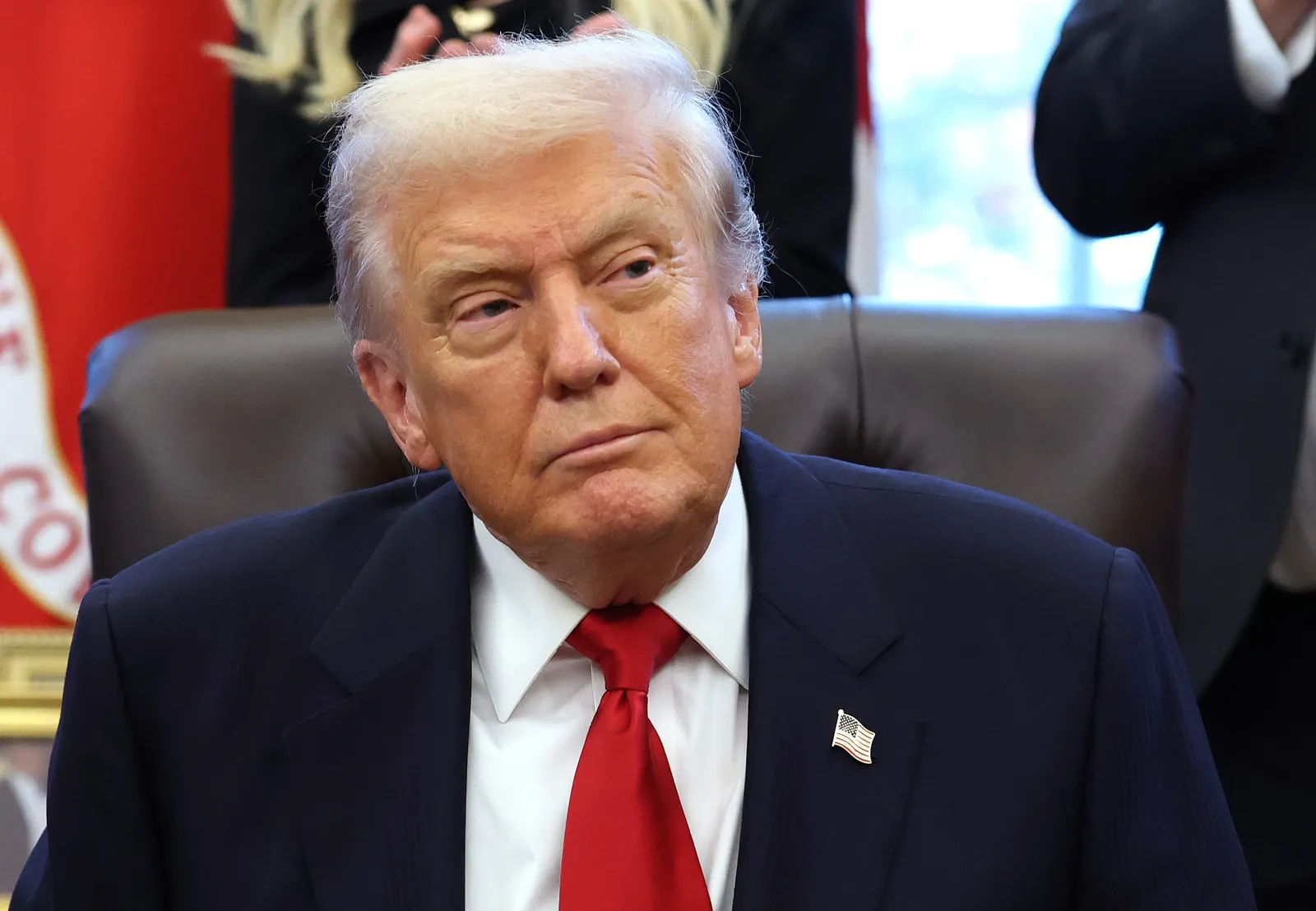

New data indicates inflation is easing in the United States, though overall prices are still rising—despite President Donald Trump’s assertion that “inflation is stopped.”
Speaking at the White House on Wednesday, Trump said his administration was “bringing those high prices down and bringing them down very fast.”
On Thursday, the Bureau of Labor Statistics (BLS) released the delayed Consumer Price Index (CPI) for November, showing a 12-month inflation rate of 2.7%. That’s down from 3.0% in September and 2.9% in August.
Core inflation—which excludes food and energy—also slowed, falling to 2.6% from 3.0% in September, the lowest core reading since March 2021.
Why It Matters
The November report came in better than analysts expected. Forecasts had projected annual inflation would rise to 3.1%, with core inflation holding steady. The report also shows inflation is lower than levels seen when Trump returned to office in January.
Still, the data reflects a slowdown in the rate of increases, not outright price declines. Inflation remains above the Federal Reserve’s long-term 2% target.
What to Know
Within the 2.7% annual inflation rate:
- The energy index rose 4.2% over the past 12 months
- The food index increased 2.6%
- Electricity prices climbed 6.9%
- Gas utility costs rose 9.1%
Some categories posted year-over-year price declines, including:
- Dairy and related products (-1.6%)
- Fresh fruit and vegetables (-0.2%)
- Eggs (-13.2%)
Other items rose sharply, with coffee and beef notably higher amid supply pressures:
- Coffee (+18.8%)
- Beef (+15.8%)
Stock futures moved higher after the report, according to CNBC, as investors weighed whether the softer data could increase the chances of a Federal Reserve rate cut in January or March.
No October figures were released due to data collection issues caused by the government shutdown. As a result, November’s report also did not include month-over-month changes.
What People Are Saying
President Trump said during his address on Wednesday:
“We’re putting America first, and we are making America great again. Very simple. We are making America great again. Tonight, after 11 months, our border is secure, inflation is stopped, wages are up, prices are down, our nation is strong, America is respected, and our country is back, stronger than ever before. We’re poised for an economic boom the likes of which the world has never seen.”
White House Press Secretary Karoline Leavitt said on X:
“Just as President Trump told Americans last night: inflation continues to fall, wages continue to rise, and America is trending towards a historic economic boom.”
White House spokesman Kush Desai said:
“Today’s expectation-beating inflation report is the latest proof that President Trump’s robust policy agenda continues to pay off. In the new year, the Trump administration will continue to focus on ending Joe Biden’s affordability crisis and restoring the working-class prosperity that Americans enjoyed during President Trump’s first term.”
Economist Kenneth Rogoff told CNN:
“I was surprised. It was a better number than anyone was expecting. Look, inflation has been very high. It stayed high. It’s not been coming down. But, you know, people were expecting it to be above 3 percent. It was well below 3 percent. I mean, I think the president will take this as good news, the investors will think that interest rates will get cut more. So, yeah, it was a positive.”
Bernard Yaros, lead economist at Oxford Economics, said:
“The latest CPI numbers are encouraging for the Federal Reserve, but Fed Chair Jerome Powell has already warned against reading too much into the latest data due to distortions from the shutdown.
“The central bank will remain most vigilant about the labor market, as a continuation of real wage growth will allow households to fully recover from the hit to their purchasing power since the pandemic.”
Matthew Ryan, head of market strategy at Ebury, said:
“On face value, fears of a tariff-induced spike in US inflation are so far proving to be almost entirely unfounded following one of the largest misses in a CPI report in recent memory. We don’t think that the Fed will be rushing to judgement just yet for two reasons: firstly, given that shutdown distortions may have artificially skewed the data and secondly, considering that we are still not close to seeing the full impact of the tariffs on consumer prices.”
Federal Reserve Chair Jerome Powell said at a press conference last week:
“We’re going to get data, but we’re going to have to look at it carefully and with a somewhat skeptical eye by the time of the January meeting, notwithstanding that we will have a lot of the December data by the time of the January. So, we expect to see a lot more, but I’m just saying that the—what we get for, for example, CPI or for the, you know, household survey, we’re gonna look—we’re going to look at that really carefully and understand that it may be distorted by very technical factors.”
What Happens Next
Economists say the report suggests inflation is gradually moving closer to the Fed’s target, which could influence upcoming rate decisions.
According to the CME FedWatch tool, expectations for a January cut rose slightly after the CPI release, though most forecasts still point to rates staying steady. Odds of a March cut—either 25 or 50 basis points—also increased and are currently around 56%.