
Request to retire — and avoid resigning in protest, which could be viewed as a political act, or picking a fight to get fired.
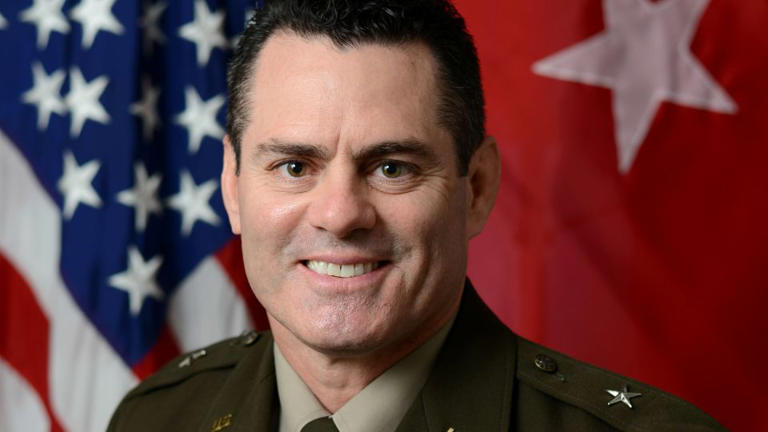
That was the previously unreported guidance Brig. Gen. Eric Widmar, the top lawyer for the Joint Chiefs of Staff, gave to Joint Chiefs Chairman Gen. Dan Caine in November, according to sources familiar with the discussion.
Caine had just watched a video in which six Democratic lawmakers publicly urged US troops to disobey illegal orders. He then asked Widmar, the sources said, for the latest guidance on how to assess whether an order is lawful — and what a commander should do if it is not.
Widmar advised that commanders should consult their legal adviser if they are uncertain, the sources said. But if they ultimately determine an order is illegal, he suggested they consider requesting retirement.
The guidance offers a clearer view into how senior military officials are approaching a question that has intensified in recent weeks, as lawmakers and legal experts have repeatedly challenged the legality of the US military’s counternarcotics operations in the Caribbean Sea and Pacific Ocean. Those concerns have included heightened scrutiny of a “double-tap” strike on September 2 that deliberately killed survivors.
Caine is not in the chain of command. Still, he is closely involved in operations — including those in SOUTHCOM — and often presents military options to the president, CNN has reported, sometimes more so than Secretary of Defense Pete Hegseth.
The Joint Staff declined to comment.
Several senior officers who reportedly raised concerns about the boat strikes — including former US Southern Command commander Adm. Alvin Holsey and Lt. Gen. Joe McGee, the former director for Strategy, Plans, and Policy on the Joint Staff — have retired early in recent months.
Widmar’s advice to Caine was intended to inform the chairman’s discussions with other senior military officials if the issue arose, the sources said. The Democrats’ video became headline news, angering Hegseth and igniting debate nationwide.
A separate official familiar with military legal advice said it is not unusual for lawyers to suggest servicemembers consider leaving the force if they believe they are being asked to do something they are personally uncomfortable with. But, the official added, such counsel is typically delivered case-by-case and tailored to the specific facts.
Other current and former US officials — including those who have served as military lawyers in the Judge Advocate General corps — warned that broadly encouraging eligible servicemembers to quietly retire, rather than raise concerns when confronting a potentially illegal order, could reinforce a culture of silence and weaken accountability.
“A commissioned officer has every right to say, ‘this is wrong,’ and shouldn’t be expected to quietly and silently walk away just because they’re given a free pass to do so,” said a former senior defense official who left the Pentagon earlier this year.
More than a dozen senior officers have reportedly been fired or retired early since Trump took office in January, an unusually high rate of turnover. In a September speech to hundreds of general and flag officers, Hegseth urged officers to “do the honorable thing and resign” if they disagreed with his vision for the department.
Legal experts emphasized, however, that disagreeing with policy direction is not the same as concluding an order is illegal.
Dan Maurer, a retired Army lieutenant colonel and former JAG lawyer, said the guidance described by CNN appears to “misunderstand what a servicemember is supposed to do in the face of an unlawful order: disobey it if confident that the order is unlawful and attempt to persuade the order-giver to stop or modify it have failed, and report it through the chain of command.”
Maurer added that “if the guidance does not explicitly advise servicemembers that they have a duty to disobey unlawful orders, the guidance is not a legitimate statement of professional military ethics and the law.”
Widmar also explained that an order may be unlawful if it is “patently illegal,” or something an ordinary person would recognize instinctively as violating domestic or international law, the sources said — with the My Lai massacre in Vietnam often cited as a clear example. But the guidance he gave, the sources said, emphasized retirement as the response when possible and did not note that servicemembers have a duty to disobey unlawful orders.
“It’s a very safe recommendation in this current political environment,” the former senior defense official said. “But that doesn’t make it the right or ethical one.”
Experts in civil-military relations have previously described retirement as a reasonable option for officers who object to a policy — while also noting that it carries its own costs.
In a September article that has circulated among the Joint Staff and other senior military leaders, Peter Feaver, a political science professor at Duke University, and Heidi Urben, a former Army intelligence officer and now associate director of Georgetown University’s security studies program, wrote that “quiet quitting,” or opting for retirement, “allows officers with professionally grounded objections to leave without posing a direct challenge to civilian control.”
At the same time, they argued that while officers should not resign in protest or manufacture conflict, they should still “speak up” and demonstrate “moral courage” when the military’s professional values are at risk — even if that means risking removal. “Complete silence can be corrosive to good order and discipline and signal to the force that the military’s professional values and norms are expendable,” they wrote.
Maurer argued that advising retirement in response to an unlawful order can also function to “keep that person silent in perpetuity,” because retirees remain subject to the Uniform Code of Military Justice, which criminalizes a wide range of conduct and speech that would be constitutionally protected for civilians.
Those constraints have come into focus as the Pentagon has launched an investigation into Sen. Mark Kelly, a retired Navy captain and one of the Democratic lawmakers shown in the video urging troops to disobey unlawful orders — an episode that, according to the sources, contributed to Caine seeking Widmar’s guidance.
As scrutiny continues over the legality of the boat strike campaign, Widmar also told Caine, the sources said, that Article II of the Constitution gives the president authority to authorize lethal force to protect the nation — unless hostilities rise to the level of a full-scale war, in which case congressional approval is required.
Whether a president’s orders are legal in the first place, Widmar advised, is ultimately a question only the Justice Department’s Office of Legal Counsel can answer, the sources said. That authority, they noted, is reinforced by a February executive order from Trump stating that the president’s and attorney general’s “opinions on questions of law are controlling” for all executive branch employees, including US troops.
The Office of Legal Counsel determined in September that it is legal for Trump to order strikes on suspected drug boats because they pose an imminent threat to the United States, CNN has reported.
Since September 2, the US military has killed at least 99 people across dozens of strikes in the Caribbean and eastern Pacific, describing those targeted as “narcoterrorists” who pose a direct threat to the United States. The Trump administration has not publicly provided evidence of narcotics on the boats struck or proof of the individuals’ affiliation with drug cartels.
Lawmakers have said Pentagon officials acknowledged in private briefings that they do not always know the identities of everyone aboard a vessel before striking it. Instead, lawmakers said, officials maintain that confirming an affiliation with a cartel or criminal organization is sufficient to target the individuals.
Some members of Congress, legal experts, and human rights groups have argued that suspected drug traffickers are civilians who should be arrested rather than summarily killed — an approach the Coast Guard used routinely, and continues to use in the eastern Pacific, when encountering suspected drug-trafficking vessels.