
My father was born in 1918 and lived a life of quiet courage. He was openly gay in the 1930s — a time when that was virtually unheard of. In my 20s, he began to share stories from his youth: bold dreams, secret romances, and heartbreaking realities. The problem? He was still married to my mother.
In 1939, at a Hollywood Hills party with other gay men, he was arrested during a police raid. The charges didn’t stick, but the experience marked him. Later, he was extorted in a sting operation in Pasadena targeting gay men. His dreams of becoming a schoolteacher and living openly with a partner were shattered.
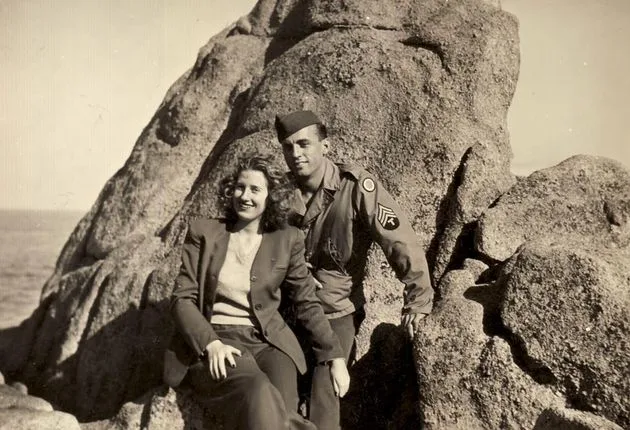
When WWII broke out, he tried to enlist in the Navy but was rejected for being gay. The Army accepted him — likely out of wartime necessity. Just before shipping out, he met my mother at a USO dance. She saw “a handsome soldier with blue eyes and white teeth,” and said, “I’ll dance with you.” That moment became their lifelong love story.
In 1942, he proposed by telegram. My mother, just 18, said yes, despite her mother’s disapproval. After the war, they had four children. I was the second. Our home was full of music, dinner parties, and art—not football games or hunting trips. My dad styled our hair, taught us to crochet, and made frozen desserts that looked like works of art.
When I was 24, I confronted him during a hike about what I assumed were affairs. That’s when he told me:
“Honey, I’m gay. I’ve always been gay.”
I was stunned. But things began to click—his sensitivity, creativity, and the way he stood out from other dads. I asked if Mom knew. She had found compromising photos in the 1950s. Hysterical, she’d called him home from work. He offered to leave, but she stopped him at the door:
“I still love you.”
So he stayed. For life.
Years later, I asked my mom if she regretted staying. She responded simply:
“Oh nooo, Laurie. I love your father.”
Though unconventional, their marriage endured with real love. Mom stood by Dad when he founded the first LGBT section at the local library and volunteered during the AIDS crisis. Their love defied norms and expectations.
The night before my mother died in 2006, I saw my father quietly walk into her room and say:
“Rusty, I’m so glad you said yes.”
To our surprise, Mom, unconscious for 24 hours, replied:
“I’d do it all over again.”
She passed away the next morning, five months short of their 65th anniversary. My dad died two years later. His last words to me were a command:
“Turn the clock back, Laurie. Turn it back.”
I didn’t understand at the time, but now I think I do. Maybe he wanted more time with my mom. Maybe he wanted another chance to live as his full self. Maybe both.
After his death, I began to share our story. At my first talk in San Francisco’s Castro District, some criticized him — called him a traitor to the gay movement or selfish for marrying my mom. Their judgment stung. For years, I wondered if they were right.
Then I saw Maestro, the film about Leonard Bernstein, and something shifted. Like Bernstein and his wife, my parents had a marriage the world couldn’t quite understand — because it wasn’t just one thing. It was love, chosen against the odds.
My father’s life wasn’t fair. Neither was my mother’s. But despite the shame, the secrets, and the sacrifice, they built a home filled with art, care, and love. And that love made me who I am.
I can’t turn back the clock. But I will always stand up for my father — and for others like him. Love isn’t always simple. But it’s still love. And that matters.