
In death, Charlie Kirk has underscored just how central he was as a unifying force within the Make America Great Again (MAGA) movement.
This weekend, conservatives from across the coalition gathered in Phoenix, Arizona, to honor the late activist at Turning Point USA’s (TPUSA) flagship event. Among the headliners was the movement’s second-in-command.
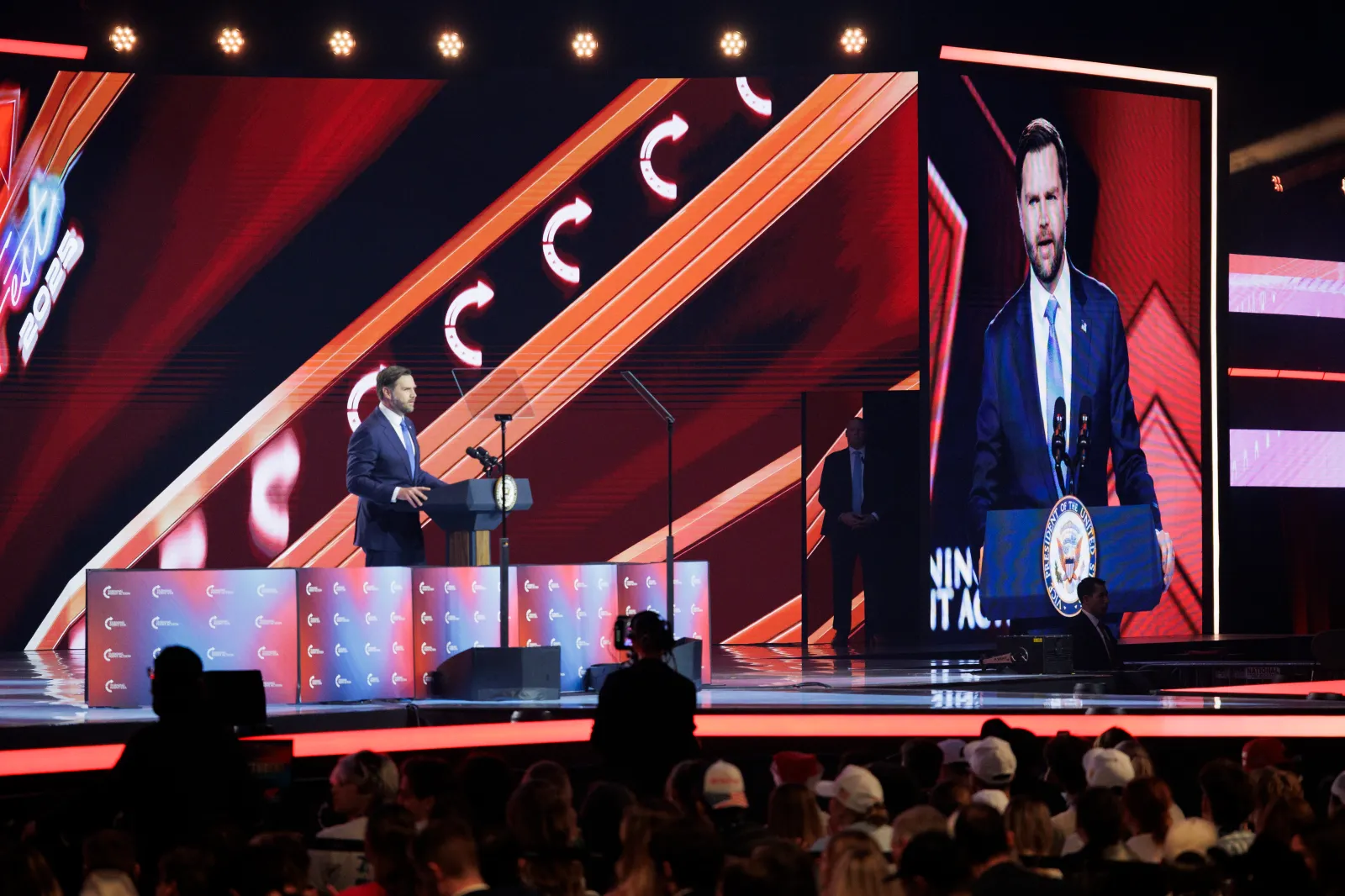
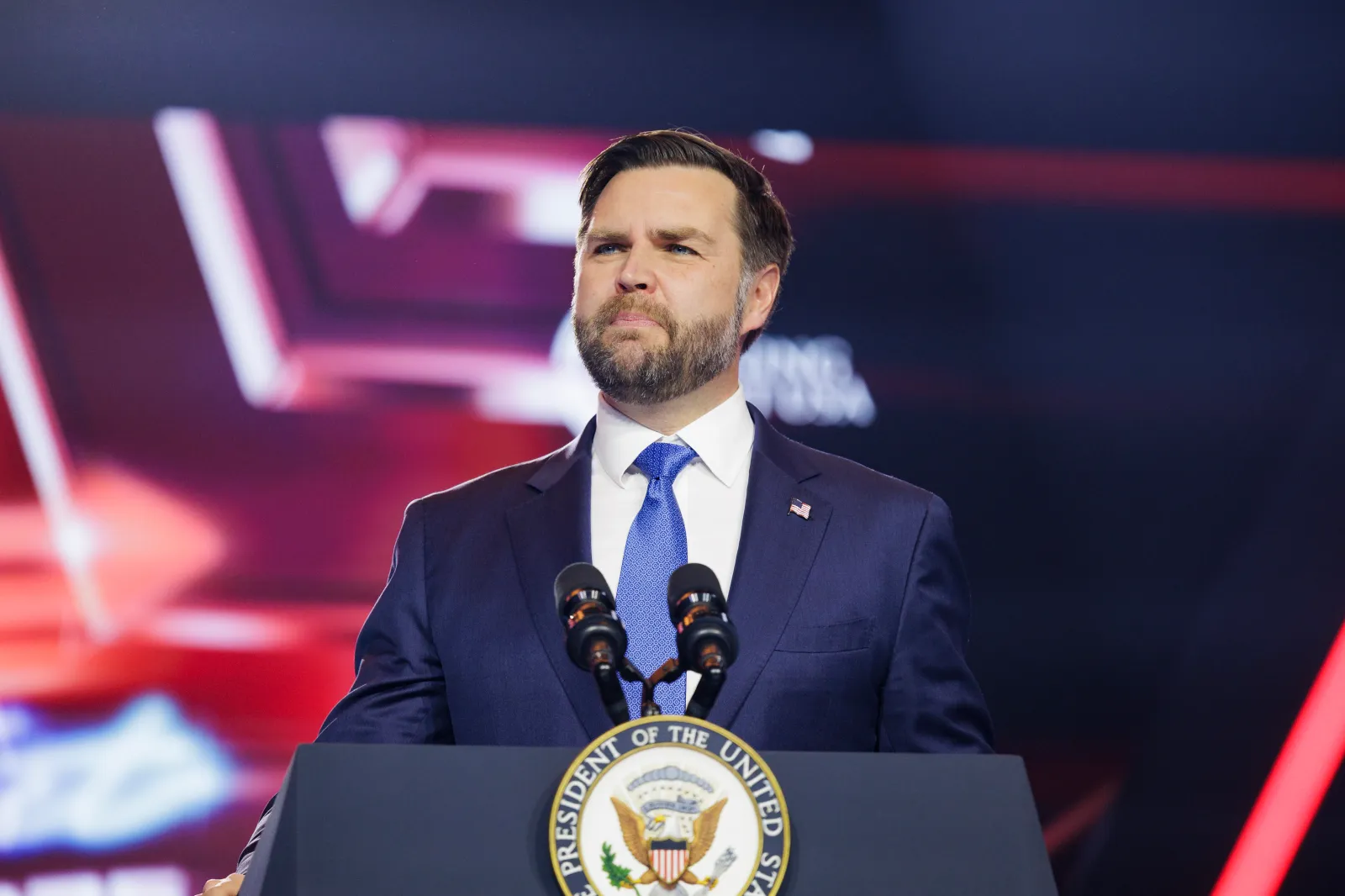
Vice President JD Vance took the stage after being introduced by Kirk’s widow, Erika, as pyrotechnics flared and the song “Long Cool Woman” played. Vance leaned into Kirk’s trademark emphasis on broad participation, praising the crowd as “free thinkers” while urging unity after a weekend of tense, high-profile disagreements on the AmericaFest stage.
“Every American is invited [into MAGA],” Vance said. “Charlie invited all of us here for a reason because he believed that each of us, all of us, had something worth saying, and he trusted all of you to make your own judgement, and we have far more important work to do than cancelling each other.”
While speakers were aligned in their animosity toward transgender Americans, the event itself was far from uniform in message. American support for Israel became a flashpoint, as conservative commentators Ben Shapiro and Tucker Carlson clashed on the opening night. Other fault lines surfaced as well.
Former Republican presidential candidate Vivek Ramaswamy, a Hindu American, pushed back against the concept of “Heritage Americans,” a view promoted by some on the right that elevates those who can trace ancestry to the colonial era as more “American” than others. His remarks were followed by an address from former Trump official Steve Bannon, who declared, “We have to Christianize this country,” and who has previously sparred with Ramaswamy over issues including support for H-1B visas.
The contrast between speakers appeared deliberate. In a prior statement to Newsweek, TPUSA spokesman Andrew Kolvet said: “We embrace the debate and the dialogue. We don’t back down from it, and we’re not afraid of it. The only way is through, so we can land on a consensus that actually unites the coalition.”
Organizers seem to be betting that Vance can help forge that consensus in time for 2028.
Over roughly a decade under President Donald Trump, the Republican Party has largely moved in step with the president’s priorities. As a result, even modest signs of tension inside the MAGA coalition quickly become political news—and fuel speculation about what comes next.
Trump won reelection in 2024 by stitching together a mix of constituencies that at times appeared contradictory: traditional conservatives, blue-collar populists, Silicon Valley entrepreneurs, and the religious right, among others.
But with Trump’s politics so closely tied to personality, skepticism persists about whether anyone else can keep that coalition intact. The president has signaled he views Vance as a successor capable of inheriting the movement, and Turning Point made clear it agrees—Erika Kirk used her appearance to endorse the vice president for 2028.
A product of rural Ohio, Vance first rose to national prominence with the publication of his memoir Hillbilly Elegy, which drew attention to a slice of the electorate closely associated with Trump’s base. At the same time, as a Yale-educated attorney and former employee of conservative Silicon Valley investor Peter Thiel, Vance brings credentials that fit the current MAGA moment.
His standing has also been boosted by support from Donald Trump Jr., who privately lobbied for Vance’s selection as vice president. Trump’s eldest child has described Vance as a friend and used his own remarks to emphasize who he believes now controls the party: “It’s not the Republican Party anymore—It’s the America First Party.”
Even so, what “America First” means in practice remains contested. Some former MAGA stalwarts—such as Congresswoman Marjorie Taylor Greene—have criticized the president for prioritizing foreign affairs and argued that the administration has drifted from the movement’s original ethos.
Turning Point, however, has largely backed the president’s international agenda, and it remains one of the most formidable organizing forces in Republican politics. White House officials have credited TPUSA with playing a significant role in Trump’s 2024 victory, as he improved on his 2020 margin with 18–29-year-old voters by 11 points and won 47 percent of that demographic.
With TPUSA behind him, Vance’s position as a leading contender for 2028 only strengthens. Still, the question hanging over the weekend is whether the divisions exposed at AmericaFest will produce constructive debate that ultimately consolidates MAGA—or whether they will deepen into a conflict that fractures the coalition.
For now, the legacy of the late TPUSA founder appears to be enough to bring rival factions under the same roof. Vance closed by asking attendees to focus on what they share, and to recommit to what he framed as a common mission.
“If you miss Charlie Kirk, do you promise to fight what he died for? Do you promise to take the country back from the people who took his life?” Vance said. “My friends, commit to these things and I promise you victory.”