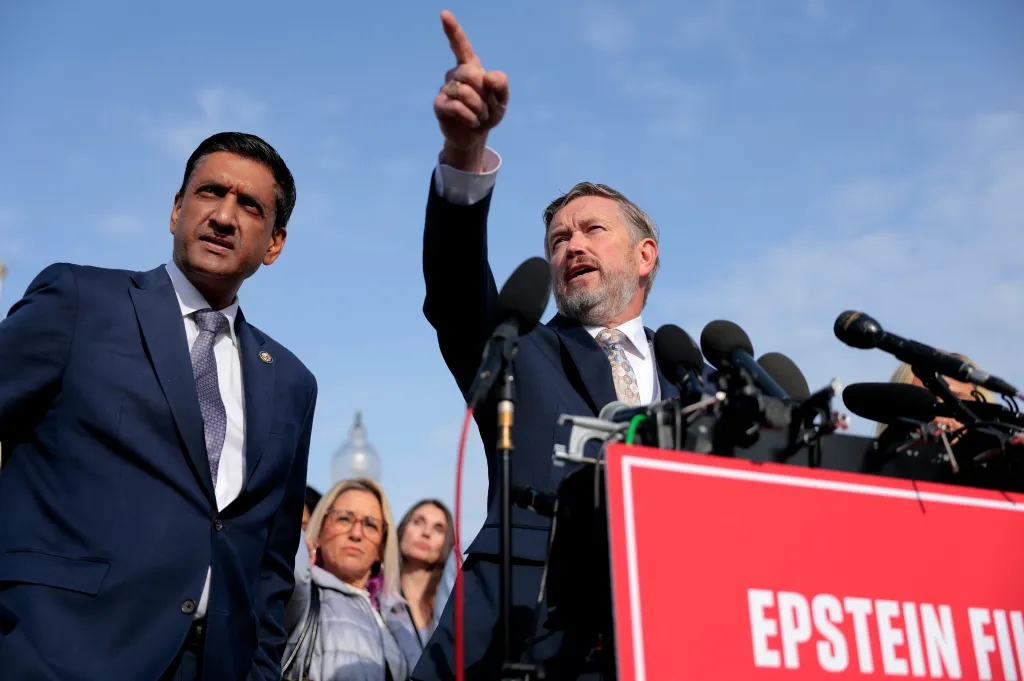

Rep. Ro Khanna said the Justice Department’s Friday release of Jeffrey Epstein-related files—riddled with redactions—does not meet the requirements of the disclosure law Congress passed last month.
Khanna, a California Democrat, and Rep. Thomas Massie of Kentucky, a Republican, spearheaded the legislation, which required the DOJ to release its full collection of documents by the deadline.
In a video posted on X, Khanna criticized what he called a deeply incomplete release, pointing to one New York grand jury document in which all 119 pages were fully blacked out.
“That’s despite a federal judge ordering them to release that document,” Khanna said, arguing that the law also requires the DOJ to provide reasons for any redactions. “There’s not a single explanation,” he added, claiming the withheld material includes a draft indictment that he says could implicate other wealthy and influential men allegedly connected to Epstein.
Khanna accused Attorney General Pam Bondi of “obfuscating for months” and said the Friday release was “incomplete” and “over-redacted.”
The Justice Department did not immediately respond to a request for comment.
Massie echoed Khanna in a separate post on X, saying the DOJ “grossly fails to comply with both the spirit and the letter of the law” that President Donald Trump signed last month.
Later Friday, Khanna said he and Massie have begun drafting potential articles of impeachment and an inherent contempt measure against Bondi, though he emphasized they have not decided whether to proceed.
“Impeachment is a political decision,” Khanna told CNN, noting they would not move forward without meaningful support in the House.
Deputy Attorney General Todd Blanche told Congress the DOJ identified about 1,200 victims of Epstein or their relatives and redacted information that could reveal their identities, according to the New York Times.
Earlier Friday, Blanche told Fox News that “several hundred thousand” pages would be released that day, adding that he expected “several hundred thousand more” over the following weeks.
Khanna said he and Massie are “exploring all options,” including impeachment, inherent contempt, and referrals for prosecution related to potential obstruction, and said they intend to work with survivors while pressing for a fuller release of the files.