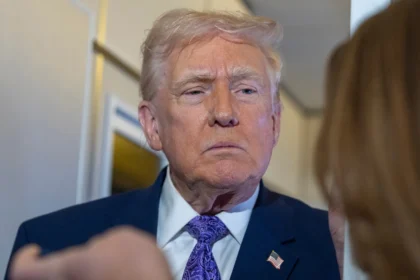
President Donald Trump has once again shifted course on trade policy, postponing sharp tariff increases on imported upholstered furniture, kitchen cabinets and vanities for another year.
The White House was contacted for comment on Thursday.
Why It Matters
The delay highlights the continued unpredictability of U.S. trade policy at a time when businesses and consumers are already dealing with inflation, supply chain pressures and uncertainty over how repeated tariff changes will affect long-term planning and prices.
What to Know
On Wednesday, Trump signed a presidential proclamation pushing back the start date for higher tariffs on certain imported goods that had been scheduled to take effect on January 1, 2026.
According to a White House fact sheet, the president invoked Section 232 of the Trade Expansion Act of 1962 to delay the tariff increases on upholstered furniture, kitchen cabinets and vanities for an additional year.
The New Year’s Eve decision keeps the current 25 percent tariff in place while postponing planned increases that would have raised rates to 30 percent on upholstered furniture and 50 percent on kitchen cabinets and vanities.
The move follows months of shifting tariff announcements and reversals across multiple industries, as well as mounting concern over rising prices and economic strain tied to higher import costs.
Trump has repeatedly defended tariffs as a means to correct trade imbalances and support domestic manufacturing, frequently framing them as necessary for national security. Still, business groups, homebuilders and consumers have warned that higher tariffs could lead to increased costs and potential job losses.
Overall, the administration’s approach has involved imposing, threatening, delaying and sometimes withdrawing tariffs, contributing to ongoing economic uncertainty.
What People Are Saying
A White House fact sheet stated that the United States continues to engage in negotiations with trade partners to address trade reciprocity and national security issues related to wood product imports. As a result, the tariff increases originally set for January 1, 2026, under the September 29, 2025, proclamation will be delayed by one year.
Humanscale CEO Bob King told Dezeen that the constantly shifting tariff environment has made long-term planning extremely difficult. He said rapid changes every few weeks have forced operations teams to work extended hours and created a stressful climate for U.S. manufacturers.
What Happens Next
The delayed tariffs are now scheduled to take effect no earlier than January 2027, offering temporary relief to importers, manufacturers and retailers. However, the possibility of future increases may still prompt companies to restructure supply chains, stockpile inventory or accelerate domestic investment.
At the same time, Trump’s authority to impose tariffs remains under scrutiny, with the U.S. Supreme Court reviewing lower-court rulings that question the scope of his use of emergency powers to levy broad import taxes.