
If you’ve been scrolling social media lately, you may have come across the buzz around the “Brick” — and despite the name, it’s not an actual brick.
The small device connects to your phone through an app and is designed to help users take back control of their attention. In a world where smartphones often feel less like tools and more like bottomless distractions, the Brick taps into a growing movement focused on setting healthier tech boundaries, staying present, and using time more intentionally.
The concept is simple but physical. When you “Brick” your phone by tapping it against the device, access to selected apps — such as social media, games, or other distractions — is locked. Those apps remain inaccessible until you physically return to the Brick and “un-Brick” your phone. Calls and essential notifications still come through, but everything else is temporarily off-limits, creating a deliberate pause from endless scrolling.
TikTok creator Haley (@haleyreidtay) says the device has completely reshaped how she uses her phone.
“I’m addicted to bricking,” she admits in a viral video. She explains that she follows a morning and nighttime schedule to block apps like Instagram, TikTok, and Pinterest — anything she tends to scroll through without thinking.
:max_bytes(150000):strip_icc():focal(731x461:733x463):format(webp)/Woman-Doordash-while-sleepwalking-071125-01-19e2266d8da541a382c254f9269275d7.jpg)
Unlike standard screen-time settings, Haley says the Brick forces a conscious decision. “There’s something about physically tapping your phone to the Brick where you’re like, ‘Okay, I’m choosing scrolling over being productive or doing something else I actually need to do,’” she says.
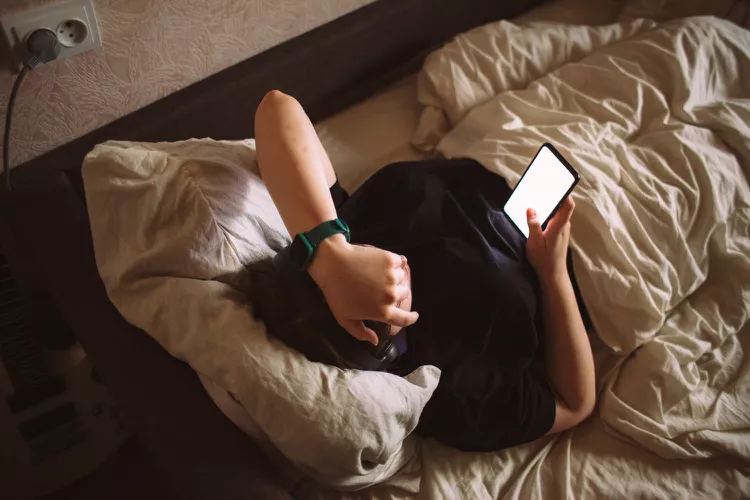
Before using the device, Haley describes a familiar routine: getting into bed and scrolling until exhaustion took over. Now, her phone automatically Bricks at 8 p.m., meaning her evenings are phone-free. As a mom of two, she says the shift has been meaningful.
“Since I’ve been using this, my phone time is so much more intentional,” she explains. “I use it to do the content-creating work I need to do — and then I’m done.”
She’s not alone. Another Brick user, TikTok creator @austin.gouda, shared that the device helped him significantly cut back on social media use. Before Brick, he says he averaged around 10 hours a day on his phone. Since using it, he’s reduced that time by about three hours.
“It’s still a lot,” he admits, “but I’m getting three hours of my life back every day — and I’m hoping to bring that number down even more.”
Still, the Brick doesn’t work for everyone. TikTok user @kfruitfly shared a more skeptical take on the $59 device.
“Listen, it’s not for me,” she says in her review. She explains that when her phone locks, all she has to do is tap it again — and she enjoys that process a little too much. “I tap my phone… and yeah, not for me. I honestly don’t know how or why this would work for anybody. It’s too much fun tapping.”
As reactions roll in, the Brick seems to spark the same question for everyone: can a simple physical action really change how we use our phones — or does it just highlight how hard breaking the habit really is?