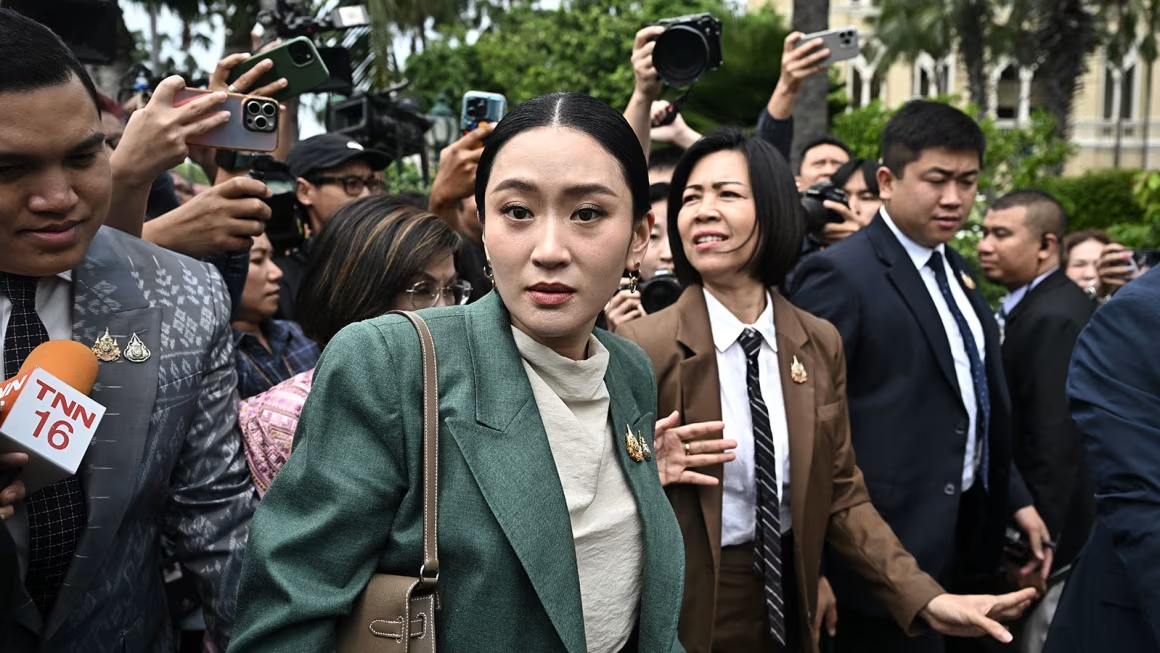

Thailand’s Prime Minister Paetongtarn Shinawatra was suspended from her duties Tuesday after the country’s Constitutional Court accepted a petition accusing her of breaching ethical standards in a leaked phone call with Cambodia’s former leader Hun Sen.
The suspension marks a major political blow to Paetongtarn, 38, who has held office for less than a year and now faces the possibility of being removed altogether. The court will deliberate on whether her actions violated the constitution, but in the meantime, she remains in the Cabinet as Minister of Culture, following a recent reshuffle.
Ethics Investigation Sparks Crisis
The court’s decision stems from a petition submitted by 36 senators, claiming that the leaked phone call — confirmed as authentic — showed Paetongtarn undermining national interests. In the June 15 call, she referred to Hun Sen as “uncle,” appeared to criticize the Thai military following a deadly border clash, and told the former Cambodian leader, “If you want anything, just tell me, and I will take care of it.”
The comments infuriated critics, prompting protests in Bangkok over the weekend and intensifying calls for her resignation. Critics claim she compromised Thai sovereignty by allegedly prioritizing diplomacy with Cambodia over backing her own military.
Paetongtarn responded in a press conference after the ruling:
“My intentions were more than 100% sincere. I acted to protect the country, our sovereignty, and the lives of our soldiers. I apologize to all Thais who feel uneasy or upset by this situation.”
Fallout and Political Implications
The leaked call has thrown the Thai government into fresh turmoil. Last week, the Bhumjaithai Party, a key coalition partner, pulled out of the governing bloc, weakening the ruling Pheu Thai Party’s grip on power. Meanwhile, Paetongtarn’s approval ratings have plummeted, and she now faces an upcoming no-confidence vote in parliament.
The prime minister has tried to downplay the controversy, calling the phone call a “private negotiation tactic” meant to ease cross-border tensions. She insisted her comments were not a sign of disloyalty but a diplomatic effort to prevent escalation with Cambodia.
Thailand and Cambodia share a long, disputed border shaped by colonial-era maps. Though both nations have worked toward cooperation in recent years, flare-ups over border patrols and nationalist sentiment have often reignited tensions.
A Pattern of Political Upheaval
Paetongtarn came to power after the Constitutional Court ousted her predecessor Srettha Thavisin in a separate ethics case. The same court also dissolved the progressive Move Forward Party, which won the most seats in the 2023 election, and banned its leaders from politics for 10 years.
Now, the same judicial body is weighing Paetongtarn’s fate, continuing a cycle of leadership disruption that has defined Thai politics for over a decade.