
The Nobel Prize medal has always carried symbolic weight far beyond its gold. Lately, though, it’s also become a flashpoint for political baggage, presidential reputations, and eye-popping money.
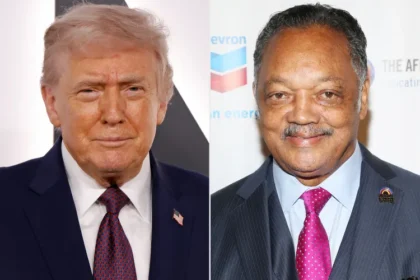
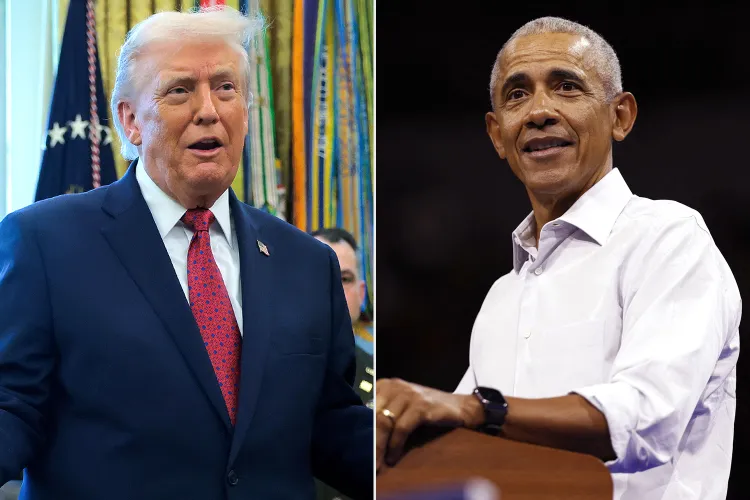
Critics have long argued the Nobel Committee put Barack Obama in an awkward position by honoring him early in his presidency. Now, as Donald Trump’s name circles the same conversation, the Norway-based panel appears intent on shutting down even the idea of a Nobel being “handed” to him—especially as a kind of political trophy.
At the same time, the committee’s tight control over who gets the Peace Prize hasn’t stopped the medals themselves from becoming enormously valuable. In recent years, Nobel medals have sold for sums that reach into nine figures, highlighting a strange contradiction: the committee guards the title, but once someone wins, the physical prize can be treated like an asset.
The Obama precedent—and the regret that followed
When Obama accepted the Nobel Peace Prize in 2009—less than a year into his first term—he called it undeserved and said he was humbled. The committee praised his “extraordinary efforts to strengthen international diplomacy.”
But the glow didn’t last. His later choices, including escalating troop levels in Afghanistan and expanding the use of drone strikes, fueled backlash and undercut the committee’s original optimism. Even Geir Lundestad, a former Nobel secretary, later wrote in his memoir Secretary of Peace that he regretted the decision, noting that many supporters believed the prize had been a mistake and that the committee didn’t achieve what it hoped for.
Trump, the Nobel, and a new line the committee won’t cross
Trump has long been portrayed as wanting the same honor. Reports have suggested his pursuit of Nobel recognition has shaped how he frames major policy moves and foreign-policy claims—sometimes tying actions and rhetoric to the argument that he “deserves” the prize.
That dynamic resurfaced in recent claims involving India and Pakistan, with accounts linking Trump’s Nobel fixation to heightened tensions after a dramatic tariff move and a public dispute with Prime Minister Narendra Modi over Trump’s assertion that he prevented a war.
The Nobel question has also been dragged into the politics of Venezuela. Opposition leader Maria Corina Machado—described as recently being in hiding and fearing retaliation from the Maduro regime—reportedly won the prize in 2025 and then presented it to Trump during a White House meeting on Thursday.
But the optics quickly ran into the rules. The committee stepped in to clarify that the prize cannot be transferred—Machado cannot “give” it to Trump. Machado, however, told reporters she did so anyway.
A Nobel quirk: the title stays put, the benefits don’t
These episodes underline a basic feature of Nobel protocol: the committee alone decides the winner, and the honor itself cannot be reassigned, transferred, or retroactively redirected for political convenience.
Obama’s response to the controversy in 2009 was to shift attention away from himself. He donated the full $1.4 million cash award to multiple charities, including organizations supporting veterans and students—effectively passing along the money, even though the prize remained his. Tax experts noted the donation functioned as charitable giving under U.S. tax rules.
After decades of criticism over early or politically charged awards, the Nobel institution has grown more cautious—keen to avoid even the appearance that the Peace Prize could be used as a reputation-polishing tool for figures whose public images are already hardened.
Nobel for sale
While the committee draws a hard line around who can be named a laureate, it has far less power over what laureates do afterward.
Over the last decade, Nobel medals have become some of the most dramatic items in the auction world. The most striking case came in 2022, when Russian journalist Dmitry Muratov’s Nobel Peace Prize medal was sold to benefit Ukrainian child refugees, shattering expectations and raising a record $103.5 million.
Other sales have been more personal—and more revealing. Physicist Leon Lederman’s medal was sold to help pay medical bills, sparking outrage over the realities of U.S. healthcare. “Only in America,” wrote Sarah Kliff of the Physicians for a National Health Program.
The committee’s limits
The Nobel Committee can’t unwind the Obama decision, and it can’t fully control how people interpret or weaponize the prize in politics. It also can’t stop medal sales—no matter how large the price tag.
What it can do is enforce one boundary with absolute clarity: the Peace Prize is not transferable. Whatever the politics swirling around it, the committee decides the name on the record—and that name cannot be swapped, gifted, or handed off after the fact.