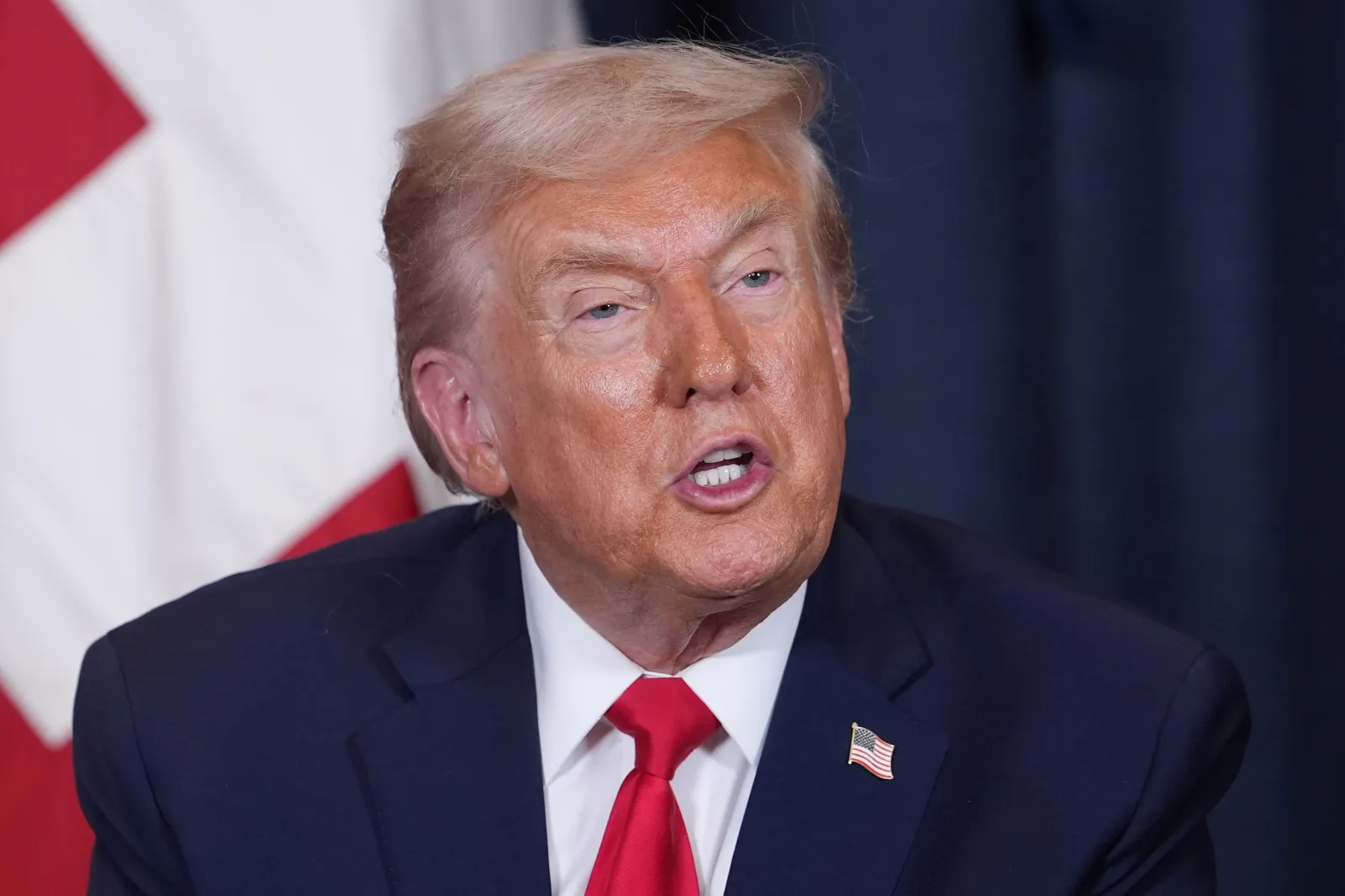

President Donald Trump suggested Tuesday that his administration may be able to send $2,000 “dividend” rebate checks—funded by tariff revenue—without first getting congressional approval.
“I don’t think we would have to go to Congress now, but, you know, we’ll find out,” Trump said at a press conference, responding to a question about comments from White House economic adviser Kevin Hassett, who has indicated the plan would hinge on congressional action.
Why It Matters
Trump has floated the idea of direct payments to lower- and middle-income Americans since early November, pitching the checks as a “dividend” made possible by what he described as “trillions of dollars” generated through tariffs.
So far, the White House has offered few details about who would qualify, when checks would be sent, and what legal authority would be used. In a recent interview with The New York Times, Trump said he expected payments to arrive “toward the end of the year.”
The proposal also faces a looming legal uncertainty: the Supreme Court is expected to rule on whether Trump’s broad tariffs are lawful. A ruling against the tariffs could require refunds of tariff revenue—directly impacting whether a dividend plan could be financed at all.
What To Know
Hassett, the director of the National Economic Council, said in December that any checks would require a formal proposal to Congress and ultimately depend on appropriations—underscoring Congress’ constitutional control over federal spending.
“I would expect that in the new year, the president will bring forth a proposal to Congress to make that happen,” Hassett said on CBS News’ Face the Nation.
But Trump struck a different tone Tuesday, repeating his claim that tariff collections are bringing in enough money to support direct payments.
“The reason we’re even talking about it is that we have so much money coming in from tariffs that we’ll be able to issue at least a $2,000 dividend and also pay down debt for the country,” he said.
Trump said an income cap would be set “where it made sense,” adding that the administration could deliver “a very substantial dividend” to Americans.
Questions About the Funding
Economists and budget analysts have raised doubts that tariff revenue alone could cover checks of that size—especially if the program excludes higher earners.
Federal data shows the U.S. collected $195 billion in customs duties in the fiscal year that ended September 30, plus an additional $90 billion so far this fiscal year, according to Treasury Department figures.
Meanwhile, estimates of the plan’s cost vary widely. The nonpartisan Committee for a Responsible Federal Budget has projected a price tag of roughly $600 billion and warned it could increase deficits by “$6 trillion over 10 years.” Tax Foundation analyst Erica York has previously estimated the checks “would cost in the order of $300 billion or more.”
Hassett has also suggested the money might not come strictly from tariffs.
“It could come from tariff revenue, but in the end, you know, we get taxes, we get tariffs, we get revenue from lots of places, and then Congress decides how to spend those monies,” he said. “That’s an appropriation. And so this would have to be money that would be an appropriation.”
Public Support
The proposal appears to be popular with voters, according to a Daily Mail survey of 1,000 registered voters conducted December 20–21. The poll found 52 percent supported a tariff rebate, including 44 percent of Democrats, while 20 percent opposed it.
What People Are Saying
Hassett told CBS News: “I think that most of the tariffs that we’ve passed this year have proven their mettle. We’ve got still-high growth, which people said we couldn’t if we had tariffs. We have reduction in the deficit.”
White House press secretary Karoline Leavitt said in a November briefing: “The White House is committed to making [the tariff dividend] happen… we are currently exploring all legal options to get that done.”
Erica York, vice president of federal tax policy at the Tax Foundation, told Newsweek in November that sending checks could worsen inflation. She warned that pairing higher spending with pressure on the Federal Reserve to cut rates “would seriously threaten a return of higher inflation.”
What Happens Next
The next major turning point could come from the Supreme Court. Once the justices rule on the legality of Trump’s tariffs—after arguments are heard—the decision could determine whether tariff receipts must be refunded and whether a $2,000 dividend plan has a stable funding source.