
The analysis came after the DRC and Rwanda signed a peace deal on Friday in Washington to end the conflict in eastern Congo, where M23 fighters seized the provincial capitals of Goma and Bukavu.
Rwanda’s military was directly involved in a major offensive alongside the M23 rebel group earlier this year in eastern Democratic Republic of Congo (DRC), leading to the seizure of key cities, according to a soon-to-be-published report by United Nations experts obtained by AFP.
Despite Rwanda’s continued denials of military support for M23, the UN panel found what it called “extensive evidence” that Rwandan Defence Forces (RDF) actively participated in combat operations and facilitated M23’s territorial gains.
“RDF operations were critical to the conquest and occupation of new territories and towns,” the UN’s Group of Experts on the DRC wrote in the report.
The findings emerge just days after Rwanda and the DRC signed a peace agreement in Washington, pledging to end hostilities and cease support for armed groups operating in the region. Former U.S. President Donald Trump welcomed the deal as a “new chapter of hope and opportunity” for the war-torn region.
Rwandan Troops on the Frontlines
According to the UN experts, the Rwandan military’s role went far beyond passive support. Their investigation relied on photographs, drone footage, intelligence intercepts, and eyewitness testimony to document “systematic and large-scale incursions” by Rwandan troops across the border.
The evidence reportedly includes RDF units fighting on the frontlines, deploying high-tech weapons, and engaging in coordinated offensives that helped M23 capture the provincial capitals of Goma and Bukavu during their swift campaign in January and February.
The report also alleges that Rwandan officials privately told UN investigators that President Paul Kagame had personally ordered the takeover of Goma and Bukavu shortly before the offensive began.
Kigali Dismisses UN Claims
The Rwandan government swiftly rejected the UN’s conclusions. In a statement posted on X (formerly Twitter), government spokeswoman Yolande Makolo accused the UN panel of ignoring Rwanda’s legitimate security concerns related to the Democratic Forces for the Liberation of Rwanda (FDLR)—an armed group based in eastern Congo founded by Hutu extremists involved in the 1994 Rwandan genocide.
“The report deliberately misrepresents Rwanda’s longstanding security concerns related to the persistent threat of the FDLR and its affiliates,” Makolo said.
Kigali maintains that its military presence near the border is purely defensive.
A Fragile Peace in a Volatile Region
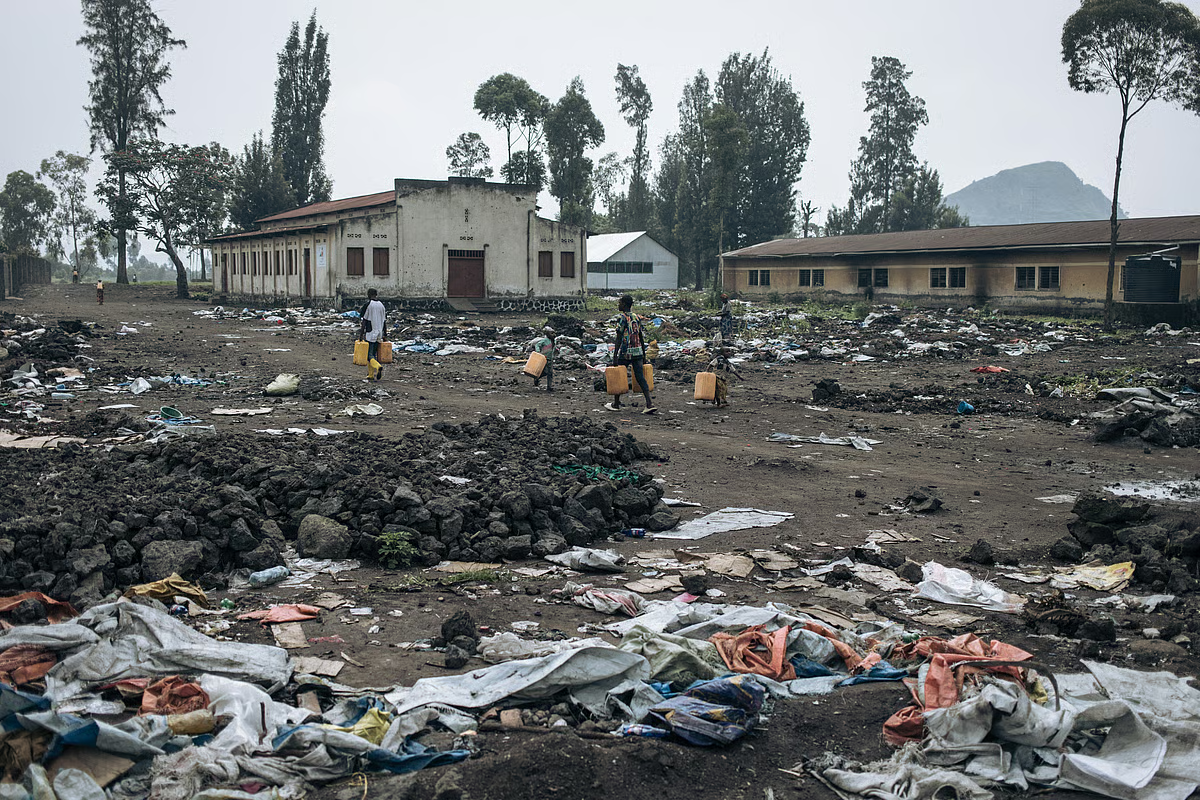
Eastern DRC has long been plagued by conflict fueled by ethnic tensions, competing militias, and struggles over the region’s vast mineral wealth. The recent M23 offensive and Rwanda’s alleged involvement have triggered a humanitarian disaster, with thousands killed and hundreds of thousands displaced, according to the UN and Congolese officials.
The M23 rebellion, which had been largely dormant since 2013, resurfaced in late 2021 and has since become one of the most powerful armed groups in the region, raising alarms among international observers.
Presidents Kagame and Felix Tshisekedi of the DRC are expected to meet in Washington in the coming months to further discuss the peace agreement. While the deal was signed by both nations’ foreign ministers, its provisions have yet to be implemented—and its success remains uncertain amid mutual distrust and ongoing violence on the ground.