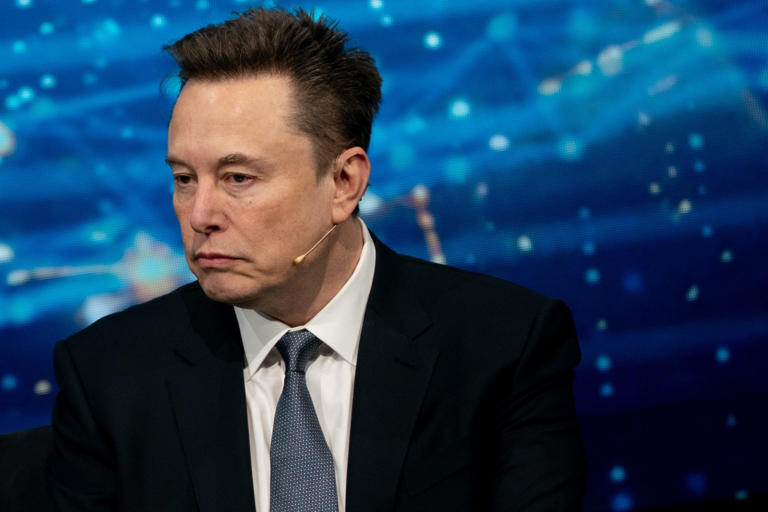

Tesla’s stock has fallen in recent days amid renewed attention on its chief executive and mounting concerns about the automaker’s broader business trajectory.
Late last month, newly released Justice Department records related to Jeffrey Epstein became public. Among them were emails that appeared to show correspondence between Epstein and Tesla CEO Elon Musk in 2012, including language suggesting potential travel plans. The material contrasted with earlier public statements from Musk about his relationship with Epstein. The scope and significance of the documents are still being examined, and no new allegations have been brought against Musk.
Following the release of the records, Tesla shares declined nearly eight percent over a five-day period. Market analysts caution that it is difficult to isolate a single cause for the drop, noting that the company has been grappling with several challenges at the same time.
Tesla’s brand and sales momentum have weakened over the past year. The company recently reported its first annual revenue decline, with sales falling in three of the last four quarters. Profitability has also come under pressure, including a sharp year-over-year drop in fourth-quarter earnings.
At the same time, Tesla faces intensifying competition. European data show that Volkswagen surpassed Tesla in battery-electric vehicle sales last year, while China-based BYD has expanded its global lead, including gains in Europe. Industry observers say Tesla’s early dominance in the EV market has eroded as rivals scale production and broaden their lineups.
Product strategy has also raised questions. Tesla has not introduced a fully new mass-market model since the Cybertruck launch in late 2023, and production of some legacy models has been phased out. Analysts have pointed to the limited rollout of new vehicles and ongoing concerns about service and quality as factors weighing on consumer demand.
Despite the recent decline, Tesla remains one of the world’s most valuable companies by market capitalization. Whether the company can stabilize its stock and reassert its position may depend on how it balances its automotive business with its longer-term ambitions in robotics and artificial intelligence.