
The latest inflation report from the Department of Labor suggests price pressures are continuing to cool at the start of 2026, moving closer to levels seen before the pandemic.
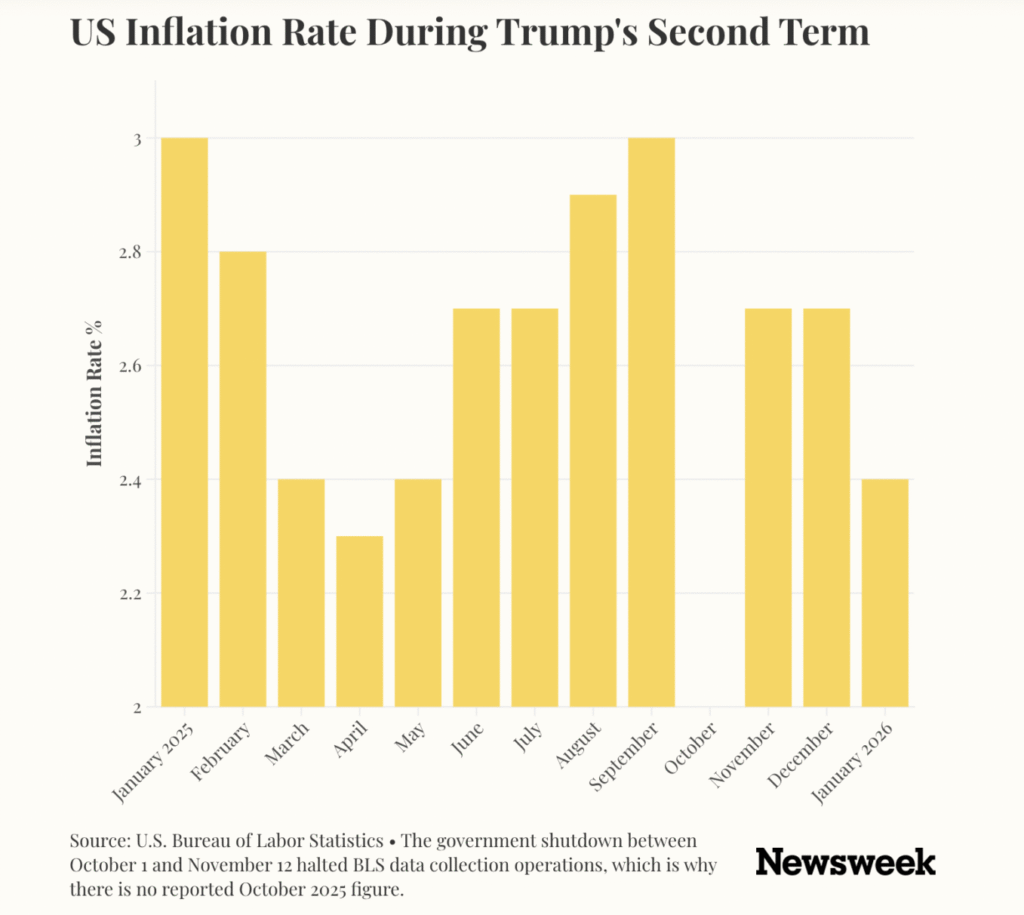
On Friday, the Bureau of Labor Statistics reported that consumer prices rose 0.2% in January, down from a 0.3% increase in December. Over the past 12 months, inflation eased to 2.4% from 2.7% the month before—the lowest year-over-year reading since May 2025. Economists had expected the monthly pace to remain at 0.3%, with annual inflation dipping more modestly to 2.5%.
Core inflation, which strips out food and energy, rose 0.3% in January after a 0.2% increase in December. On an annual basis, core inflation edged down to 2.5% from 2.6%, matching forecasts.
The inflation update followed earlier data showing the U.S. economy added 130,000 jobs in January—well above expectations and higher than the totals reported for November and December.
Why It Matters
A cooling inflation reading can ease concerns at the Federal Reserve and strengthen the argument for future interest-rate cuts, especially if price growth continues to move toward pre-pandemic norms. Analysts also say the figures could factor into ongoing political debate over whether new tariffs might trigger broader price increases.
“Today’s inflation report comes on the heels of the jobs report released earlier this week that showed better-than-expected labor market conditions in January,” said Bright MLS Chief Economist Lisa Sturtevant.
She added that recent months had raised concerns about “stagflation,” but the latest numbers suggest the economy may be moving in a more favorable direction—one where inflation falls while employment remains strong.
What To Know
The BLS said shelter costs accounted for much of January’s increase, with food prices also contributing. Energy prices, however, declined 1.5% during the month, helping offset some of the upward pressure.
Within the energy category, gasoline prices were down 7.5% over the past year, while electricity and natural gas costs rose 6.3% and 9.8%, respectively.
Other notable shifts in the report included a 6.5% jump in airline fares from December to January and a 7.0% drop in egg prices over the same period.
The White House pointed to the new figures as evidence that its economic approach is working, with officials highlighting falling inflation and rising real wages.
During former President Joe Biden’s term, inflation moved from 1.4% when he took office in January 2021 to a peak of 9.1% in June 2022. By January 2025, inflation had eased to roughly 3%, including a 2.9% reading in December 2024.
What People Are Saying
Heather Long, chief economist at Navy Federal Credit Union, said the report offered “great news on inflation,” pointing to cooling costs for major household staples.
Oxford Economics lead economist Bernard Yaros called the report a “welcome surprise” given that January has often delivered stronger-than-expected inflation readings in recent years due to seasonal effects and delayed pricing adjustments.
James Bentley, a director at Financial Markets Online, said the week’s data shows inflation easing while job growth remains strong, though he noted that an interest-rate cut may still take time.
What Happens Next
Analysts say the softer inflation reading gives the Federal Reserve more flexibility in deciding whether and when to lower interest rates in coming months.
The Federal Open Market Committee is scheduled to meet March 17–18, and market pricing suggests the central bank is likely to hold rates steady at that meeting. However, expectations for cuts later in the year have increased following the January inflation report.