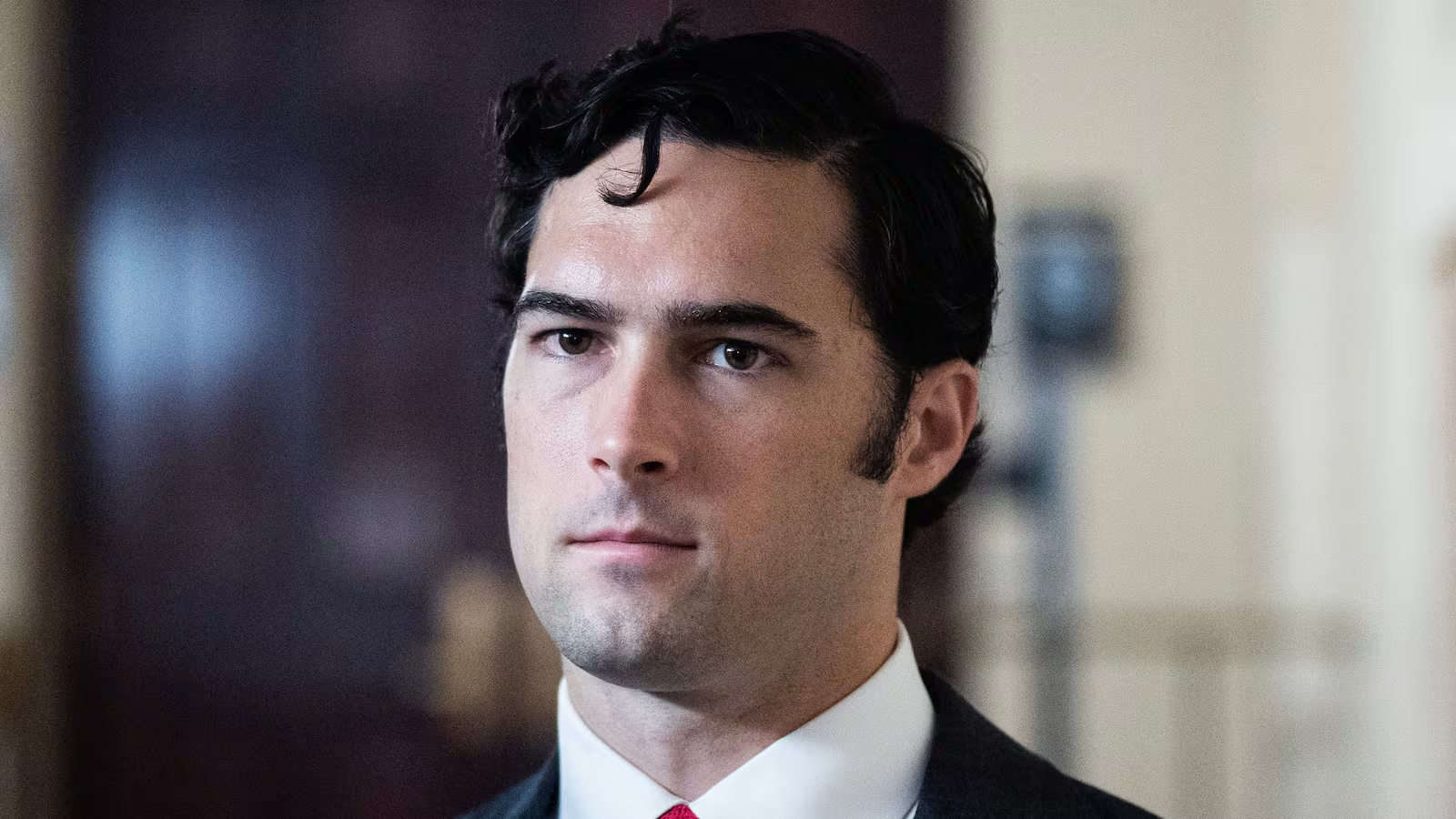

Representative Brandon Gil has urged a broad suspension of immigration from Somalia, contending that large-scale migration from the country has increased welfare dependency, fraud, and corruption concerns in the United States. In an interview with Scott Jennings, Gil argued that the primary purpose of the U.S. immigration system is to serve the interests of American citizens, saying current policies have moved away from that objective. His remarks follow heightened attention on recent fraud cases in Minneapolis involving members of the Somali immigrant community, as well as continuing national debates over immigration enforcement and reform.
Gil, who recently introduced the Somalia Immigration Moratorium Act, said the proposal would establish a 25-year pause on immigration from Somalia. He described the measure as necessary to limit financial pressures on taxpayers and to ensure immigration policy aligns with national priorities. “We cannot allow people to come in and for us to pay for their food, housing, and healthcare and everything else. We’ve got our own problems to deal with,” Gil said. He referenced data suggesting that a significant share of Somali immigrants in Minnesota depend on public assistance programs even after many years in the country, calling the figures concerning.
According to Gil, the legislation reflects principles found in earlier immigration policies, particularly the public burden doctrine, which historically restricted entry for individuals likely to rely on government support. He characterized the moratorium as a practical and moderate step designed to prioritize American citizens while allowing existing immigrants time to integrate. Several Republican lawmakers have joined as co-sponsors, and Gil indicated he intends to continue advocating for the bill’s advancement in the House.
The discussion also addressed student visa policies. Gil expressed concern about what he described as systemic vulnerabilities, pointing to instances where foreign nationals from adversarial countries pursue studies in fields with potential national security implications. He argued that student visa issuance should be significantly curtailed and that educational opportunities should focus more heavily on domestic students. “We’ve got our own people that we want to educate,” he said, adding that universities increasingly promote viewpoints he believes conflict with U.S. interests.
Gil presented both proposals as components of a wider effort to reshape immigration policy around the needs of American citizens. “Does this help our people? Does this make life better for Americans? Does this increase our national security and make America a stronger country?” he said, suggesting that many existing policies fall short of these standards.
His comments highlight continuing debates in Congress over the relationship between immigration, public spending, national security, and broader economic policy.