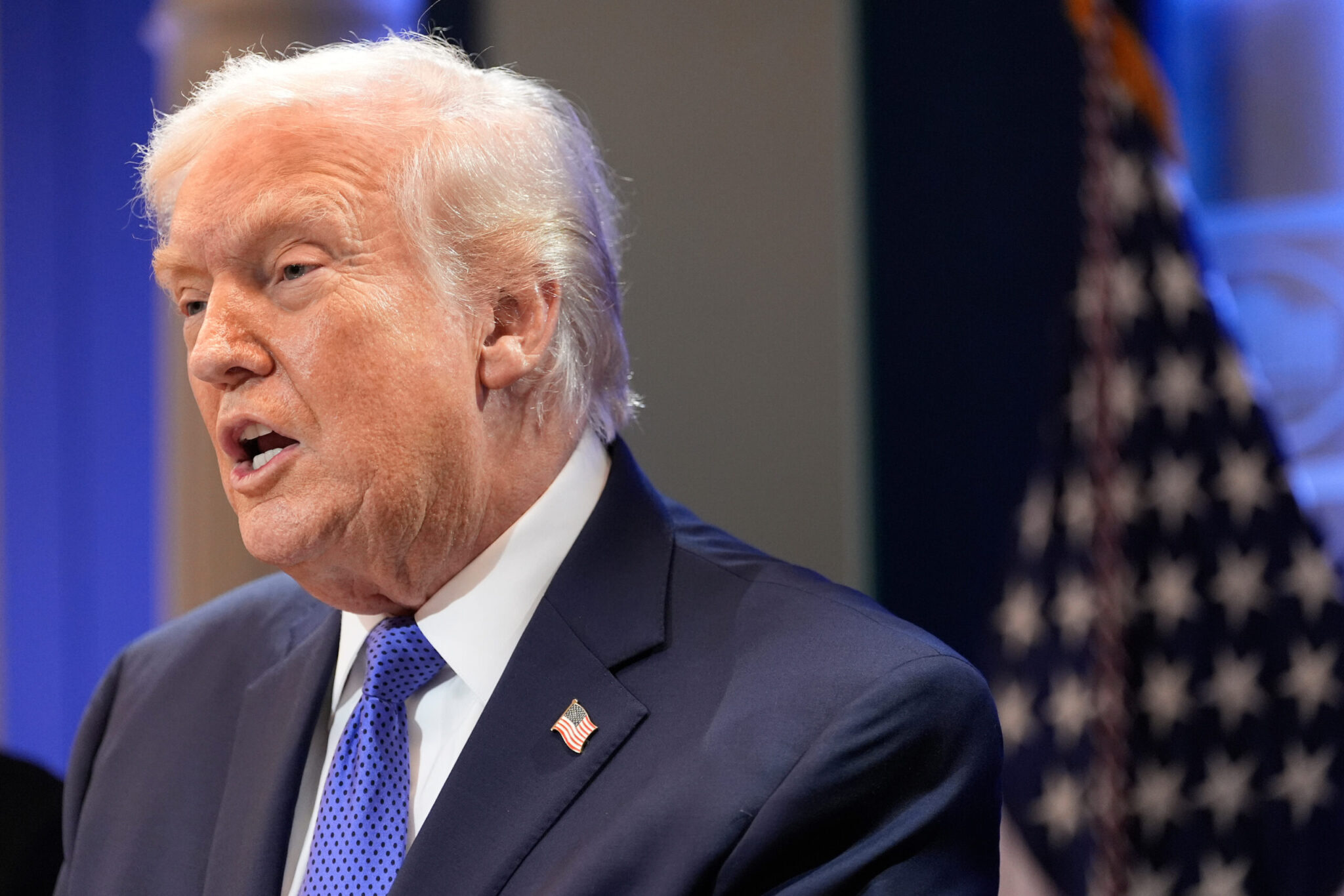

WASHINGTON — President Donald Trump’s campaign is doubling down on a promise to deliver $2,000 “rebate” checks to Americans, according to a recent fundraising and mobilization email sent to supporters. The move comes as the White House faces a significant constitutional setback following a Supreme Court ruling that dismantled the primary funding mechanism for the proposed payments.
In an email dispatched on February 27, 2026, titled “$2,000 stolen from you?”, the President signaled he is “looking into these checks very seriously.” While stopping short of an absolute guarantee, the message noted he “may make the commitment” to bypass what he characterized as Democratic obstruction, despite the fact that the legal barrier was erected by the nation’s highest court.
The Constitutional Wall: SCOTUS Strikes Down Tariff Authority
The timing of the campaign push is notable, arriving just days after the U.S. Supreme Court ruled 6-3 against the administration’s tariff program. The White House had previously designated revenue from these broad-based tariffs as the dedicated source for the $2,000 payouts.
In a landmark decision, the Court found that the International Emergency Economic Powers Act (IEEPA)—the statute Trump invoked to bypass Congress—does not grant the executive branch the power to levy broad tariffs for general economic policy. The ruling was bipartisan in its composition; while all three liberal justices voted to strike down the tariffs, they were joined by three conservative justices who prioritized a strict interpretation of executive limits.
Because these tariffs were implemented via executive order rather than through Congressional legislation, they lacked the legislative “power of the purse” required to withstand judicial scrutiny.
Fiscal Friction and the $600 Billion Question
While the President maintains that the U.S. has taken in “literally trillions” in tariff revenue, non-partisan fiscal watchdogs present a starkly different ledger.
The Committee for a Responsible Federal Budget estimates that a nationwide $2,000 rebate program would cost approximately $600 billion. This figure is double the $300 billion in annual revenue the Trump tariffs were projected to generate before they were struck down.
Economists also warn that the infusion of cash could be counterproductive. Erica York, Vice President of Federal Tax Policy at the Tax Foundation, cautioned that issuing mass checks during a period of “stubbornly high” inflation could trigger a secondary price surge.
“Sending out checks to Americans is a recipe for higher inflation,” York stated. “Pushing for higher spending while simultaneously pressuring the Federal Reserve to cut interest rates threatens a return to the inflationary spikes of previous years.”
The Political Calculus
Despite the legal and fiscal hurdles, the $2,000 rebate remains a potent political tool. Recent polling suggests widespread public support for direct financial relief as the labor market softens and affordability concerns dominate the national conversation.
Trump has framed the Supreme Court’s decision not as a legal limit, but as a “windfall” for foreign interests. On Truth Social, the President questioned if a “rehearing or readjudication” of the case is possible, claiming the ruling allows foreign companies to “rip off” the United States.
What’s Next for the Rebate?
The administration now faces a narrowing path to fulfill this “commitment.” With the Supreme Court blocking the executive route, the President would likely need to secure an appropriation from a divided Congress to fund the $600 billion program.
As of early March 2026, no formal legislation has been introduced to replace the lost tariff revenue, leaving the $2,000 checks in a state of political limbo—a “commitment” pending a viable legal and financial strategy.