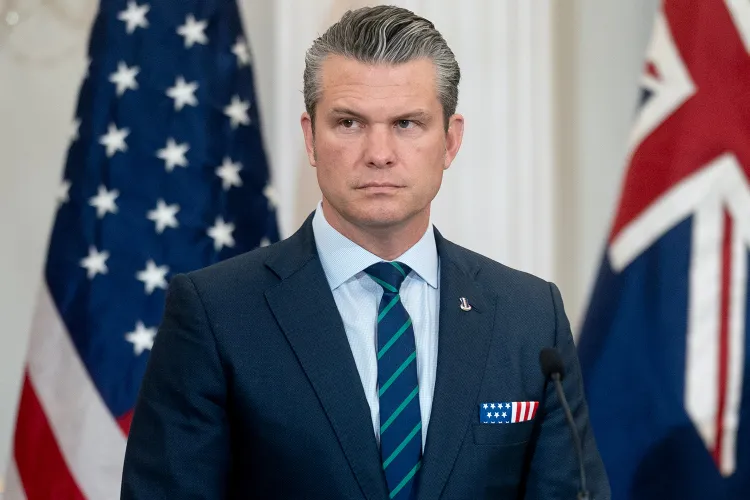

The Pentagon has requested an emergency $200 billion from Congress to fund ongoing military operations against Iran, as U.S. Defense Secretary Pete Hegseth declared the American-led coalition is “decisively winning” a war that has now expanded into the Caspian Sea.
The massive funding request, first reported by the AP via a senior administration official, comes as the conflict enters a volatile new phase. In a press briefing on Thursday, Secretary Hegseth defended the scale of the expenditure. “It takes money to kill bad guys,” Hegseth stated, confirming the Pentagon is seeking a significant capital infusion to sustain “Operation Epic Fury.”
Naval Front Opens in the Caspian
In a historic military first, Israel confirmed on Thursday that it successfully targeted Iranian naval assets in the Caspian Sea. The strike marks the most geographically distant operation by the Israel Defense Forces (IDF) since hostilities commenced on February 28.
“We have been able to take out their navy capabilities in the Caspian Sea,” said IDF Lieutenant Colonel Nadav Shoshani. Shoshani described the mission as a “systematic strike” targeting a strategic naval shipyard used for the construction and repair of Iranian vessels. “This is the first time we have done that in our history,” he added.
Global Coalition Moves to Secure Hormuz
As Tehran continues its blockade of the Strait of Hormuz—a chokepoint for 20% of the world’s oil—a coalition of six Western allies announced a joint intervention. The United Kingdom, France, Germany, Italy, Japan, and the Netherlands issued a statement on Thursday pledging to “contribute to appropriate efforts to ensure safe passage” through the waterway.
The allies condemned Iran’s use of drones, missiles, and sea mines to disrupt international shipping, citing the United Nations Convention on the Law of the Sea. “Freedom of navigation is a fundamental principle of international law,” the joint declaration stated, signaling a coordinated naval buildup to break the Iranian blockade.
“Zero Restraint”: Tehran Threatens Energy Infrastructure
The regional escalation follows an Israeli strike on Iran’s South Pars region, the world’s largest gas field. In response, Iranian Foreign Minister Abbas Araghchi warned that Tehran’s previous restraint is at an end.
“Our response to Israel’s attack on our infrastructure employed a fraction of our power,” Araghchi posted on X. “ZERO restraint if our infrastructures are struck again.”
This rhetoric coincides with a wave of retaliatory strikes across the Gulf. Energy-producing nations reported significant damage:
- Qatar: Confirmed three fires and “extensive damage” at the Ras Laffan gas complex.
- UAE: Reported debris from intercepted missiles falling on the Habshan gas facilities and the Bab oilfield.
- Saudi Arabia: Intercepted drones and missiles targeting Riyadh and eastern gas facilities. Saudi Foreign Minister Faisal bin Farhan Al Saud stated that the Kingdom “reserves the right to take military actions if deemed necessary.”
Hegseth Claims “Overwhelming Force”
Despite the broadening regional chaos, Secretary Hegseth maintained an optimistic outlook on the U.S. military position. He revealed that the U.S. has struck over 7,000 targets across Iran’s military infrastructure since the conflict began.
“Epic Fury is different. It’s laser-focused. It’s decisive,” Hegseth said, noting that Thursday’s strike package was the largest to date. “We’re winning—decisively and on our terms. Iran’s capabilities continue to degrade. We’re hunting and striking, bringing death and destruction from above.”
The $200 billion request is expected to face immediate scrutiny on Capitol Hill, as the Trump administration continues to conduct strikes without a formal Authorization for Use of Military Force (AUMF) from Congress.