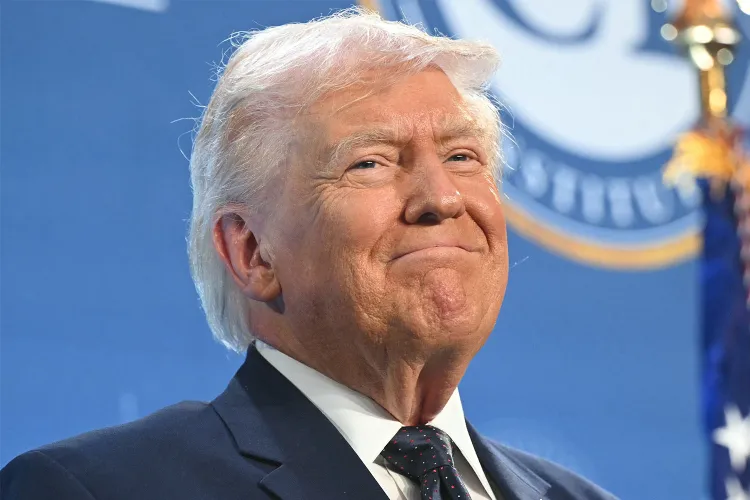

President Donald Trump is facing renewed criticism over his handling of sensitive medical information after publicly revealing a private terminal diagnosis for Republican Representative Neal Dunn. The disclosure has reignited a national debate over the President’s selective transparency, contrasting his willingness to discuss others’ health with the “caginess” surrounding his own medical records.
During a recent press briefing alongside House Speaker Mike Johnson, Trump claimed that Dunn would have been “dead by June” were it not for the intervention of White House physicians. The comments appeared to catch Speaker Johnson off guard. Johnson, who had previously mentioned Dunn’s health to private donors, responded to the President’s public outburst by noting, “That wasn’t public… it was grim.”
A Pattern of Selective Disclosure
The incident highlights a long-standing double standard in the President’s rhetoric. While Trump frequently boasts of his own “unmatched” physical and mental vitality, he has historically remained opaque regarding his specific medical data. Recent concerns regarding a visible neck rash and the lack of comprehensive physician reports have only fueled speculation about his own well-being.
Ethicists and political strategists suggest this behavior further erodes the traditional norms of American public life.
- Etiquette Breaches: Rosalinda Oropeza Randall, a San Francisco-based etiquette expert, told The Guardian that disclosing another person’s health status is almost never appropriate. She noted that while providing medical care is a “generous gesture,” publicizing it for political leverage—as Trump did by mentioning he wanted Dunn’s “vote”—comes across as “cold and calculated.”
- Political Propriety: Brittany Martinez, executive director of Principles First, characterized the disclosure as “pointless” and “abhorrent,” noting that it is fundamentally inappropriate for a Commander-in-Chief to “out” the diagnosis of a member of Congress.
The Healthcare Contrast
The President’s boast about providing “world-class” care to a political ally comes at a sensitive time for the U.S. healthcare system. As millions of Americans face surging costs following the expiration of Affordable Care Act subsidies, the image of a “gossipy” head of state gatekeeping elite medical resources has drawn sharp rebukes from Democratic strategists.
“It’s more of the same,” said veteran strategist Hank Sheinkopf. “What do people expect? It’s another drop in the bucket in Trumpland.”
Despite the backlash, analysts expect little to no political fallout within the President’s base, where such “shock-jock” tactics have become a normalized feature of his leadership style. However, for a nation grappling with a deepening divide over privacy and healthcare access, the Dunn disclosure serves as a stark reminder of the President’s unfiltered approach to the presidency.