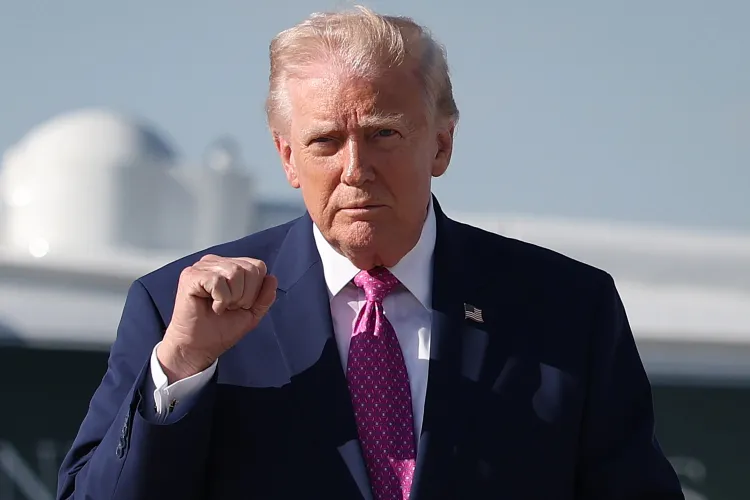

Unverified reports from high-level intelligence circles allege a dramatic confrontation occurred at the White House last Saturday night, with President Donald Trump reportedly attempting to authorize the use of nuclear weapons against Iran. The claim, first brought to light by retired CIA analyst Larry Johnson, suggests that General Dan Caine, Chairman of the Joint Chiefs of Staff, intervened to block the order.
The incident reportedly took place during an emergency meeting on April 18, 2026, amid the fragile ceasefire following Operation Epic Fury. According to Johnson, who spoke on the Judging Freedom podcast, Trump moved to utilize nuclear codes to escalate the campaign against Tehran. Johnson’s sources claim General Caine physically stood up and refused the directive, invoking his role as the nation’s highest-ranking military officer.
Constitutional and Command Deadlock
The allegation raises profound questions regarding the U.S. nuclear chain of command. By law, the President possesses the sole authority to launch a nuclear strike. The Chairman of the Joint Chiefs of Staff serves as a principal military advisor but sits outside the direct operational chain of command.
Under standard protocols:
- The President issues an order via the “nuclear football.”
- The order is authenticated by the Secretary of Defense.
- The National Military Command Center (NMCC) transmits the launch orders.
On paper, a General cannot “veto” a presidential order. However, military officers are bound to refuse illegal orders. If General Caine deemed a nuclear strike “disproportionate” or “unnecessary” under the laws of armed conflict, a refusal could theoretically trigger a constitutional crisis.
The Shadow of Epic Fury
The reported tension follows 38 days of intensive conventional strikes that have already decimated 85% of Iran’s defense industrial base. While the White House has lauded the “Peace Through Strength” approach, critics argue the administration’s rhetoric—including vows that Iran’s “civilization will die”—has pushed the world to the brink.
Historical Precedent: The Petrov Legacy
The alleged standoff echoes the 1983 “Petrov Incident,” where Soviet Lieutenant Colonel Stanislav Petrov ignored a computer warning of an incoming U.S. missile strike. Petrov’s decision to follow his conscience rather than protocol is credited with preventing global thermonuclear war.
If the reports regarding General Caine are accurate, they suggest a similar moment of “ethical insubordination” may have occurred in the Oval Office. Neither the White House nor the Pentagon has officially commented on the alleged meeting, but the mere suggestion of such a rift underscores the extreme volatility currently governing U.S. foreign policy.
As of Wednesday, April 22, 2026, the ceasefire remains in effect, though military sources describe the atmosphere within the Pentagon as “unprecedentedly tense.”