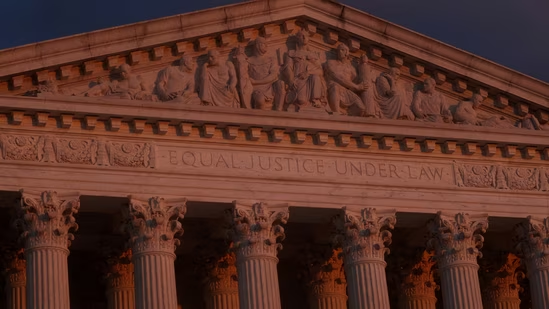

In a contentious decision Monday, the U.S. Supreme Court gave President Donald Trump the green light to move forward with his plan to overhaul the Department of Education, including the layoff of nearly 1,400 federal employees. The ruling effectively halts a lower court’s injunction that had blocked the layoffs and raised concerns about the broader effort to dismantle the agency.
The court’s conservative majority did not issue an explanation, but the three liberal justices—Sonia Sotomayor, Elena Kagan, and Ketanji Brown Jackson—issued a scathing dissent. They warned that the decision sets a dangerous precedent by allowing the president to bypass laws enacted by Congress.
“When the Executive publicly announces its intent to break the law, and then executes on that promise, it is the Judiciary’s duty to check that lawlessness, not expedite it,” Justice Sotomayor wrote.
Their dissent further cautioned that the ruling hands the president the power to effectively “repeal statutes by firing all those necessary to carry them out.” The justices called the majority “either willfully blind or naive,” warning of a serious threat to the Constitution’s separation of powers.
The ruling allows Trump and Education Secretary Linda McMahon to resume a controversial reorganization plan that includes $1.5 billion in grant cuts and a workforce reduction that critics say will cripple the agency’s core functions. Secretary McMahon called the ruling a vindication of presidential authority.
“It’s a shame it took the Supreme Court to restore basic executive power,” McMahon said. “The president has full authority to manage federal staffing and operations, and today’s ruling confirms that.”
The layoffs, which began with administrative leave in March, had been halted by U.S. District Judge Myong Joun of Boston, who called the plan a likely violation of federal law. Joun warned the mass terminations would “likely cripple the department,” particularly its ability to carry out congressional mandates such as distributing financial aid, supporting special education, and enforcing civil rights protections.
Two lawsuits, one filed by Massachusetts school districts and teacher unions, and another by a coalition of 21 Democratic attorneys general, alleged that the Trump plan amounts to an illegal attempt to shutter the department without congressional approval.
Employees affected by the layoffs have been on paid leave since March. The Education Department had indicated earlier this summer it was exploring how to reintegrate the workers. But without Judge Joun’s injunction in place, the path is now cleared for their permanent dismissal.
On the same day as the high court’s decision, more than 20 states filed new lawsuits against the administration, challenging the freeze of billions in federal education funds for after-school programs, summer learning, and other essential services.
The legal fight over the future of the Education Department appears far from over—but for now, Trump’s plan is moving full speed ahead.