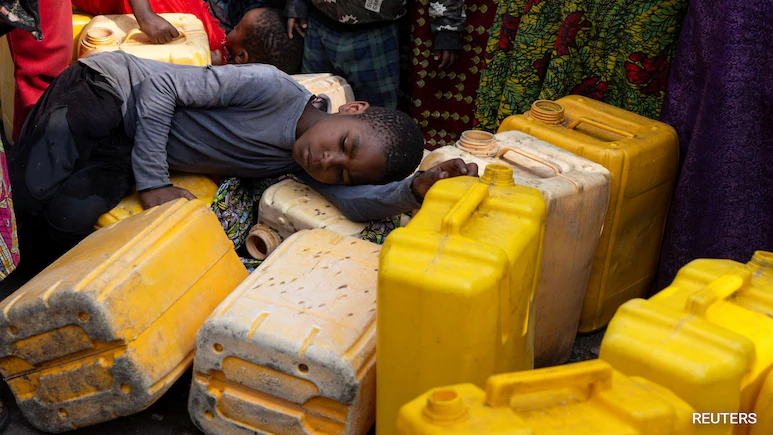

The Trump administration’s sweeping cuts to U.S. foreign aid have brought dozens of critical water and sanitation projects to a grinding halt around the world, leaving millions of people without promised access to clean drinking water and safe sanitation.
A Reuters investigation identified 21 incomplete projects across 16 countries, many previously unreported. Interviews with 17 sources and internal documents reveal a trail of half-dug trenches, abandoned building supplies, and communities now more vulnerable to disease, displacement, and instability.
Since January, hundreds of millions in U.S. funding have been withdrawn, halting work midstream. In Mali, water towers meant for schools and clinics now stand incomplete. In Nepal, over 100 clean water systems remain unfinished, with thousands of bags of cement and supplies sitting idle. The country’s water minister, Pradeep Yadav, says Nepal will now attempt to finish the work with its own funds.
In Lebanon, a U.S.-funded solar project for water utilities was canceled, resulting in 70 job losses and forcing water services back to costly diesel power. In Kenya’s Taita Taveta County, half-built irrigation canals are now seen as flood hazards that could destroy crops and worsen disasters for local farmers.
“I have no protection from the flooding that the canal will now cause,” said 74-year-old farmer Mary Kibachia. “The floods will definitely get worse.”
The halted projects are part of a broader rollback of U.S. global aid efforts under Trump. The dismantling of the U.S. Agency for International Development (USAID) has disrupted food and medical relief worldwide. A Lancet study estimates the aid cuts could contribute to 14 million preventable deaths by 2030.
Trump and his allies argue that U.S. tax dollars should prioritize domestic needs. They’ve criticized USAID for funding programs they view as outside its core mission—such as LGBTQ+ initiatives in Serbia—while slashing budgets for water and infrastructure. Despite bipartisan support in the past, including a 2014 law that doubled water aid funding, the projects have become political targets under Trump’s second term.
John Oldfield, a longtime advocate for global water access, warned of the long-term consequences: “Do we want girls carrying water on their heads for their families, or do you want them carrying school books?”
Security Risks and Reputational Damage
The U.S. State Department has assumed control of foreign aid from USAID but has yet to restore funding for most water projects. One exception: a $6 billion desalination plant in Jordan, revived after diplomatic pressure from King Abdullah. Projects in Ethiopia, Tanzania, and Congo remain in limbo.
Nonprofit groups working with USAID say communities that were counting on these projects are now worse off than before. In Congo, incomplete water kiosks are now playgrounds. One woman, Evelyne Mbaswa, said her teenage son disappeared in June while fetching water.
“When we send young girls, they are raped. Young boys are kidnapped,” said Mbaswa, a mother of nine. “All this is because of the lack of water.”
In eastern Kenya, only 15% of a $100 million USAID water and irrigation project had been completed before workers were ordered to stop. Unprotected construction sites are now dangerous for children and livestock. USAID-branded materials at the sites make it clear who left the work unfinished, raising concerns in a memo from the U.S. embassy in Nairobi: “The reputational risk of not finishing these projects could turn into a security risk.”
The memo cited al-Shabaab’s recruitment efforts in underserved regions, warning that abandoned U.S. projects may fuel anti-American sentiment.
Local Communities Step In
In Taita Taveta County, residents are trying to salvage what they can. Only 220 meters of a planned 3.1-kilometer canal were built before work stopped—without plaster or reinforcement, the brick walls are vulnerable to collapse.
“Without plaster, the walls will collapse in heavy rain, and the flow of water will destroy farms,” said local leader Juma Kobo.
The community hopes to raise funds—possibly by selling leftover cement and steel cables—to finish the project. The estimated cost: 68 million shillings ($526,000). Stephen Kiteto Mwagoti, an irrigation officer, said the local government must “find funds to at least finish the project to the degree we can with the materials we have, if not complete it fully.”
Meanwhile, Kibachia, the 74-year-old farmer, has already suffered. Three months after the canal work stopped, her home flooded with thigh-high water.
“It was really bad this time,” she said. “I had to use soil to level the floor of my house and to patch holes in the wall. Where can I go? This is home.”