
Defense Secretary Pete Hegseth directed the U.S. military on Sept. 2 to kill all 11 people on a suspected drug-smuggling vessel in the Caribbean Sea because each person on board was on an internal narco-terrorist target list, the commander in charge of the mission told lawmakers in briefings this past week, according to two U.S. officials and a person familiar with the discussions.
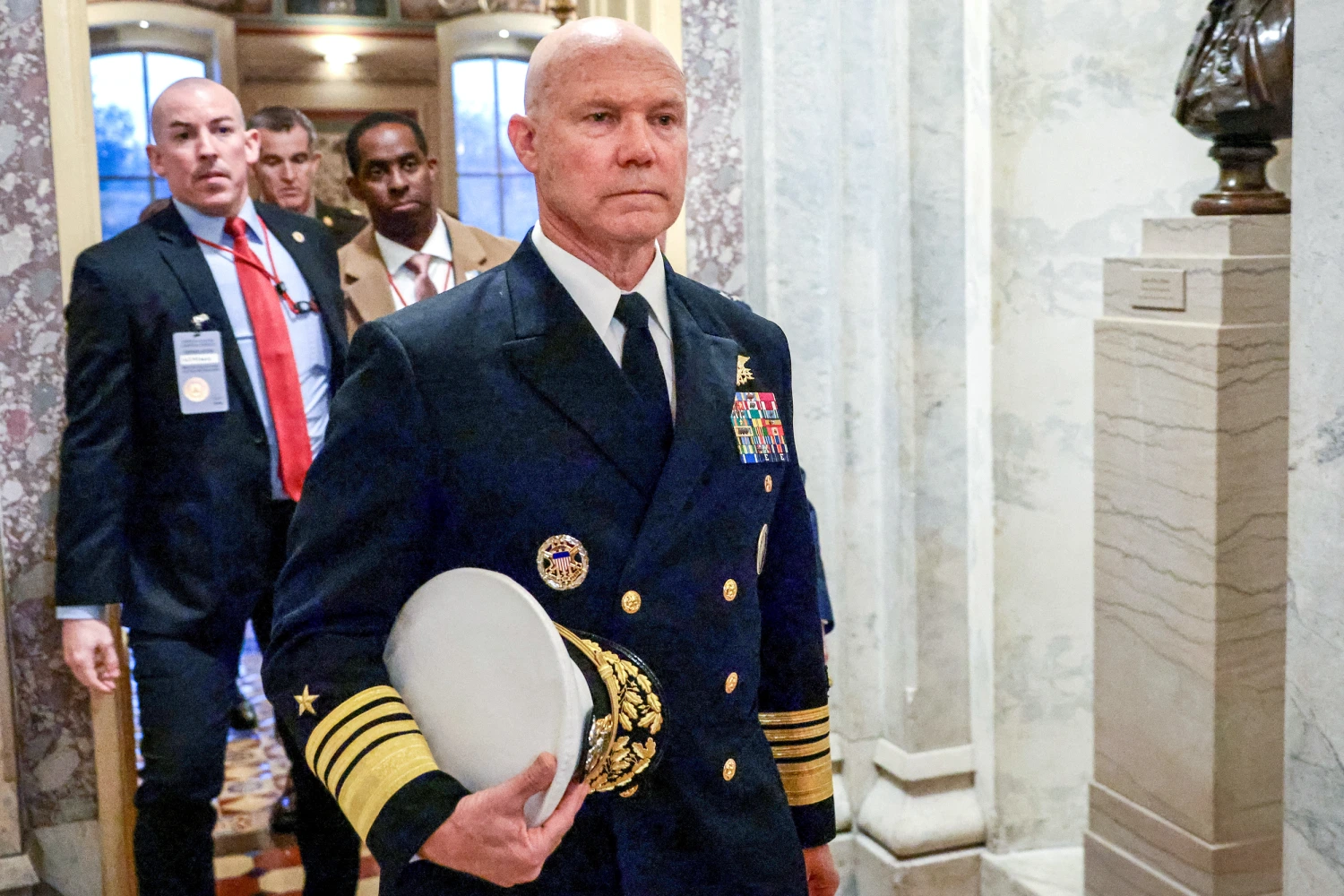
That internal list, the officials said, identifies individuals who can be targeted, including with lethal force, when the opportunity arises. Adm. Frank “Mitch” Bradley, who oversaw the Sept. 2 operation, told members of Congress that U.S. intelligence officials had confirmed the identities of the 11 people on the boat and validated them as lawful targets. Only after that, he said, did the military carry out airstrikes as part of President Donald Trump’s campaign against alleged drug-smuggling vessels, according to the officials and the person familiar with the briefings.
The fact that all 11 people aboard were on a U.S. military target list had not been previously disclosed publicly. It adds a new layer to an operation already under scrutiny because the military launched a second strike after the first attack left two survivors in the water.
Lawmakers have questioned whether that follow-up strike complied with international law. Whether Hegseth explicitly instructed Bradley, the commander of U.S. Special Operations Command, to ensure no one on the vessel survived has been central to the controversy surrounding the second strike.
An administration official said Bradley emphasized in his briefings that he adhered fully to legal requirements at every stage of the mission. “As with all such actions, a uniformed JAG provided advice and counsel every step of the way,” the official said in a written statement, adding that the vessel was targeted because it was “carrying cocaine” and was “affiliated with a cartel designated by the president as a terrorist organization.”
“The cumulative impact of these narcoterrorist shipments directly threaten Americans and the national security interests of the United States,” the official said.
The Pentagon did not respond to a request for comment. U.S. Special Operations Command also declined to comment.
The Pentagon has previously said that 22 strikes on suspected drug boats have killed 86 people — 11 in the Caribbean Sea and 11 in the eastern Pacific. So far, the administration has not released evidence to substantiate its claims about the nature of the vessels or the people aboard them.
On Thursday, Bradley spent more than eight hours on Capitol Hill briefing around a dozen lawmakers and their staff on the Sept. 2 operation. Gen. Dan Caine, chairman of the Joint Chiefs of Staff, was also present.
This account of the timeline Bradley provided and his explanation of the mission is based on interviews with the two U.S. officials and the person familiar with the congressional briefings.
According to those sources, Bradley told lawmakers that Hegseth’s orders were to kill the individuals on the approved target list — which, he said, included everyone on the boat — then destroy the narcotics and sink the vessel.
White House press secretary Karoline Leavitt told reporters Monday that “Secretary Hegseth authorized Adm. Bradley to conduct these kinetic strikes.” She added that Bradley “worked well within his authority and the law directing the engagement to ensure the boat was destroyed and the threat to the United States of America was eliminated.”
Bradley told lawmakers that the second strike killed the two remaining survivors but did not sink the vessel, so he ordered a third and then a fourth strike to complete the mission, the officials and the person familiar with the briefings said.
Hegseth has said he watched the operation unfold on Sept. 2 but “did not personally see survivors.” During a Cabinet meeting at the White House this past week, he defended Bradley’s decision to carry out the second strike, saying the admiral “made the right call.”
“This is called the fog of war,” Hegseth said.