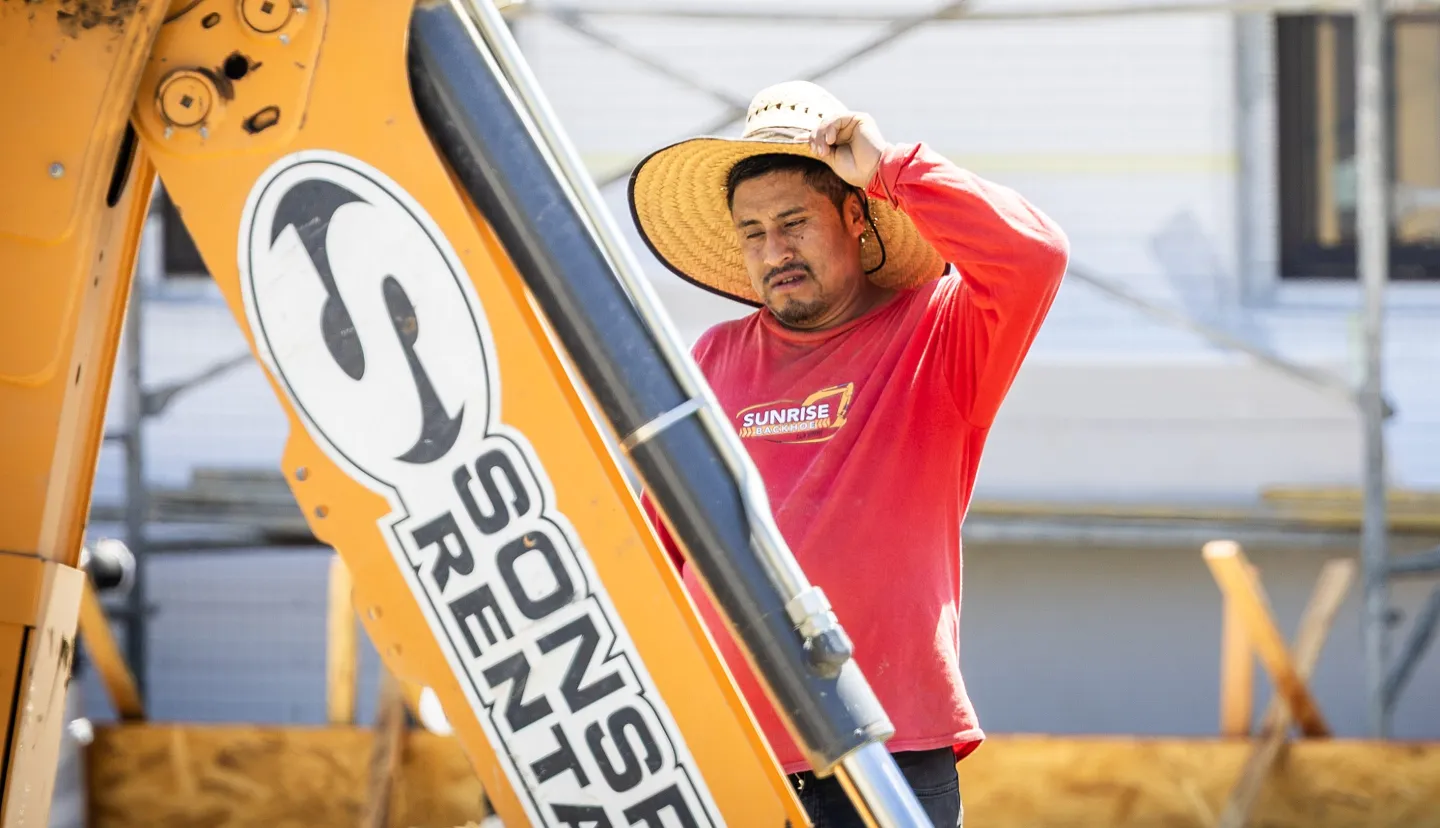

Across Baldwin County, Alabama, construction sites are seeing workers disappear mid-shift—not because they quit, but because immigration agents have taken them away. These “God-fearing, family-oriented” laborers have braved sweltering summer heat to support their families, and their absence is leaving a tangible gap on job sites.
Contractors now warn that the raids are worsening a labor shortage already threatening the state’s economic growth, even in Alabama, where 65% of voters supported President Trump with immigration as a key issue.
Russell Davis, executive vice president of the Home Builders Association of Alabama, told Fortune that the industry is feeling the effects firsthand.
“We’ve had several situations where we’ve had job sites raided, for lack of a better term… and it is a cause of concern,” he said. “It’s definitely affected the labor market in general,” with ripple effects reaching beyond undocumented workers.
“There’s a lot of folks that are here legally, that have relatives that may not be, and it’s put everybody more in a defensive position,” Davis added.
Across the South, heightened ICE enforcement is visible on school sites and in store parking lots—more so than during Trump’s first presidency, labor economist Anirban Basu told Fortune.
“For years, the U.S. construction industry has faced skills and labor shortages, even with significant participation from undocumented migrants,” Basu said. “This enforcement push is an economic shock: It drives up costs, delays investment, and leaves us with a lower-grade built environment.”
This summer alone, federal agents detained nearly 50 workers at Baldwin County school projects in Gulf Shores and Loxley, and 475 people at a Hyundai EV plant in neighboring Georgia. Contractors report crews are now working with “heads on a swivel,” leading to blown schedules and reduced capacity.
“It’s definitely affected the ability… to get houses built in a timely fashion,” Davis said. “We’ve got huge gaps.”
Construction projects are notorious for delays, Basu noted, but ICE enforcement adds extra costs that can halt previously viable projects.
“When contractors must replace crews quickly, the documented workers they can find are often more expensive and harder to source,” he explained. “That squeezes margins and delays delivery.”
Basu also challenged the idea that immigrant workers “take jobs” from Americans.
“Look at who’s on the roofs of American homes—mostly immigrants,” he said.
“It’s dangerous, unpleasant work in the Alabama heat. The idea that an immigrant ‘takes a job’ is a zero-sum mistake.”
For many contractors, the shift in perspective comes from personal experience: crews aren’t just statistics—they are people they know as “God-fearing and family-oriented.” Seeing these workers raise families and pay taxes in the community often softens harsh rhetoric.
The White House did not respond to Fortune’s request for comment.
Industry Leaders Push for a Work-Visa Program
Builders are not calling for blanket amnesty, particularly for workers who violate the law. But after a summer of disappearing crews, Davis said companies are reconsidering broad deportations in favor of targeted enforcement and legal work channels for long-standing, tax-paying workers. The proposal: a renewable, employer-backed visa allowing vetted crews to stay on the job while non-law-abiding workers are removed.
“I can’t help but believe at some point that a work-visa program could be successful and help our industry and help our economy as well,” Davis said. “In today’s world, it’s probably pretty hard… but there’s got to be a way. We’ve got to step up to the plate and try to do the right thing for people who are trying to do right themselves.”
Builders will continue to adapt, he added, but there remains a gap between the workers who were here and the young people currently being trained.
The economic stakes are immediate. Davis puts it plainly: Alabama’s builders are running out of time—and workers—unless Washington shifts from broad sweeps to a practical, legal solution that keeps dependable crews on the job.