
The National Transportation Safety Board issued a stark warning this week: a change to aviation rules tucked inside a major military spending bill could create the conditions for a deadly crash in some of the busiest airspace in the country.
Speaking to reporters on Wednesday, Dec. 10, NTSB Chair Jennifer Homendy said the proposal would amount to a “significant safety setback,” even as lawmakers argue the measure is intended to strengthen safeguards for the flying public.
What the fight is about
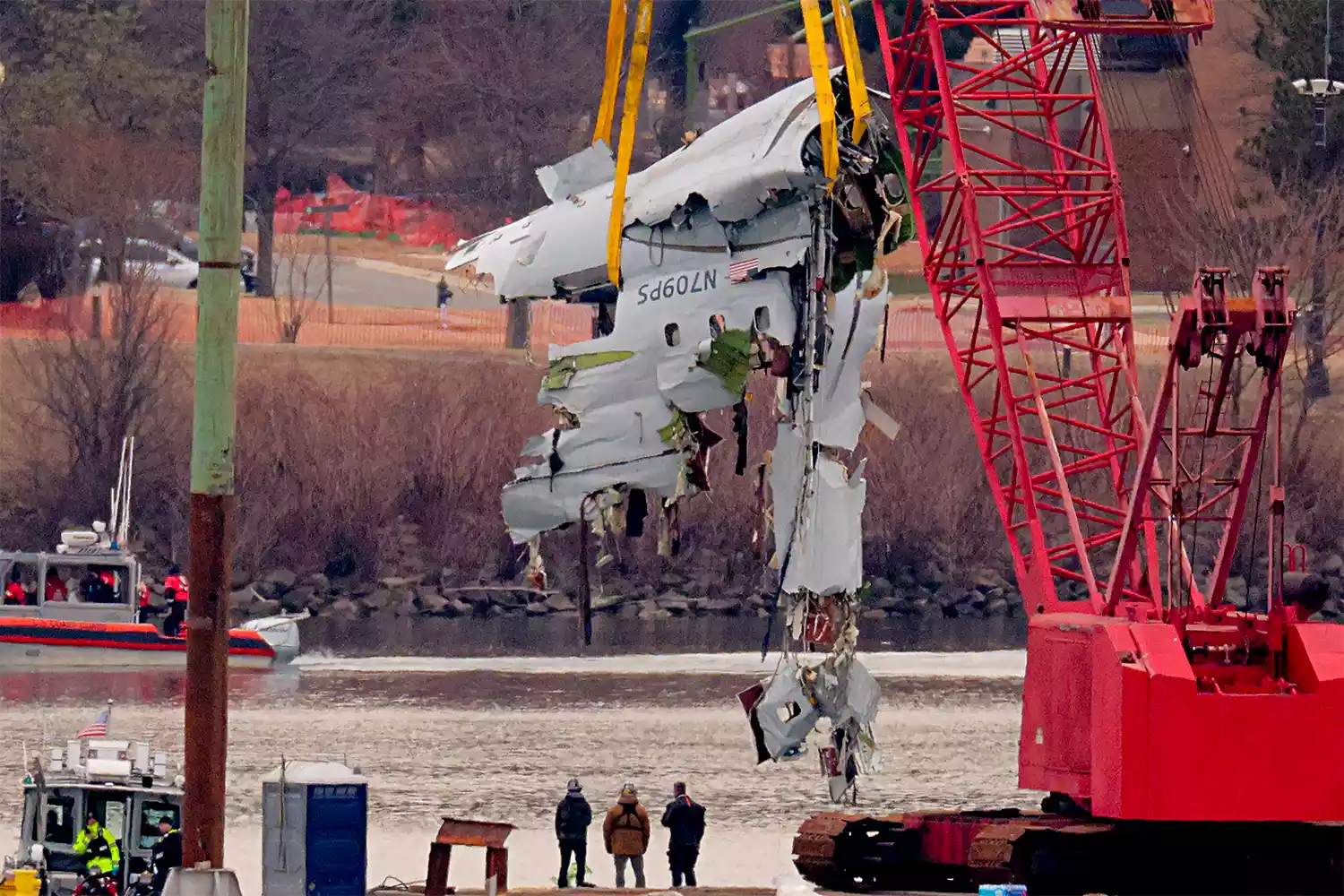
The dispute centers on language included in the National Defense Authorization Act. Homendy argues the provision would weaken reforms that followed a January midair collision just outside Washington, D.C., involving an Army Black Hawk helicopter and an American Airlines jet. All 67 people aboard the two aircraft died.
Under the pending bill, military aircraft operating around the D.C. region would be required to use TCAS — the traffic alert and collision avoidance system — in the area’s notoriously complex and crowded airspace.
However, the aircraft would not be required to use automatic dependent surveillance–broadcast (ADS-B), the broadcast-based tracking technology the military agreed to begin using after the January crash — and which was not being used at the time of that collision.
Homendy said that’s a serious problem. In a letter to lawmakers this week, she wrote that ADS-B provides stronger safety and location information for aircraft operating close together — particularly in an environment like the airspace surrounding Ronald Reagan Washington National Airport, where commercial and military flights frequently overlap.
:max_bytes(150000):strip_icc():focal(773x408:775x410):format(webp)/helicopter-reagan-national-airport-013125-1-216dfb2dd6b34049a8f1189ff589fe27.jpg)
She also warned against leaning heavily on TCAS as a solution, arguing that the system did not prevent the January collision.
Supporters say the bill sets a floor, not a ceiling
Backers of the provision — including senior members of Congress — contend the bill should be understood as setting a minimum standard and expanding oversight, helping ensure that a wide range of military aircraft do not operate without broadcasting their locations except under limited circumstances.
The legislation would allow top military and government officials to waive the TCAS requirement for “national security,” so long as a “risk assessment” is completed.
Homendy sharply criticized that carve-out, saying it doesn’t go far enough and could leave serious gaps.
In her letter, she argued military officials have not demonstrated that they fully grasp the unique hazards of navigating D.C.’s airspace. “As it is clear from our investigation thus far, that the Army and potentially other military departments within the [Department of War] do not … understand the complexities of the DC airspace, how to conduct a thorough safety risk assessment, or implement appropriate mitigations to ensure safety for all,” she wrote.
Speaking Wednesday, Homendy said the proposal “represents an unacceptable risk to the flying public, to commercial and military aircraft crews and to the residents in the region.” She added that she was not consulted on the bill and said she did not know who on Capitol Hill had inserted the aviation language. She called it an “unthinkable dismissal” of the ongoing investigation and of the families of the 67 victims, stressing the tragedy was preventable.
Lawmakers push back and point to the investigation
In a statement to PEOPLE, the chairmen and ranking members of the House and Senate Armed Services Committee said, in part, “We all care deeply about and are fully committed to ensuring aviation safety. In particular, we want to ensure military aircraft properly coordinate with civil aviation authorities in order to avoid another tragic accident.”
“We look forward to the National Transportation Safety Board (NTSB) releasing the results of its investigation next month. … We agree that there is more that needs to be done,” they added.
A committee aide echoed that theme, saying that “every party involved wants to improve the safety of our airspace” and describing that as the guiding approach once the investigation is released.
The aide also said the legislation was developed after the NTSB released preliminary information indicating that one factor in the January crash involved the Black Hawk’s exemption from broadcasting its position and altitude. According to the aide, any waiver would require agreement from both the Secretary of the military branch involved and the Secretary of Transportation — a standard the aide described as a “very high bar.”
What happens next
The NTSB’s investigation into the January collision has pointed to multiple operational and airspace-management issues around Ronald Reagan Washington National Airport, along with a chain of errors before the crash. A final report is still pending.
The National Defense Authorization Act passed the House on Wednesday. Some senators have since said they want the D.C.-area aviation language removed, according to PBS.
Still, the bill remains a major priority for both Congress and the White House because it authorizes military pay, and lawmakers are expected to pass some version of it before the year-end recess.