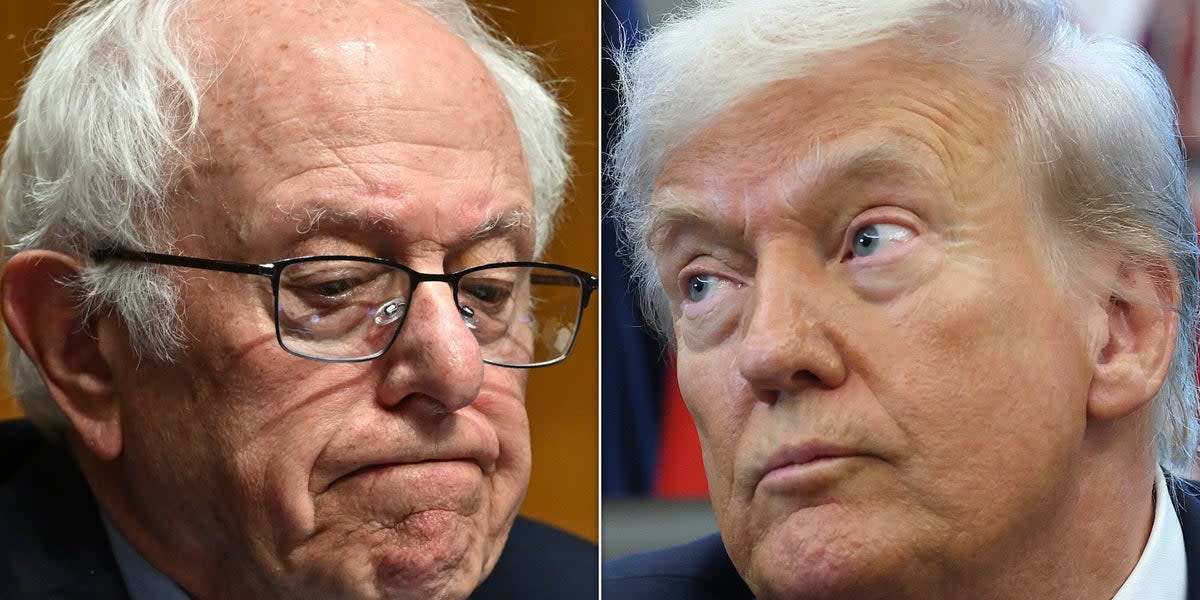

Senator Bernie Sanders has long been one of Donald Trump’s most outspoken critics, and he shows no signs of backing down. Once again, Sanders is shining a spotlight on what he sees as Trump’s extraordinary privilege—and his detachment from the financial realities facing millions of Americans.
On December 28, 2025, Sanders took to X (formerly Twitter) to share his latest criticism. He posted a Forbes graphic illustrating that Trump’s net worth rose by roughly 273 percent between 2020 and 2025. Accompanying the image, Sanders wrote that Trump’s fortune had nearly tripled during his time in office, arguing that much of this growth was tied to cryptocurrency ventures supported by foreign governments. Sanders contrasted that surge in wealth with the daily struggles of Americans who are unable to afford essentials like food, housing, and health care, saying the country needs leadership focused on improving lives rather than enriching itself.
Sanders’ remarks align closely with his long-standing message about wealth inequality and corruption. Throughout his career, he has pushed for policies aimed at preventing the concentration of wealth among a small elite and ensuring that basic needs are met for everyone. His recent alignment with New York mayor-elect Zohran Mamdani reflects those priorities. Sanders endorsed Mamdani during the mayoral race and backed several worker-focused initiatives, including high-profile Starbucks protests over alleged labor law violations, wages, scheduling, and workplace conditions.
The senator’s post, however, quickly ignited debate online. Many users echoed Sanders’ concerns, agreeing that Trump’s wealth increase deserved scrutiny and that stronger measures were needed to improve economic conditions for ordinary Americans. Others pushed back, defending Trump and questioning Sanders’ motives.
Some critics asked Grok to examine the personal wealth accumulated by former President Barack Obama during his presidency and by Sanders himself over the course of his Senate career. When Grok indicated that both men had also seen significant increases in their net worth while in public office, skeptics seized on the results, suggesting potential hypocrisy or impropriety. At the same time, they argued that Trump’s rising wealth was therefore unremarkable, claiming that financial growth among powerful figures is common and not necessarily evidence of wrongdoing.
The sharply divided reactions underscored just how polarized the conversation has become—where evidence is often filtered through loyalty, and even stark disparities in wealth can be rationalized depending on who benefits from them.