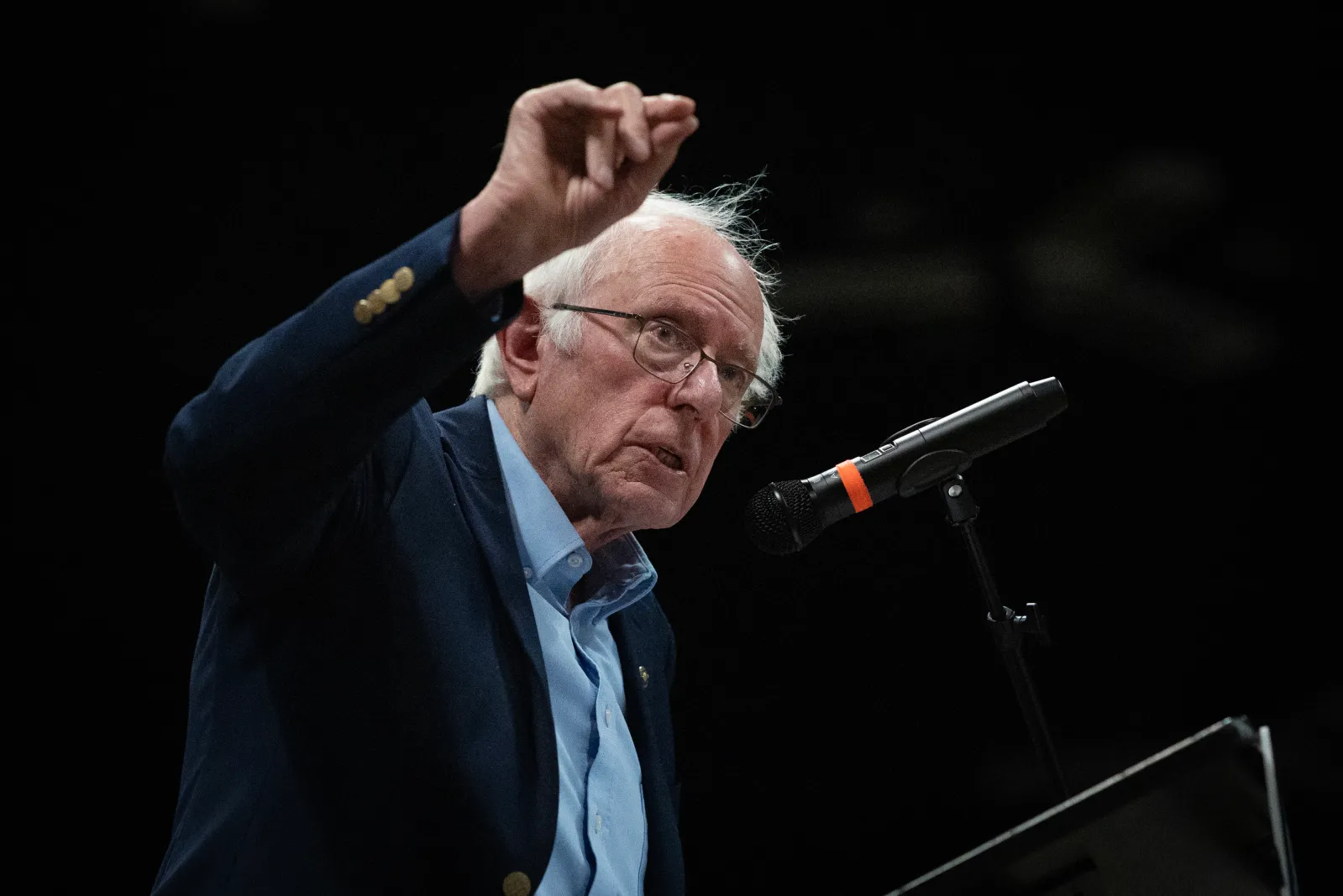

Senator Bernie Sanders, a Vermont independent, is set to launch a campaign supporting a California proposal to tax billionaires, according to The Los Angeles Times.
Sanders, a self-described democratic socialist, has backed higher taxes on the wealthy for years. His national profile grew during his presidential campaigns, and other left-leaning lawmakers, including Representative Alexandria Ocasio-Cortez of New York, have since been elected to Congress. Still, critics have questioned Sanders’ views on capitalism by pointing to his own personal wealth.
Why It Matters
California voters could decide in November whether to enact a new tax on billionaires. Supporters are working to collect 875,000 signatures from registered voters to qualify the proposal for the ballot. If approved, the measure would impose a one-time 5 percent tax on California billionaires.
Backers argue the tax could help fund public services, including health care. Opponents say it could encourage billionaires to leave the state, potentially shrinking future revenue.
Sanders supports the proposal, The Los Angeles Times reported. He said the tax would “provide the necessary funding to prevent over 3 million working-class Californians from losing the healthcare they currently have — and would help prevent the closures of California hospitals and emergency rooms.”
“It should be common sense that the billionaires pay just slightly more so that entire communities can preserve access to life-saving medical care. Our country needs access to hospitals and emergency rooms, not more tax breaks for billionaires,” he told the newspaper.
Sanders is not a billionaire. Forbes estimated his net worth at about $2.5 million in 2019. He owns three homes, including properties in Burlington, Vermont, and Washington, D.C., as well as a third home on Lake Champlain.
The senator has said his wealth grew largely through his Senate salary and book deals. In a 2024 interview on The Lex Friedman Podcast, he defended owning multiple residences and said he earned additional income from writing two best-selling books. He also noted his Senate salary is about $175,000 a year.
Billionaire Tax Proposal Divides Democrats
Democrats in California have taken different positions on the proposed tax.
Governor Gavin Newsom told Politico the initiative “makes no sense” and called it “really damaging to the state.”
Representative Ro Khanna, who represents parts of Silicon Valley, has urged compromise. He told Bloomberg in January that he had been engaging both tech leaders and ballot proponents to address concerns about innovation and inequality.
How Likely Is the Tax to Pass?
A Nestpoint poll released last month found 60 percent of Californians supported the tax when shown the initial ballot text, while 24 percent opposed it. After respondents were presented with opposition messaging, support fell to 54 percent. The survey questioned 907 likely voters from January 2–12, 2026, and reported a margin of error of plus or minus 3 percentage points.
What People Are Saying
SEIU-UHW endorsed the tax, saying it would fund health care, education, and food assistance programs and would apply only to Californians worth more than $1 billion.
Ro Khanna wrote on X that his district includes some of the nation’s most valuable companies and argued that supporting a billionaire tax should not be difficult for other members of Congress.
Billionaire Tom Steyer, who is running for governor in California, wrote on Substack that he supports taxing the wealthy to fund health care and education but raised concerns about whether the proposal is designed to work long term.
What Happens Next
Supporters have until June 24 to gather enough signatures to place the measure on the November ballot.