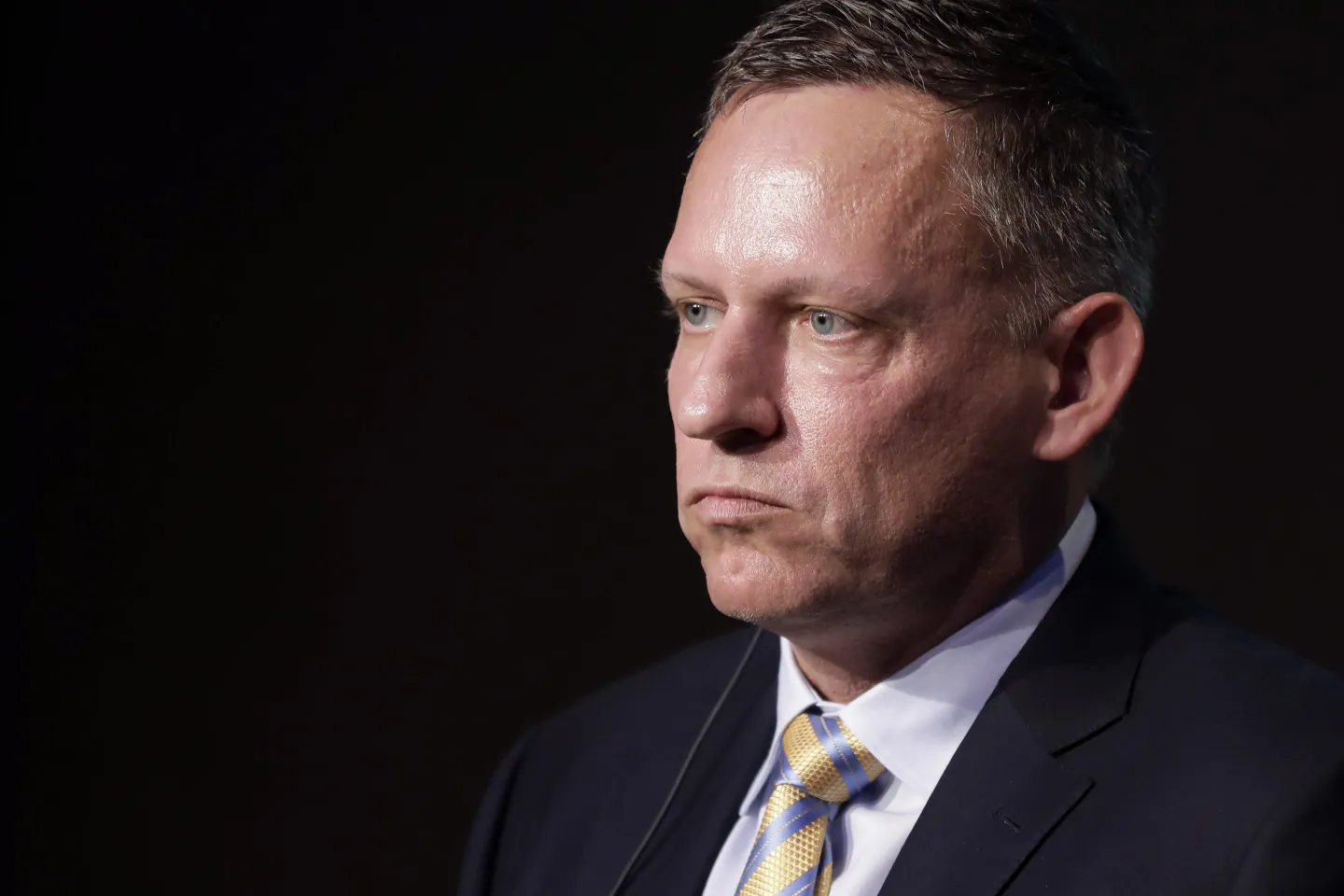

PayPal cofounder and Silicon Valley investor Peter Thiel is renewing his concern about growing generational divides and the future of capitalism — concerns he first voiced years ago that are now resurfacing after the election of democratic socialist Zoran Mamdani as New York City’s new mayor.
Following Tuesday night’s results, an email Thiel wrote in 2020 circulated widely online. In that message to Mark Zuckerberg, Marc Andreessen, and others, he urged a deeper understanding of why younger Americans appear to be embracing socialism, noting: “When 70% of Millennials say they are pro-socialist, we need to do better than simply dismiss them by saying that they are stupid or entitled or brainwashed; we should try and understand why.”
Speaking with the Free Press in a recently published interview, Thiel argued that housing restrictions and zoning rules have rewarded older generations — especially Boomers who watched property prices soar — while making homeownership nearly unreachable for Millennials.
“If you proletarianize the young people, you shouldn’t be surprised if they eventually become communist,” he said.
Although Thiel supported Donald Trump in the 2020 election and disagrees with Mamdani’s solutions to New York’s housing crisis, he acknowledged that Mamdani is at least prioritizing affordability concerns in a way mainstream politicians have not.
Thiel questioned whether young people are truly more supportive of socialism or simply fed up with an economic model they feel has turned against them. In his words, many are thinking: “‘Capitalism doesn’t work for me. Or, this thing called capitalism is just an excuse for people ripping you off.’”
Affordability Takes Center Stage in Politics
Mamdani’s win underscored a shift away from traditional Republican politics — but it wasn’t only progressives who resonated with voters. More moderate candidates found success by emphasizing the growing burden of the cost of living.
Polling expert Frank Luntz called the election outcomes a “wake-up call” for both parties to take affordability seriously, differentiating the issue from general inflation trends.
Thiel expressed empathy for those demanding major changes to address challenges like housing costs and student debt, noting that the minor policy tweaks of past years have failed. This frustration, he said, has opened the door to “some very left-wing economics, socialist-type stuff.”
It’s no surprise to him that voters are turning toward candidates like Mamdani — though Thiel remains skeptical their ideas will fix the problem.
“Capitalism is not working for a lot of people in New York City. It’s not working for young people,” he said.
“A Political Bull Market” — Fueled by an Aging Nation
Thiel also described the surge in socialist sentiment among younger Americans as part of a broader surge in political energy — a “multi-decade political bull market.”
Increasingly, people are turning to political institutions to solve personal and economic challenges, he said, driven by a widening gulf between expectations and reality. Boomer parents believed their children would be more prosperous — yet many Millennials have fallen short of that promise.
“There’s never been a generation where the gap has been as extreme,” Thiel said.
He cast doubt on the possibility of a dramatic uprising, noting that communism and fascism historically grew through youth-led movements — and America isn’t getting younger. Birth rates have declined, and the country is trending toward a “gerontocracy.”
“And so, we have more of a gerontocracy. Which means that if the U.S. becomes socialist, it will be more of an old people’s socialism than a young people’s socialism, where it’s more about free healthcare or something like that,” he said.
Even the idea of revolution no longer aligns with the country’s demographics.
“The word ‘revolution’ sounds pretty high testosterone and violent and youthful. And today, if it’s a revolution, it’s 70-something grandmothers,” Thiel added.