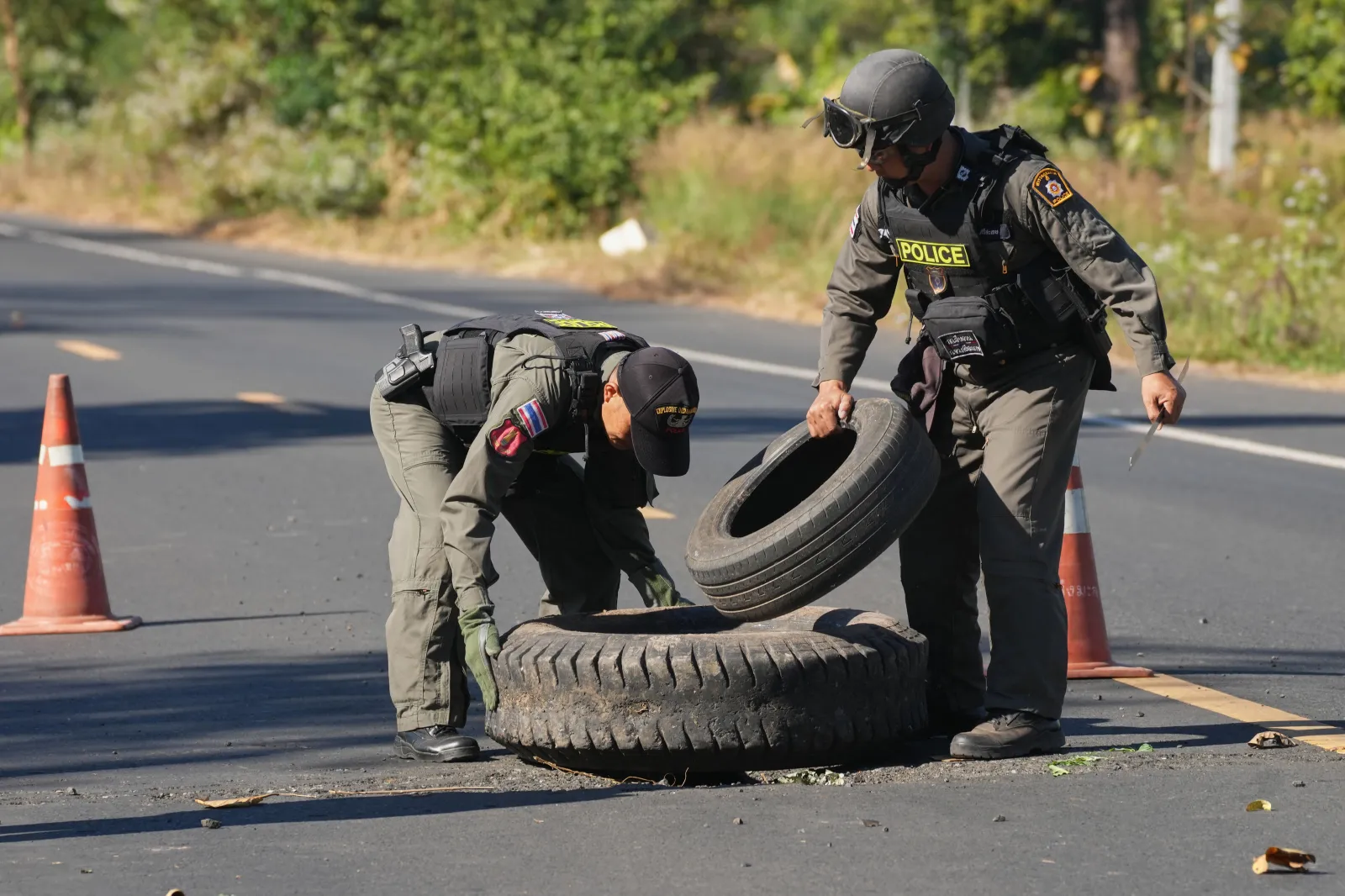

Thailand says it is examining guided anti-tank missiles its army captured along the border during renewed fighting with Cambodia. The weapons include the GAM-102LR, a fifth-generation precision-guided anti-tank missile (ATGM) developed in China.
The Royal Thai Army said the captured missiles are in its custody and will not be handed over to anyone, according to Thai Public Broadcasting Service (PBS). Newsweek has reached out to the Foreign Ministries of Cambodia and China for comment.
Why It Matters
China’s defense exports are becoming more visible in regional conflicts, highlighting how Chinese military technology is influencing security dynamics in Southeast Asia. China has supplied VT-4 tanks to the Royal Thai Army under a 2017 agreement.
Thailand has also moved to disrupt supply routes and logistical support it believes may be aiding Cambodian forces. The border conflict is in its second week despite President Donald Trump announcing earlier this week that the two countries had agreed to a new ceasefire.
What To Know
Security sources told The Nation Thailand that questions have emerged over how such costly, advanced hardware appeared in Cambodian border operations. However, PBS reported Tuesday that the Thai Army said there is no evidence at this stage to prove China has been secretly resupplying Cambodian forces with weaponry.
If it is confirmed that Cambodia is operating the GAM-102, it would mark the first known deployment of the system by any military, according to defense site Janes. Unveiled by Poly Technologies in 2018, the GAM-102 can be tripod- or vehicle-mounted and resembles the U.S. FGM-148 Javelin.
Thai authorities also reported seizing other weapons, including Chinese-made 82 mm Type 65 grenade rounds and Norinco PF-89 anti-tank unguided rockets, along with associated warheads. State media said Thai military strikes destroyed large quantities of munitions and disrupted Cambodia’s ability to resupply front-line forces.
In a separate step, Bangkok decided Monday to stop fuel shipments through a Laos border checkpoint amid concerns supplies were being diverted to Cambodia, according to Reuters. Thai Prime Minister Anutin Charnvirakul said Thailand cannot legally restrict exports that are properly documented and destined for its neighboring nation.
Thailand and Cambodia have disputed a roughly 500-mile border for decades, a boundary originally drawn by the French during Cambodia’s colonial era. A ceasefire signed on October 26 in Malaysia and backed by the U.S. quickly collapsed. Both Thailand and Cambodia have rejected Trump’s recent claims that they had agreed to a new ceasefire.
What People Are Saying
Thailand’s Prime Minister Anutin Charnvirakul wrote on Facebook Sunday: “There was no plan nor agreement by [the] Thai government to a ceasefire with our enemy as of 10 p.m. last night. Thailand stands firm with our determination to preserve, protect and defend [the] integrity of our land and our people at all costs.”
Cambodia’s Ministry of Defense posted on Facebook Sunday: “Cambodia reaffirms its firm commitment to comply with and adhere to the ceasefire conditions, the joint statement on the peace agreement between Cambodia and Thailand, with utmost zeal and responsibility.”
China’s Foreign Ministry spokesperson Guo Jiakun said in a press briefing Monday: “As neighbors and friends of both countries, China follows closely the current developments along the border of Cambodia and Thailand…The top priority now is to stop the fighting and protect civilians.”
What Happens Next
Thailand is demanding that Cambodia cease fire first, Bangkok’s Foreign Ministry said Tuesday, according to state media. Casualties are rising, and civilians continue to flee the conflict zone.