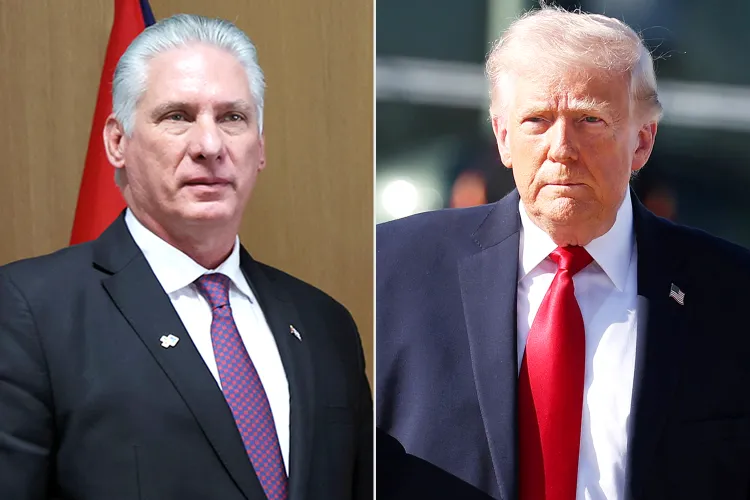

Cuban President Miguel Díaz-Canel declared on Sunday that his nation is prepared to face a U.S. military invasion, vowing that Cubans would “die fighting” rather than submit to Washington’s intensifying pressure campaign.
The statements, delivered during an interview on NBC News’ Meet the Press, mark a significant escalation in rhetoric as President Donald Trump signals that Cuba may be the next target for U.S.-led regime change.
Speaking through a translator to host Kristen Welker, Díaz-Canel rejected the legitimacy of U.S. intervention. “If [an attack] happens, there’ll be fighting and there’ll be a struggle and we’ll defend ourselves,” he said. “I have no fear. I am willing to give my life for the revolution.”
The President’s defiance follows a period of aggressive U.S. foreign policy shifts, including recent strikes against Iranian leadership and the deployment of troops to Venezuela to oust Nicolás Maduro.
The diplomatic rift is fueled by a U.S.-led oil blockade that has paralyzed the Caribbean island. By preventing shipments from reaching the nation of 10 million, the U.S. has triggered a systemic energy crisis.
:max_bytes(150000):strip_icc():focal(749x0:751x2):format(webp)/Cubas-President-Miguel-Diaz-Canel-041326-382628e675e14cf498ba32a85764ca2a.jpg)
Reports from The New York Times and local medical officials indicate the blockade has caused “devastating effects,” including:
- Widespread hospital disruptions.
- Increased mortality rates.
- Rising cases of infant malnourishment.
Díaz-Canel characterized the strategy as “viciousness and evil,” arguing that the U.S. lacks the moral authority to portray itself as a “savior” while intentionally subjecting a population to such hardship.
President Trump has remained steadfast in his “maximum pressure” approach. Speaking to reporters on Monday, Trump reiterated his view of Cuba as a “failing nation” that has been “horribly run.”
The administration has indicated that diplomatic talks are technically ongoing, but the terms appear to require total capitulation. Trump previously suggested he would put Secretary of State Marco Rubio—a staunch critic of Havana—in charge of the transition.
:max_bytes(150000):strip_icc():focal(749x0:751x2):format(webp)/cuban-people2-041326-6d0655eb99864ecfbf8024aa31e79fc6.jpg)
“Cuba’s gonna be next,” Trump told reporters aboard Air Force One late last month, framing the potential intervention as a mission to assist Cuban Americans and dismantle the long-standing communist government.
For the Trump administration, the goal is clear: utilize the oil blockade to trigger domestic unrest and a total government collapse. However, Díaz-Canel’s “homeland or death” rhetoric suggests that the Cuban leadership is digging in for a protracted and potentially violent conflict.
:max_bytes(150000):strip_icc():focal(749x0:751x2):format(webp)/cuban-people-041326-4535617ce3c24f468128e1c7868b9a07.jpg)
As the energy crisis worsens, the international community continues to watch whether the U.S. will pivot from economic warfare to the “surgical operations” the Cuban government now fears is imminent.