
President Donald Trump warned on Monday that the U.S. would impose steep tariffs on Russia—and its trading partners—if no peace agreement is reached in Ukraine within 50 days.
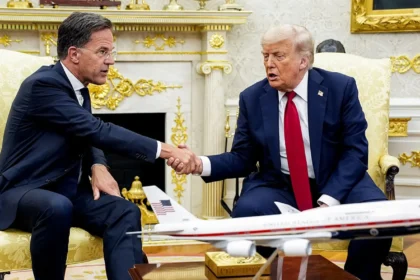
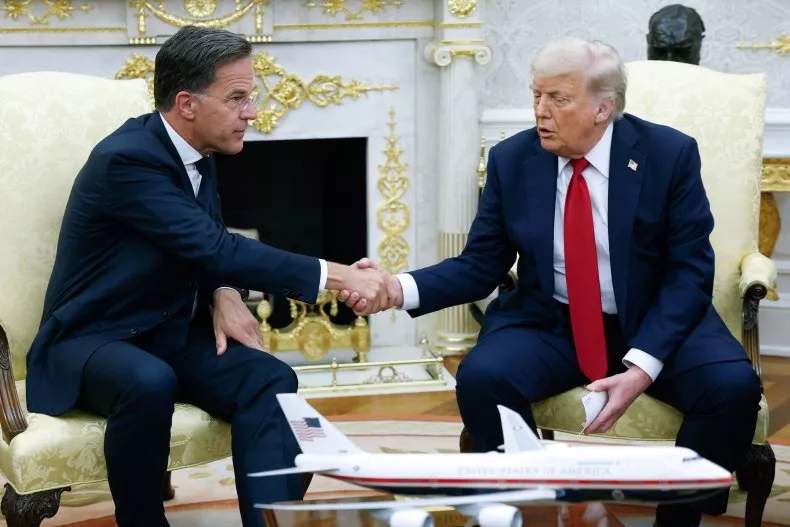
Speaking during an Oval Office meeting with NATO Secretary General Mark Rutte, Trump said:
“We’re going to be doing very severe tariffs if we don’t have a deal in 50 days.”
He added that the tariffs would be “secondary,” targeting third-party countries that continue trading with Moscow. “I use trade for a lot of things,” Trump said. “But it’s great for settling wars.”
Why It Matters
Russia has ramped up attacks on Ukraine, especially on Kyiv, launching hundreds of drones and missiles. According to the U.N., June 2025 was the deadliest month for civilians in three years, with 232 deaths and over 1,300 injuries. Ukraine’s air defense systems are under immense pressure, and Russian forces are advancing on several fronts.
What to Know
Trump’s stance on the war has shifted significantly. He previously criticized Ukrainian President Volodymyr Zelensky and claimed Russia was more open to peace. But as civilian casualties increased, he began openly criticizing Russian President Vladimir Putin. In April, he urged Putin to “STOP!” bombing Kyiv. In May, he called the Russian leader “absolutely CRAZY.”
On Monday, Trump confirmed the U.S. will send additional Patriot air defense missiles to Ukraine, with the European Union helping fund the purchase.
“We should’ve had a deal a long time ago,” Trump said. “Every night, people are dying… a lot of Russian soldiers too.”
While the EU itself cannot purchase weapons under its treaties, member states and NATO allies are actively supplying Ukraine. Rutte said countries like Germany, Finland, Canada, Sweden, and the U.K. are buying weapons, emphasizing the urgency of getting them delivered quickly to pressure Putin back to the negotiating table.
Germany, in particular, has committed to funding two additional Patriot systems, on top of the three it has already sent. German Defense Minister Boris Pistorius met with U.S. Defense Secretary Pete Hegseth in Washington and stressed Berlin’s growing defense commitments.
Meanwhile, Trump’s special envoy met with President Zelensky in Kyiv, as speculation mounts over a possible policy shift in the U.S. approach to the war. Rutte is also meeting with Secretary of State Marco Rubio and congressional leaders.
Congressional Push
Lawmakers on both sides of the aisle are calling for more aggressive measures. A bipartisan bill in Congress would allow the president to impose tariffs of up to 500% on imports from countries that continue to buy Russian oil. Democratic Senators Jeanne Shaheen, Elizabeth Warren, and Chris Coons have also launched an investigation into a five-month pause on new Russia sanctions.
Secondary Tariffs: What They Are
Secondary tariffs are aimed at pressuring nations or businesses that continue to do business with a sanctioned country. In this case, they would target foreign entities—especially in countries like China, Turkey, or the Gulf states—that support Russia’s war economy.
U.S.-Russia Trade Snapshot
Before the 2022 invasion, the U.S. imported Russian crude oil, aluminum, palladium, and fertilizer. While most energy imports have ceased, some non-energy goods still enter the U.S., though in sharply reduced volumes.
Since 2022, the U.S. has imposed several rounds of tariffs and sanctions on Russia, including revoking its “most favored nation” trade status and hitting sectors like steel and aluminum. These measures have been expanded repeatedly by both the Biden and Trump administrations in response to the prolonged war.