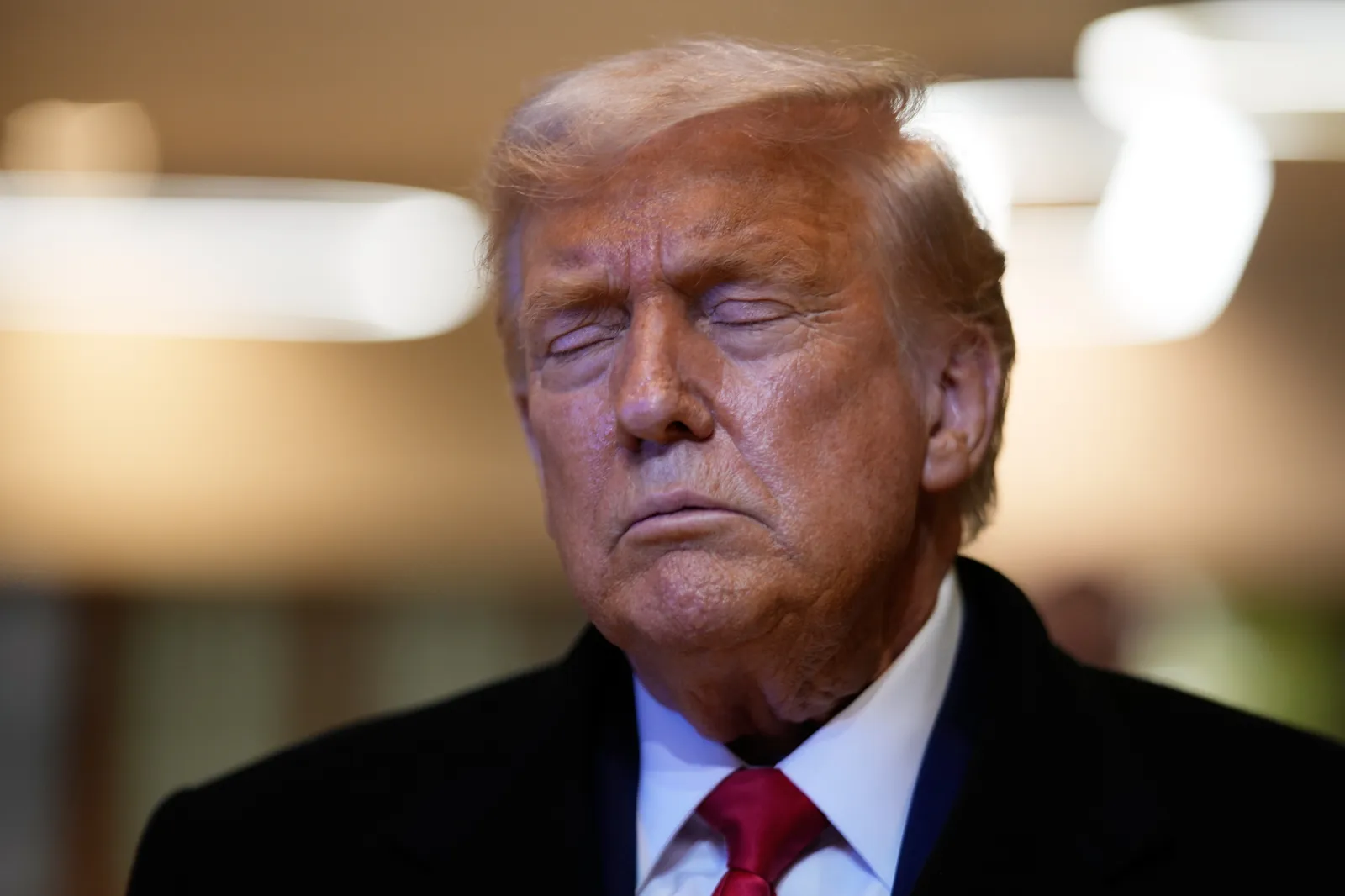

President Donald Trump has reached his lowest approval rating of his second term in new polling from the American Research Group (ARG), extending a months-long slide in public support.
The latest survey puts Trump at 35 percent approval and 63 percent disapproval, a net –28, marking his weakest standing in ARG’s tracking since his return to office. On the economy, the numbers are similarly bleak: 32 percent approve of how he’s handling it, while 64 percent disapprove.
Why It Matters
ARG’s new results show Trump at his highest disapproval and a matching low approval in that series, reinforcing growing public unease with his economic management one year into his second term.
The findings also line up with multiple recent surveys showing Trump losing ground on the issues that helped power his comeback—especially the economy and immigration.
What To Know
The poll surveyed a national sample of 1,100 adults and was conducted January 16–20, with a margin of error of ±3 percentage points.
Trump’s approval has been stuck at 35 percent for three straight months, while disapproval ticked up to 63 percent in January after sitting at 62 percent in November and December.
ARG’s earlier polls show a notable shift since the beginning of the term. In February 2025, shortly after Trump took office, ARG recorded 43 percent approval and 51 percent disapproval. In January 2018, one year into his first term, ARG found 35 percent approved and 60 percent disapproved.
Recent polling from the Associated Press-NORC Center for Public Affairs Research (AP-NORC) suggests Trump is also slipping on issues closely tied to his political identity.
In AP-NORC’s January survey of 1,203 adults conducted January 8–11, 38 percent approved of Trump’s handling of immigration, while 61 percent disapproved. Among Republicans, support remained strong—but not untouched: 76 percent approved and 23 percent disapproved.
Compared with polling taken at the start of Trump’s term, the share of Republicans who disapprove on immigration has nearly doubled, while approval among Republicans has dropped sharply.
On the cost of living, AP-NORC found that roughly 6 in 10 adults said Trump has done more to worsen costs in his second term, while about 2 in 10 said he has helped, and around 3 in 10 said he has made no impact.
Trump also appears to be losing ground with Gen Z voters—those born between 1997 and 2012—after making gains during the 2024 election, including with men ages 18 to 29.
A CBS News/YouGov poll of 2,325 U.S. adults, conducted January 5–7 with a ±2.4 percent margin of error, found Trump’s net approval among young voters has fallen to –32 points.
Trump has repeatedly dismissed negative polling as “rigged,” and has previously called for investigations into polling for “election fraud.”
Polls have also historically underestimated Trump’s support, with Trump outperforming expectations in all three of his presidential campaigns. The Pew Research Center has attributed this pattern, in part, to participation differences—arguing that people most likely to respond to polls are also more likely to back a Democratic presidential candidate.
What People Are Saying
Responding to earlier negative polling, White House spokesperson Davis R. Ingle told Newsweek on Monday that Trump was “overwhelmingly elected by nearly 80 million Americans” to pursue his agenda, adding that the administration has already made “historic progress” and that it is “not surprising” Trump remains “the most dominant figure in American politics.”
In prior remarks to the Detroit Economic Club, Trump said the U.S. had experienced “the strongest and fastest economic turnaround in our country’s history.”
Pollster John Della Volpe told The Rebuild: “Young Americans are sending a clear message: the systems and institutions meant to support them no longer feel stable, fair, or responsive.”
What Happens Next
The sustained decline in approval—both among the broader public and signs of softening within parts of his coalition—creates a growing challenge as Trump enters year two of his second term. With the 2026 midterm elections approaching, the window to reshape public perception is tightening.
At the same time, with the administration continuing to cast polling as unreliable, it remains unclear whether Trump will change course in response to the numbers.