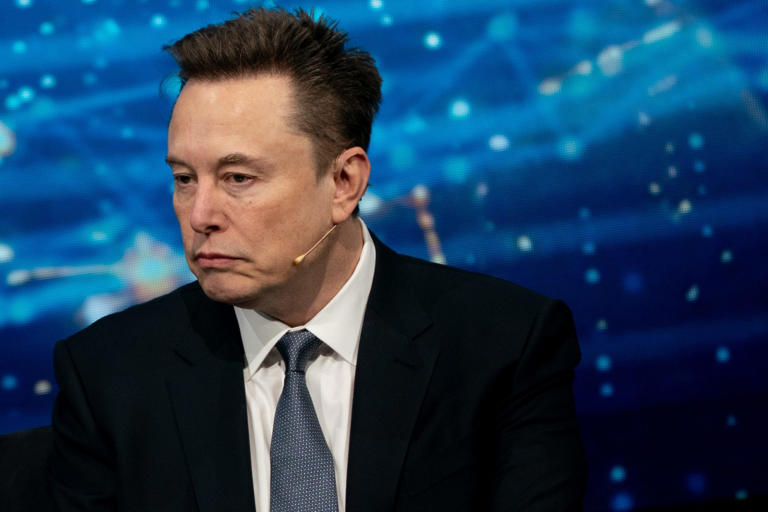

Elon Musk said SpaceX is reordering its long-term goals, placing greater emphasis on building a permanent human presence on the Moon before attempting a crewed mission to Mars.
In a recent post on X, Musk wrote that the company is now prioritizing what he described as a “self-growing city” on the Moon, arguing that such an effort could be completed in under a decade. By contrast, he said a comparable settlement on Mars would likely take more than 20 years to achieve.
Musk cited logistical differences between lunar and Martian travel to justify the shift. Launch windows to the Moon are frequent, with trips lasting roughly two days, allowing faster testing and iteration. Missions to Mars, by comparison, depend on planetary alignment cycles that occur about every 26 months and require much longer transit times.
He emphasized that SpaceX’s broader mission remains unchanged, framing the lunar focus as a pragmatic step toward expanding human life beyond Earth. Musk added that while the Moon is now the faster path, SpaceX still intends to begin work on a Mars settlement within the next five to seven years.
:max_bytes(150000):strip_icc():focal(1085x382:1087x384):format(webp)/SpaceX-headquarters-Hawthorne-020926-4d6e3c2e4476492e9e793d1d7d6162a8.jpg)
Neither Musk nor SpaceX has provided details about what constitutes a “self-growing city,” and it remains unclear how such a project would be designed, funded, or regulated.
The comments represent a notable change in tone from Musk’s earlier public statements. In past years, he repeatedly predicted that SpaceX could land humans on Mars within this decade. He has also previously dismissed lunar exploration as a distraction, including criticism of NASA’s Artemis program, which aims to return astronauts to the Moon later this decade.
NASA continues to pursue its lunar timeline independently, targeting a crewed return to the Moon later in the 2020s. SpaceX, a key contractor for NASA, plays a role in that effort through its spacecraft development.
Musk’s remarks come amid other significant developments for his companies, including the announced acquisition of his artificial-intelligence venture, xAI, by SpaceX, a move he has said would further integrate the company’s technology ambitions.