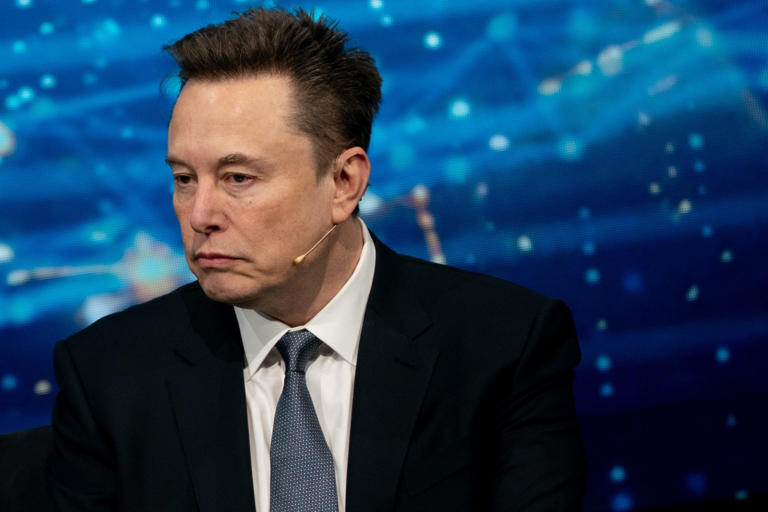

Elon Musk is again sketching a long-range vision in which work becomes a personal choice rather than an economic necessity, driven by widespread automation and artificial intelligence.
Speaking at a recent U.S.-Saudi Investment Forum in Washington, the Tesla chief executive suggested that within 10 to 20 years, most people would not need jobs to meet their material needs. He compared future employment to tending a backyard vegetable garden—more effort than simply buying produce, but appealing to those who enjoy the activity itself.
Musk said this shift would be fueled by large-scale deployment of robots capable of handling much of today’s labor. He has repeatedly described a future in which automation sharply increases productivity and lowers the cost of goods and services. As part of that outlook, he has emphasized Tesla’s humanoid robot project, even as production timelines have slipped.
Beyond manufacturing and logistics, Musk argues automation could transform health care. In recent remarks on a podcast, he predicted robotic systems could eventually outnumber human surgeons and deliver care exceeding today’s top standards. He also speculated that artificial intelligence could help extend human lifespans, framing longevity as a technical challenge rather than a biological limit.
Not everyone shares Musk’s optimism or his timeline. Economists note that while AI software is becoming cheaper, physical robots remain costly and difficult to scale. Researchers also point to data suggesting that, so far, AI adoption has not caused broad disruption across the labor market.
Even if automation advances as Musk expects, scholars say political and social questions loom large. Proposals such as “universal high income” or other income-support systems would require sustained public backing. Critics also warn that recent gains from AI have disproportionately benefited wealthy investors and large technology firms.
Others raise deeper questions about purpose. If machines perform most economically valuable work, societies may need new ways for people to find meaning and build relationships—roles long intertwined with employment.