
Elon Musk thinks artificial intelligence is on track to reshape society so dramatically that working for a living may become a choice — and money may eventually stop mattering.
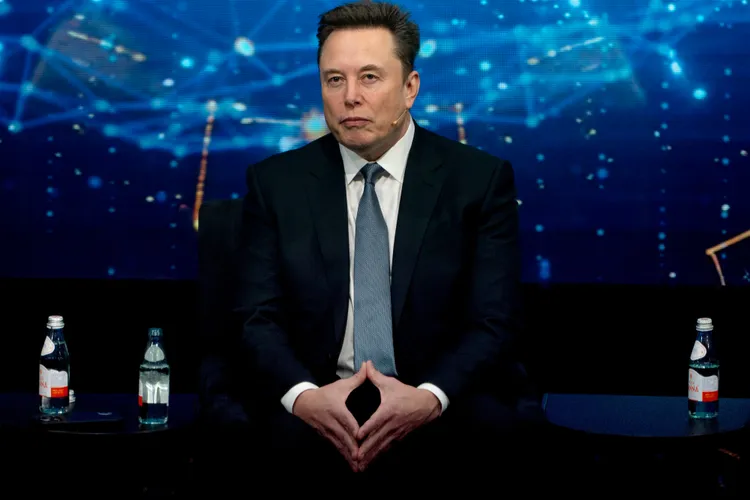
The 54-year-old founder of xAI shared the prediction while speaking at the U.S.-Saudi Investment Forum in Washington, D.C., on Wednesday, Nov. 19. In a conversation with Saudi Arabia’s minister of communications and information technology Abdullah Alswaha and Nvidia founder Jensen Huang, Musk said that within the next 10 to 20 years, “work will be optional,” drawing applause from the audience.
He described a future where people still take on tasks, but more for enjoyment than necessity. “It’ll be like playing sports or a video game or something like that,” Musk said in footage of the event shared by Forbes. He compared work to gardening: even though growing vegetables at home is harder than buying them, many people still do it because they like the process. In his view, that’s what jobs could become — something people do by choice, not out of need.
:max_bytes(150000):strip_icc():focal(1001x408:1003x410):format(webp)/Abdullah-Alswaha-Elon-Musk-Jensen-Huang-kennedy-center-112025-58ee24bac1264405a5e196407925ffe6.jpg)
Musk added that there’s still a great deal to solve before getting there, but he sees a path toward a mostly positive AI-driven future similar to the one imagined in Iain M. Banks’ Culture novels. In that kind of world, he argued, “money doesn’t exist.”
“My guess is, if you go out long enough, assuming there’s a continued improvement in AI and robotics, which seems likely, money will stop being relevant at some point in the future,” Musk said. “I think at some point, currency becomes irrelevant.”
Huang largely agreed that AI will transform work, but framed it as evolution rather than disappearance. “Everybody’s jobs will be different,” he said, because many routine or difficult tasks will be handled quickly and easily by AI systems.
He also pushed back on the idea that AI automatically eliminates jobs. As an example, Huang pointed to radiology — a field many once assumed would be among the first to be replaced. Instead, he said, AI has made radiologists more productive and valuable, leading to more hiring. With AI support, radiologists can analyze more images across more modalities and spend more time with patients, improving care while handling a larger caseload.
“That’s kind of the near-term outcome of AI and productivity. We’ll see what happens long term,” Huang said, joking to Musk, “When currency doesn’t matter anymore, just let me know right before!”
Musk has recently shared similarly sweeping ideas about AI’s potential. Earlier this month, he told shareholders that advanced AI paired with Tesla’s Optimus robot could dramatically expand access to healthcare and even end poverty, according to Business Insider. He suggested that abundance created by robotics might be the only practical way to deliver universal prosperity and medical care at scale.
He also floated other far-reaching uses for Optimus, including a concept where robots could follow people to prevent crimes before they happen — another example of how Musk imagines AI and robotics fundamentally changing daily life.