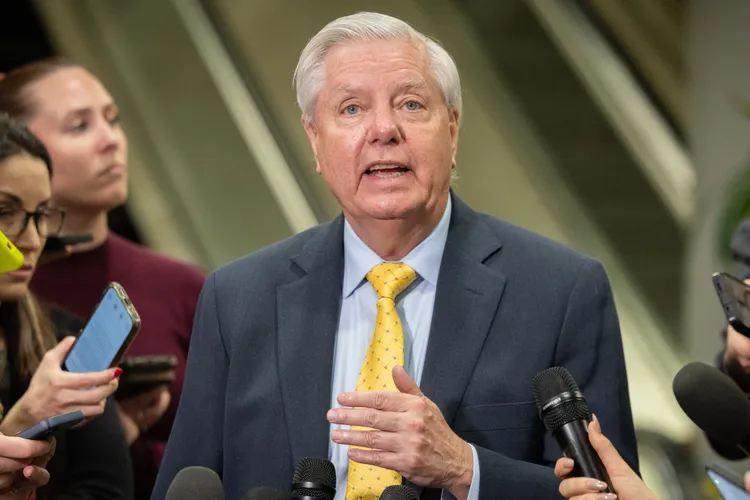

Sen. Lindsey Graham (R-S.C.) signaled a major shift in U.S. strategic objectives Sunday, suggesting that the ongoing military conflict with Iran and the recent capture of Venezuelan leader Nicolás Maduro are part of a broader plan to secure a “partnership” over nearly a third of the world’s oil reserves.
Speaking to Fox News on March 8, the veteran hawk described the potential collapse of the Iranian government as a historic “investment” that would reorder global energy markets and cripple Chinese influence.
A ‘Ton of Money’: The Economic Gamble
The South Carolina senator’s remarks arrive as the U.S.-Israeli air campaign against Iran enters its third week. Graham predicted that the displacement of the clerical regime in Tehran would result in an unprecedented economic windfall for the United States.
“When this regime goes down, we are going to have a new Mideast, and we are going to make a ton of money,” Graham stated. He specifically linked the conflict to the January 3 “abduction” of Venezuelan President Nicolás Maduro, who remains in U.S. custody in New York facing narco-terrorism charges.
By combining the resources of a post-regime Iran and a U.S.-managed Venezuela, Graham claimed Washington could effectively control a massive share of global energy.
“Venezuela and Iran have 31% of the world’s oil reserves,” Graham said. “We’re going to have a partnership with 31% of the known reserves. This is China’s nightmare. This is a good investment.”
Escalation and the Strait of Hormuz
Graham further signaled that the military pressure on Tehran is set to intensify. He projected a total collapse of Iranian leadership in the “next few weeks,” promising that U.S. forces would “blow the hell out of these people” to ensure the Strait of Hormuz—a vital maritime chokepoint—is never threatened again.
The Senator described the current Iranian government as being in its “death throe,” asserting that the fall of the regime would usher in “peace like no other time.”
Tehran Hits Back: Accusations of Partition
The response from Tehran was immediate and sharp. Foreign Ministry spokesman Esmaeil Baghaei accused Washington of using the war as a pretext for modern-day colonialism.
“Their design is clear, their enterprise is quite obvious—they aim at partitioning our country to take illegal possession of our oil riches,” Baghaei told reporters on Monday. He characterized the U.S. strategy as an attempt to “undermine our humanity” and violate Iranian sovereignty under the guise of security operations.
The Succession Crisis: Trump vs. The Ayatollah’s Son
The rhetoric coincides with a deepening leadership crisis in Iran following the assassination of Supreme Leader Ayatollah Ali Khamenei on February 28. On Sunday, the Iranian Assembly of Experts defied U.S. warnings by naming the late leader’s son, Mojtaba Khamenei, as the new Supreme Leader.
President Donald Trump, who has personally directed the “Operation Absolute Resolve” in Venezuela and the strikes in Iran, dismissed the appointment during an interview with Axios.
“They are wasting their time. Khamenei’s son is a lightweight,” Trump said, asserting that any new leadership in Tehran must have his approval. “I have to be involved in the appointment.”