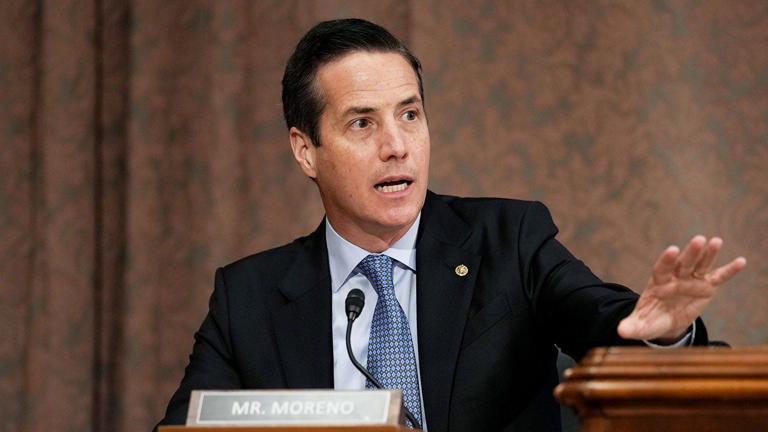

Sen. Bernie Moreno, R-Ohio, is preparing to introduce a bill that would bar Americans from holding citizenship in more than one country, effectively forcing people to choose where their loyalty lies. Under the proposal, any U.S. citizen who also holds foreign citizenship would have to pick one nationality, and anyone who seeks a foreign citizenship in the future would automatically forfeit their U.S. status.
Moreno, who immigrated from Colombia and became a U.S. citizen at 18, said in a statement that naturalizing was one of the most meaningful moments of his life. He described it as an honor to swear an oath to the United States “and only to the United States,” arguing that American citizenship should be treated as a singular privilege rather than something that can be paired with another country’s passport. “If you want to be an American — it’s all or nothing,” he said, calling for an end to dual citizenship.
Current U.S. law allows Americans to hold citizenship both in the United States and abroad, without obligating them to formally renounce one nation or the other. Moreno’s proposal, titled the Exclusive Citizenship Act of 2025, seeks to overturn that approach on the grounds that dual citizenship can create “conflicts of interest and divided loyalties” and undermine U.S. interests.

The bill would amend immigration law so that existing dual citizens are required to choose which country they wish to remain a citizen of. It would also tighten the rules going forward so that any American who acquires another citizenship after the law takes effect is treated as having given up their U.S. citizenship.
To implement these changes, the legislation directs the State Department and the Department of Homeland Security (DHS) to develop databases and regulations to monitor and enforce citizenship status. Americans with dual citizenship would have one year after the law’s enactment to either request that the Secretary of State formalize their renunciation of foreign citizenship, or notify DHS that they intend to give up their U.S. citizenship instead.
If a dual citizen fails to act within that one-year window, they would be presumed to have relinquished their U.S. citizenship. For anyone who loses their American status — whether by choice or automatically under the law — DHS and the attorney general would be required to ensure those individuals are properly recorded in federal systems and treated as non-citizens under U.S. immigration law.

Efforts to curtail dual citizenship are not entirely new. In the House, Republican lawmakers have advanced measures to require members of Congress to disclose any foreign citizenship on their candidacy paperwork or to bar dual citizens from serving in Congress altogether. Meanwhile, former President Donald Trump has pursued an effort to end birthright citizenship, a separate issue that remains tied up in the courts and has not yet been taken up by the Supreme Court.
Moreno’s proposal could face significant legal hurdles of its own. The Supreme Court examined the question of dual citizenship in the mid-20th century and issued rulings that have generally protected Americans from losing their citizenship without clear, voluntary consent — precedents that remain in place today.