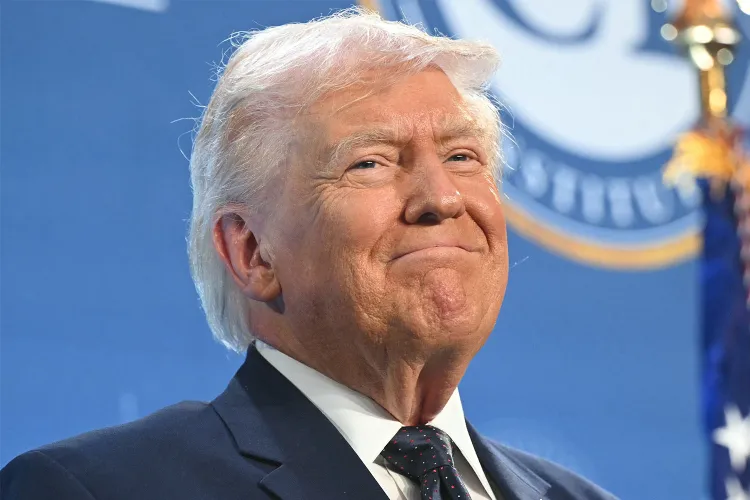

President Donald Trump issued a blunt mandate to House Republicans on Monday, demanding they formally codify his “Most Favored Nation” (MFN) drug pricing executive order into law. Speaking at the annual House GOP retreat at Trump National Doral, the President framed the move as essential to protecting his administration’s efforts to slash prescription costs, which he claims have dropped by as much as 90% for some Americans.
The push for legislation comes at a critical juncture for the administration’s trade-centric economic agenda. Just weeks ago, on Feb. 20, the Supreme Court delivered a major blow to the President’s authority, ruling 6-3 in Learning Resources Inc. v. Trump that the International Emergency Economic Powers Act (IEEPA) does not grant the executive branch the power to impose sweeping, revenue-raising tariffs.
Leveraging Tariffs as a Negotiation Tool
During his address, Trump recounted a high-stakes exchange with French President Emmanuel Macron, illustrating his “America First” approach to pharmaceutical costs. Trump detailed how he threatened a 100% tariff on all French wine and champagne imports unless France agreed to shoulder more of the research and development costs currently borne by American consumers.
“I told him, ‘Emmanuel, the legislation is on my desk. I’m going to sign it,'” Trump told the gathered lawmakers. He claimed that the threat of drastic tariffs forced international compliance, leading to what he described as unprecedented price drops for U.S. patients. “No other president can do some of this s— I’m doing,” he added, to scattered applause.
:max_bytes(150000):strip_icc():focal(749x0:751x2):format(webp)/Donald-Trump-Trump-National-Doral-031026-fd302d318c6a436f92157896e015512d.jpg)
The ‘Most Favored Nation’ Strategy
The President’s drug pricing strategy relies on the MFN model, which aims to cap U.S. drug prices at the lowest price paid by other developed nations. Since signing the executive order in May 2025, the administration has secured voluntary agreements with several pharmaceutical giants, including:
- Pfizer: Agreed to offer MFN pricing for state Medicaid programs and list discounted drugs on the government’s TrumpRx.gov platform.
- Sanofi: Reached a deal to reduce prices for diabetes and cardiovascular medications by an average of 61%.
- Eli Lilly & Novo Nordisk: Expanded access to obesity and GLP-1 medications at lower price points.
Despite these deals, the President’s claim of a 90% reduction in costs remains under intense scrutiny. Industry analysts from ING Think suggest that while some cash buyers may see savings, the overall impact on the $700 billion U.S. pharmaceutical market may be modest due to the complexity of existing insurance and rebate structures.
A Battle Over Executive Authority
The Supreme Court’s February ruling has significantly curtailed the President’s ability to use “emergency” tariffs as leverage in trade and healthcare negotiations. The majority opinion stated that the power to raise revenue via tariffs belongs exclusively to Congress under the Constitution’s Taxing Clause.
In response, the Trump administration has pivoted to Section 122 of the Trade Act of 1974, recently announcing a temporary 10% global tariff that will remain in effect for 150 days. However, without a permanent legislative fix, the President’s broader trade and healthcare policies remain on shaky legal ground.
Journalistic Fact-Check: The 90% Claim
While the administration highlights specific “landmark” deals with manufacturers, broader economic data paints a more nuanced picture:
- Limited Scope: Many of the negotiated discounts apply only to specific drugs or through the TrumpRx platform, which covers roughly 1% to 2% of total U.S. pharmaceutical sales.
- Reshoring Costs: Critics, including the CSIS, warn that aggressive MFN policies could stifle R&D investment and that the costs of reshoring manufacturing may offset consumer savings through higher prices on generic inputs.
Trump concluded his remarks by calling the Supreme Court’s decision “disappointing” and a “terrible decision for the people,” emphasizing that the GOP-led House must act to ensure his second-term healthcare legacy is not dismantled by the judiciary.