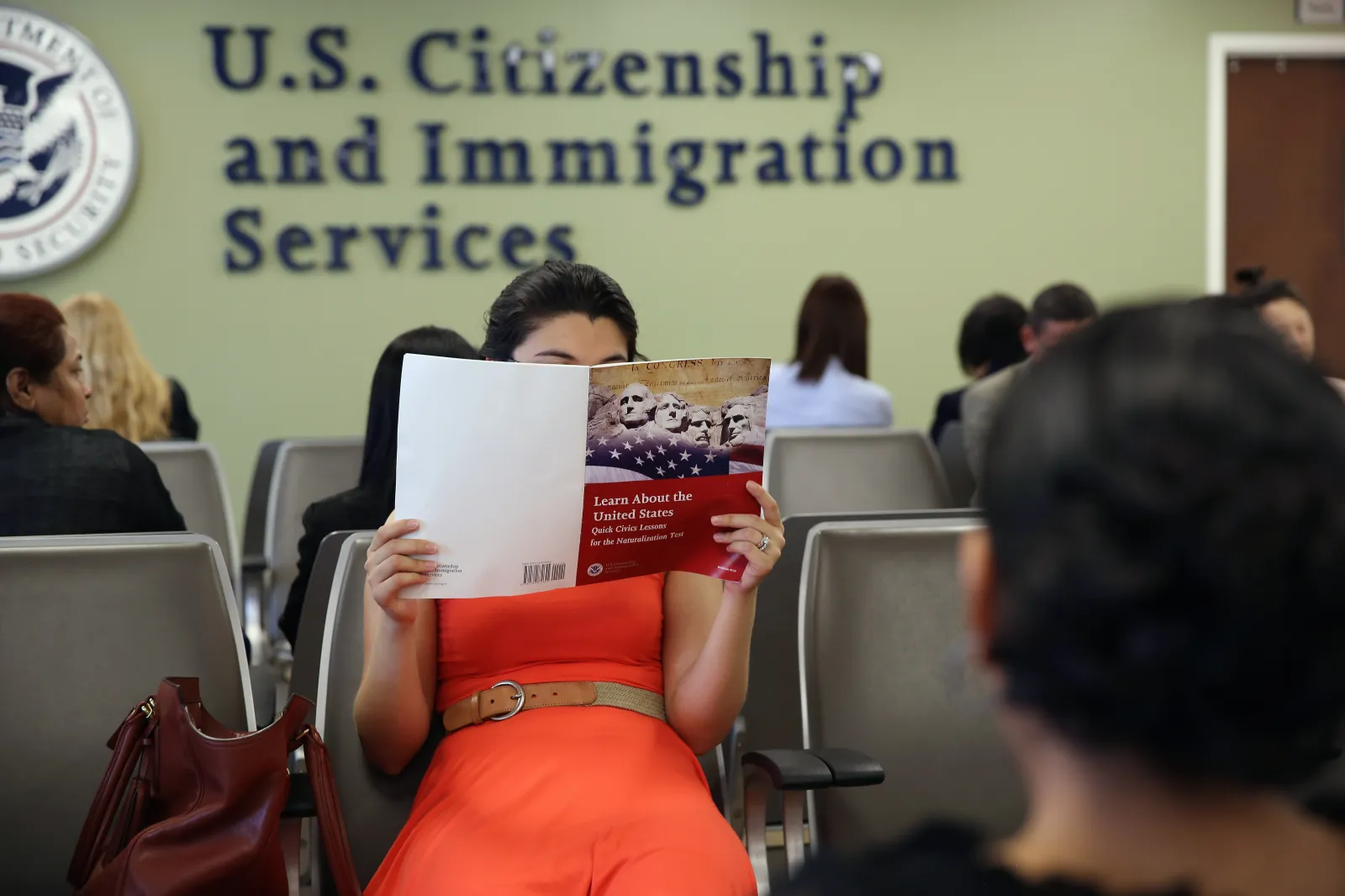

The Trump administration has moved to significantly tighten immigration oversight with two major policy shifts affecting both current Green Card holders and new applicants.
The first is a broad review of Green Cards issued to citizens from certain countries. The second is the rollout of a universal biometric entry-exit system that will apply to all non-U.S. citizens, including lawful permanent residents.
Why It Matters
The government has directed a comprehensive re-examination of Green Cards issued to citizens from 19 countries, following the shooting of two National Guard members by an Afghan national near the White House. In response, U.S. Citizenship and Immigration Services has temporarily paused asylum adjudications while it reassesses its vetting procedures in the wake of the attack.
Officials will revisit earlier vetting and approval processes, citing national security concerns and potential gaps in how some applicants were screened in the past. While the government has not yet released the precise parameters of this re-examination, more details are expected this month. The outcome could include processing delays, additional document requests, or, in some cases, changes to the status of certain Green Card holders, depending on what the review uncovers.
What To Know
The administration has identified a group of countries whose citizens will now face heightened scrutiny in Green Card and visa processing due to concerns over security screening and visa overstays.
Nationals of Afghanistan, Myanmar (Burma), Chad, the Republic of the Congo, Equatorial Guinea, Eritrea, Haiti, Iran, Libya, Somalia, Sudan, and Yemen are now subject to a full suspension of entry.
Citizens of Burundi, Cuba, Laos, Sierra Leone, Togo, Turkmenistan, and Venezuela face partial restrictions, such as tighter visa rules and shorter authorized stays. Officials have provided few specifics on how case-by-case waivers or categorical exceptions might be granted under these new measures.
Experts say the Department of Homeland Security (DHS) is likely to focus on extensive criminal and security checks, both domestic and international. That includes reviewing arrest records and other security-related information, confirming that applicants originally met Special Immigrant Visa (SIV) eligibility criteria—such as qualifying employment documentation—and looking for inconsistencies or misrepresentations through cross-checking available records.
“We can expect the criteria to be broad to give adjudicators significant discretion to consider nationality from these countries as a possible risk factor when analyzing the totality of any relevant evidence,” Morgan Bailey, a partner at Mayer Brown and former senior official at DHS, told Newsweek.
According to Bailey, individuals from the affected countries may be asked to provide biometrics (fingerprints, photographs, signatures), additional background information, and potentially attend extra interviews, along with meeting strengthened evidentiary requirements.
“In the near term, uncertainty may be the most noticeable effect. Individuals with pending applications from the affected countries may experience delays or additional requests for evidence as immigration officers implement any new screening and vetting protocols,” she added.
New Biometric Entry-Exit Rule
A second major shift begins later this month, when DHS starts enforcing a new biometric entry-exit rule on December 26. Under this regulation, U.S. Customs and Border Protection will collect biometric data from all non-U.S. citizens, including lawful permanent residents, each time they enter or depart the country.
Travelers will be photographed at airports, land crossings, and seaports, and may also be required to provide fingerprints, iris scans, or other biometric identifiers. The rule removes earlier exemptions and extends biometric screening across all age groups and travel categories.
Together, the Green Card re-examination and the universal biometric tracking system mark a significant tightening of immigration control and monitoring.
“The system will create a more comprehensive travel record, which may affect future processes tied to physical presence including naturalization eligibility, possible abandonment of permanent residency,” Bailey said.
Green Card holders should be prepared for closer scrutiny at U.S. borders and, for those from the 19 countries under review, potentially additional requirements as the government clarifies how the policy will be implemented.
The Office of Homeland Security Statistics estimated there were 12.8 million Green Card holders living in the U.S. as of January 1, 2024.
What Happens Next
“At this stage, the final criteria and procedures have not been announced, but we expect that additional details may be forthcoming in the coming weeks,” Bailey said.
Further guidance from DHS and USCIS is expected soon, which should clarify which applicants are most affected, how waivers may be considered, and what additional evidence or steps Green Card holders and applicants will need to prepare for under the new system.