

Health and Human Services (HHS) Secretary Robert F. Kennedy Jr. announced earlier this week his intention to broaden dairy recommendations in the upcoming federal dietary guidelines.
“I grew up in a world where milk was the healthiest thing that you could eat,” Kennedy said during a Monday news conference. “There’s a tremendous amount of emerging science that talks about the need for more protein in our diet and more fats in our diet. And there’s no industry that does that better than this industry.”
Currently, U.S. dietary guidelines advise Americans ages 9 and older to consume three cup equivalents of dairy daily, or lactose-free or fortified soy alternatives. Children ages 1 to 8 are recommended to have between 1.6 and 2.5 cups, depending on their age.
This includes dairy milk, fortified soy milk, yogurt enriched with calcium, vitamin A, and vitamin D, and a variety of cheeses such as hard cheese, processed cheese, ricotta, cottage cheese, queso fresco, and queso blanco.
Nutrition experts told ABC News that dairy is considered part of a healthy dietary pattern, with no known harms from consumption. However, Americans may choose dairy-free alternatives for personal reasons, and variety in dairy products is recommended for optimal health benefits.
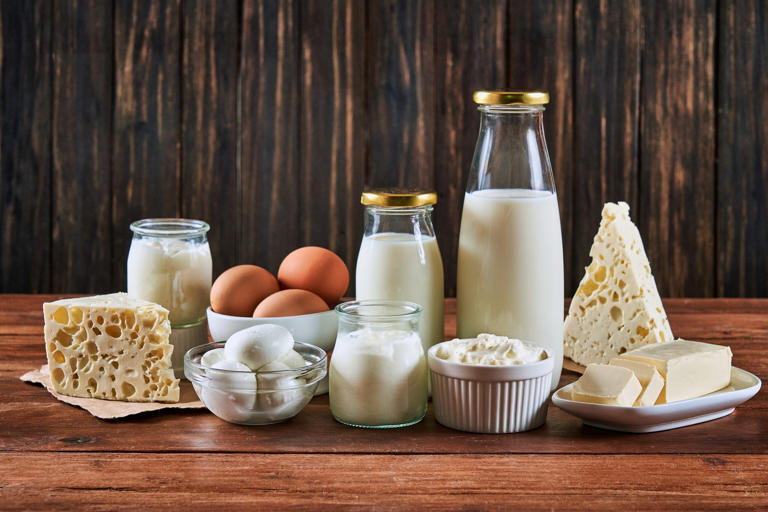
Benefits of Dairy
Dairy provides essential nutrients, including calcium, magnesium, potassium, protein, and vitamins A and D, according to the U.S. Department of Agriculture (USDA). These nutrients support healthy bones, teeth, and immune function.
Dr. Dariush Mozaffarian, director of Tufts University’s Food is Medicine Institute, told ABC News there may be additional advantages.
“Dairy, in both randomized trials and long-term observational studies, lowers blood pressure, improves lean body mass, and reduces fat mass. Observational studies show that people who consume more dairy have a lower risk of stroke, consistent with its blood pressure-lowering effects,” Mozaffarian said.
He noted that the three daily servings were originally recommended for calcium and vitamin D, but these nutrients can also be obtained from leafy greens and fatty fish.
“I think the evidence for stroke, diabetes, and blood pressure benefits is as important, if not more so,” Mozaffarian added. “For these benefits, dairy—especially yogurt and cheese for diabetes, and milk for blood pressure and stroke—plays a key role.”
Potential Drawbacks
Andrea Deierlein, associate professor of public health nutrition at NYU School of Global Public Health, highlighted reasons why some Americans may avoid dairy, including lactose intolerance, allergies, and cultural preferences.
“If people don’t consume dairy for personal or cultural reasons—or due to allergies or intolerances—there’s generally no health concern,” she said, noting lactose-free and soy alternatives.
There is ongoing debate about saturated fat in dairy. Current guidelines recommend low-fat or fat-free options, as saturated fat can raise “bad” cholesterol and increase heart disease risk, according to the American Heart Association.
However, Deierlein pointed out that the 2025 Scientific Report—an independent review supporting HHS and USDA guidelines—suggests saturated fat from meat may pose a greater health risk than that from dairy.
The report also found that replacing processed or red meat with dairy may lower the risk of cardiovascular disease, though further research is needed.
“The Dietary Guidelines Advisory Committee specifically asked whether there are benefits to replacing whole-fat dairy with reduced-fat dairy. They examined cholesterol, blood pressure, heart attacks, strokes, cardiovascular mortality, and diabetes and found no evidence of benefits from switching,” Mozaffarian said.
Looking Ahead
Mozaffarian hopes the upcoming guidelines will continue to recommend three daily servings of dairy, with at least two of those servings coming from fermented options like yogurt or cheese.
“I think Americans should have yogurt every day because it’s a fermented food with active probiotics that improve the gut microbiome,” he explained. “Yogurt is consistently linked to lower diabetes risk, and cheese is also linked to lower diabetes risk.”
He emphasized the importance of variety: “Having a mix of dairy is important because these foods offer different benefits. Ensuring we get the health advantages from a diverse mix of dairy products is key.”