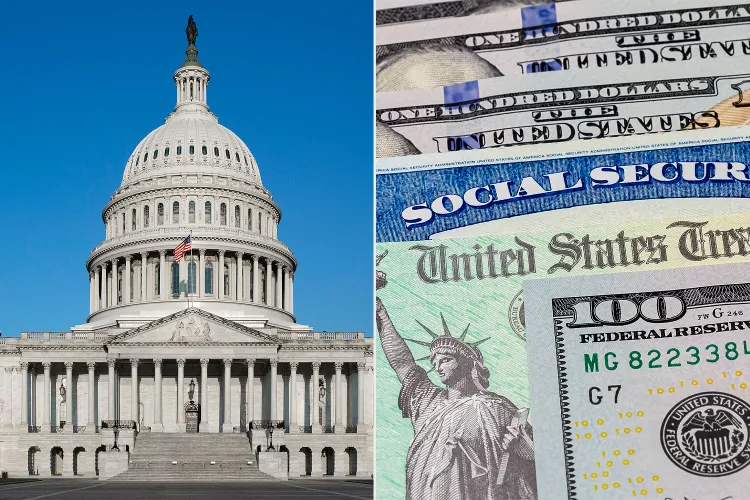

As the possibility of a government shutdown looms, questions have arisen about what it could mean for Social Security payments.
Fortunately, those payments are expected to continue nationwide, regardless of Congress’ next move.
If elected officials do not reach a deal to fund the government past Tuesday, Sept. 30, a federal shutdown will go into effect at 12:01 a.m. ET on Wednesday, Oct. 1. Democrats and Republicans remain divided over whether to extend tax credits for the Affordable Care Act, also known as Obamacare.
However, Social Security payments themselves are considered mandatory spending. The Social Security Act requires the Social Security Administration (SSA) to continue issuing benefits even if Congress fails to pass a funding agreement. What could be affected, though, is the SSA’s administrative budget for related services.
“While Congress does not set the amount of benefits we pay each year, they decide funding for our administrative budget,” the SSA explained on its website.
“Our administrative budget provides resources to administer Social Security and SSI [Supplemental Security Income] programs as well as certain aspects of the Medicare program. It funds salaries and benefits for Federal SSA employees and for State employees at disability determination services offices who make disability determinations for us,” the agency added.
Max Richtman, President & CEO of National Committee to Preserve Social Security & Medicare, a nonprofit advocacy group, echoed the same message: payments will continue, though recipients could see service disruptions.
“In the event of a government shutdown, Social Security benefits will continue to be paid. The system hasn’t missed a payment in its entire 90-year history and won’t start now,” Richtman said. “But customer service at the Social Security Administration may be disrupted, including benefit verifications, earnings record corrections and updates, overpayments processing and replacing Medicare cards.”
“The level of disruption will depend on how many SSA employees the Trump administration deems ‘essential’ and ‘non-essential’ during the shutdown,” he added.
A contingency plan published by the SSA earlier this month stated that roughly 90% of its employees would remain working if a shutdown occurs.
“We will continue activities critical to our direct-service operations and those needed to ensure accurate and timely payment of benefits,” the plan stated. “We will cease activities not directly related to the accurate and timely payment of benefits or not critical to our direct-service operations.”
Recipients of Supplemental Security Income are scheduled to receive their next checks on Oct. 1, while Social Security payments will continue according to the recipient’s regular schedule based on birth date.