
Israeli Prime Minister Benjamin Netanyahu’s White House visit on Tuesday focused on a potential ceasefire deal to halt the nearly two-year war in Gaza, as mounting casualties on both sides increase pressure for a resolution.
While no formal breakthrough was announced, both Israeli and U.S. officials signaled progress toward a possible agreement. The talks come amid growing unrest in Israel, especially after five Israeli soldiers were killed in a deadly ambush in northern Gaza — one of the conflict’s most lethal incidents for Israeli troops this year.
Escalating Violence on the Ground
According to the Israeli military, the soldiers were hit by explosive devices during an operation in the Beit Hanoun area, a frequent flashpoint in the northern Gaza Strip. As the wounded were being evacuated, militants reportedly opened fire, injuring 14 additional soldiers, two critically.
The attack brought the total number of Israeli troops killed in the war to 888. Hamas’ armed wing claimed responsibility, with spokesperson Abu Obeida calling the strike a blow to a “weak army” and warning Netanyahu against keeping troops inside Gaza.
Just two weeks earlier, seven Israeli soldiers were killed when a bomb was attached to their armored vehicle. Netanyahu, in a statement, called the fallen soldiers “heroes” who died in the mission to defeat Hamas and bring hostages home.
Heavy Civilian Toll from Israeli Strikes
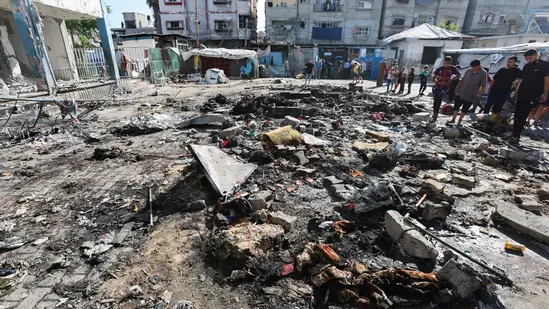
Meanwhile, Palestinian health authorities reported at least 18 people were killed Tuesday in Israeli airstrikes across southern and central Gaza.
In Khan Younis, a strike on tents sheltering displaced families killed four. Another airstrike killed a family of four — a mother, father, and their two children. In Nuseirat, central Gaza, hospital officials said 10 people were killed and over 70 injured in another bombing.
The Israeli military offered no comment on the latest strikes but reiterated that Hamas is responsible for civilian deaths by embedding its operations in densely populated areas.
The ongoing violence has further strained Gaza’s medical system. The Palestine Red Crescent announced that the Al-Zaytoun Medical Clinic in Gaza City was forced to shut down due to nearby shelling, cutting off vital health services for thousands.
U.S. Push for Ceasefire Deal Gains Momentum
President Trump, who has expressed growing urgency to resolve the conflict following last month’s brief war between Israel and Iran, is now prioritizing a deal in Gaza. His administration is pushing for a 60-day ceasefire that would include increased humanitarian aid, release of at least some of the 50 hostages still held in Gaza, and a temporary halt to hostilities.
According to a senior Israeli official, 80–90% of the deal has already been agreed upon, and a final resolution could be reached within days. However, a key sticking point remains: Hamas demands an end to the war and a full Israeli withdrawal from Gaza in exchange for releasing all hostages. Netanyahu has rejected those terms, saying the war will only end once Hamas is fully disarmed, dismantled, and exiled.
War’s Cost: 57,000 Palestinians Dead
The war, which began after Hamas’s surprise attack on Israel on October 7, 2023 — killing about 1,200 people and taking 251 hostages — has devastated Gaza. According to the territory’s Health Ministry, over 57,000 Palestinians have died since the conflict began, more than half of them women and children.
Although the ministry is run by Hamas, the United Nations and other international groups consider its casualty reports the most credible available. The Ministry does not distinguish between civilian and combatant deaths.
As international pressure builds and domestic outrage grows, Netanyahu’s meeting with Trump may prove pivotal in determining whether the bloody conflict inches closer to a pause — or spirals into further escalation.T